
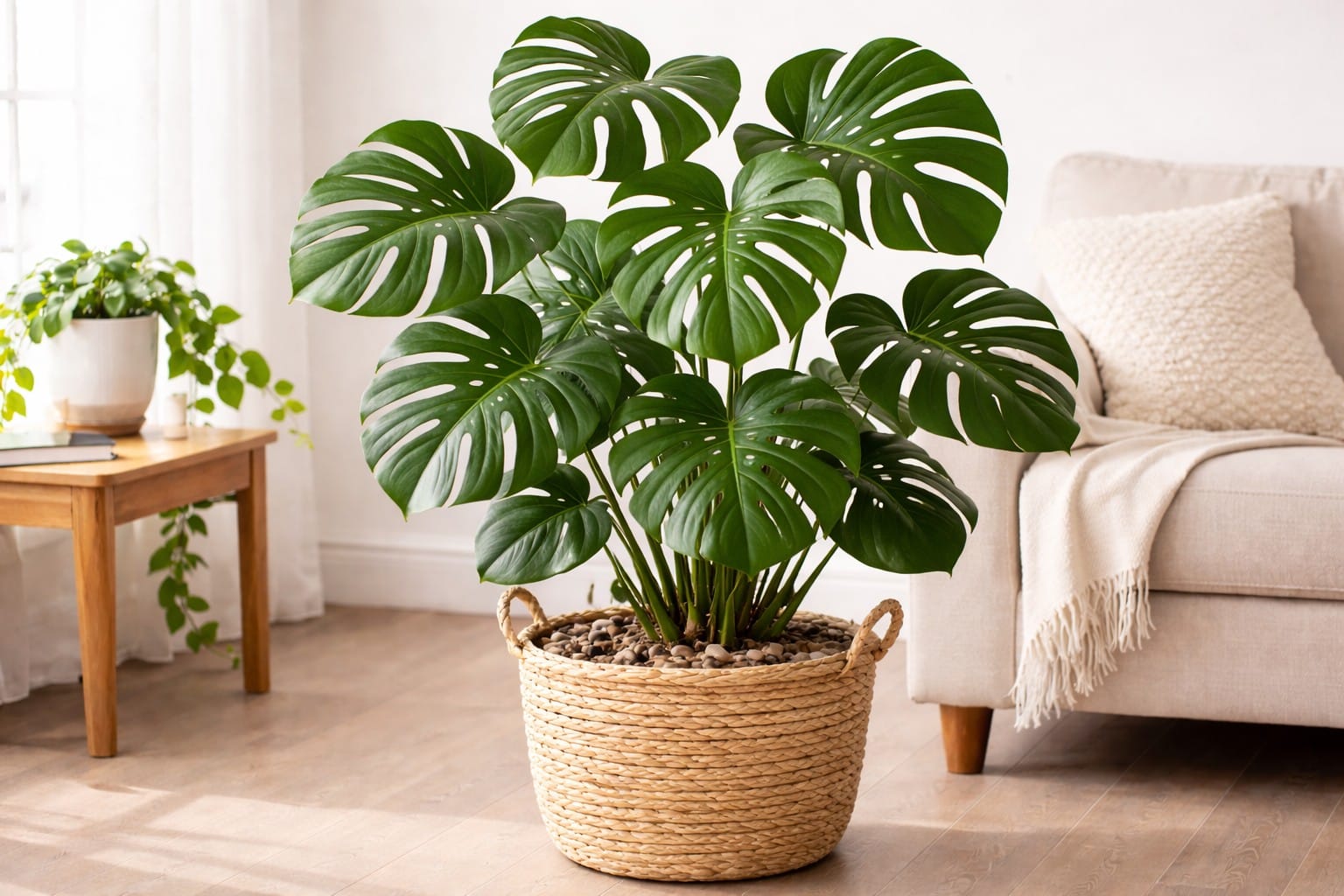
The Swiss cheese plant, scientifically known as Monstera deliciosa, is a tropical favorite loved for its large, glossy, perforated leaves and bold, dramatic appearance. Its distinctive leaf holes give it the “Swiss cheese” nickname, making it one of the most popular houseplants for modern interiors, offices, and tropical-themed spaces.
This complete guide covers everything you need to know about Swiss cheese plants, including identification, varieties, light and water needs, soil, care, pruning, propagation, common problems, and expert tips for a thriving Monstera.
What Is a Swiss Cheese Plant
The Swiss cheese plant is a tropical evergreen vine native to Central and South America. In the wild, it climbs trees using aerial roots. As a houseplant, it can grow upright with support or spread in containers.
Key characteristics:
Large, glossy green leaves with natural splits and holes
Tropical climbing habit
Rapid growth under ideal conditions
Air-purifying qualities
Easy to train on moss poles or trellises
Monstera deliciosa can grow very large indoors, sometimes reaching 6–8 feet or more with proper care.
Meaning and Symbolism
Swiss cheese plants symbolize:
Growth and abundance
Long life and prosperity
Adaptability and resilience
Tropical beauty and relaxation
In feng shui, Monstera plants are believed to bring good luck and positive energy into a home or office.
Popular Varieties
Several Monstera varieties are popular for indoor growing.
Monstera deliciosa
Classic Swiss cheese plant
Large perforated leaves
Easy to grow indoors
Monstera adansonii
Smaller leaves with multiple holes
Trailing growth habit
Ideal for shelves or hanging baskets
Monstera borsigiana
Compact version of deliciosa
Faster-growing and easier to manage
Variegated Monstera deliciosa (‘Albo’ or ‘Thai Constellation’)
White or cream variegation
Striking and decorative
Requires brighter light
Monstera obliqua
Highly fenestrated leaves
Rare and expensive
Very slow-growing
Where Swiss Cheese Plants Grow Best
Swiss cheese plants thrive in bright, indirect light in tropical or indoor environments.
Best locations:
Living rooms and offices near east- or north-facing windows
Bright corners with filtered sunlight
Areas with moderate humidity
Support poles or trellises for climbing
Avoid direct sunlight, which can scorch leaves.
Light Requirements
Swiss cheese plants prefer bright, indirect light but tolerate medium light.
Light guidelines:
Filtered sunlight ideal
Too little light slows growth and reduces leaf splits
Direct sunlight may cause brown spots
Rotate plant occasionally for even growth
Soil Requirements
Well-draining soil is essential.
Ideal soil:
Rich, loamy potting mix
High organic matter
Perlite or orchid bark added for aeration
Slightly acidic to neutral pH (6–7)
Good drainage prevents root rot and supports rapid growth.
Watering Swiss Cheese Plants
Monstera plants prefer moderate, consistent watering.
Watering guidelines:
Water when top 1–2 inches of soil are dry
Avoid letting plant sit in water
Reduce watering in winter
Misting leaves can increase humidity
Overwatering is a common cause of yellowing leaves and root rot.
Temperature and Humidity
Swiss cheese plants are tropical and love warmth.
Ideal temperatures:
65–85°F (18–29°C)
Avoid cold drafts or sudden temperature changes
Humidity:
Moderate to high humidity is preferred
Use a humidifier or pebble tray in dry indoor air
Regular misting helps develop large, healthy leaves
Fertilizing Swiss Cheese Plants
Fertilize regularly during the growing season.
Fertilizer tips:
Balanced, water-soluble fertilizer every 4–6 weeks in spring and summer
Do not overfertilize
Reduce or stop fertilizing in winter
Proper fertilization supports leaf growth and overall vigor.
Growth Rate and Size
Swiss cheese plants can grow quickly under ideal conditions.
Growth details:
Indoor height: 4–8 feet with support
Leaf size: up to 3 feet long in large specimens
Rapid growth in spring and summer
Slow growth during winter
Support with moss poles encourages upright growth and larger leaves.
Pruning and Training
Pruning keeps Monstera healthy and manageable.
Pruning tips:
Trim yellow, damaged, or old leaves
Cut aerial roots sparingly
Train vines on moss poles or trellises
Use clean, sharp tools to avoid sap irritation
Pruning encourages fuller, bushier growth.
Propagating Swiss Cheese Plants
Propagation is simple and rewarding.
Stem Cuttings
Take a stem cutting with a node and aerial root
Place in water or moist soil until roots develop
Plant in well-draining soil
Air Layering
Ideal for large plants
Wrap a stem section with moss until roots form
Cut and replant
Spring or early summer is the best time for propagation.
Repotting Swiss Cheese Plants
Repotting ensures healthy root development.
Repotting tips:
Every 2–3 years, or when root-bound
Use a pot slightly larger than current container
Refresh soil during repotting
Ensure drainage holes
Large plants may need stakes or support during repotting.
Common Problems and Solutions
Yellow Leaves
Overwatering or poor drainage
Allow soil to dry and check drainage
Brown Leaf Edges
Low humidity or salt buildup
Increase humidity and flush soil
Slow Growth
Insufficient light or nutrient deficiency
Move to brighter spot and fertilize
Pests
Spider mites, mealybugs, scale
Treat with neem oil or insecticidal soap
Leaf Curling
Dry conditions or temperature stress
Increase humidity and stabilize temperature
Air-Purifying Benefits
Monstera plants help remove:
Formaldehyde
Benzene
Trichloroethylene
They improve indoor air quality while adding lush greenery.
Swiss Cheese Plant in Containers
Perfect for indoor growing.
Container tips:
Use large, stable pots for tall plants
Ensure drainage holes
Support vines with stakes or moss poles
Decorative pots complement interior décor
Interior Design Uses
Swiss cheese plants are widely used in home and office design.
Design ideas:
Modern and tropical interiors
Large living rooms or office corners
Hanging baskets or shelves for smaller varieties
Statement plant in minimalist spaces
Their large leaves and dramatic shape create a bold focal point.
Frequently Asked Questions
Are Swiss cheese plants easy to care for?
Yes, they are low-maintenance with proper light and watering.
Do they tolerate low light?
They survive, but growth slows and leaves may have fewer splits.
How often should I water a Monstera?
When the top 1–2 inches of soil are dry.
Do Swiss cheese plants climb?
Yes, they naturally climb using aerial roots.
Are Monstera plants safe for pets?
No, they are toxic to cats and dogs if ingested.
Expert Care Tips
Provide bright, indirect light
Water moderately, never overwater
Use well-draining soil
Train vines on moss poles
Regularly clean leaves to remove dust
Final Thoughts
The Swiss cheese plant (Monstera deliciosa) is a tropical, striking, and adaptable houseplant perfect for modern interiors and indoor jungles. Its large perforated leaves, climbing habit, and air-purifying properties make it both beautiful and functional.
With proper sunlight, moderate watering, and good support, Monstera plants thrive indoors, offering lush greenery and dramatic foliage that enhances any space for years.