
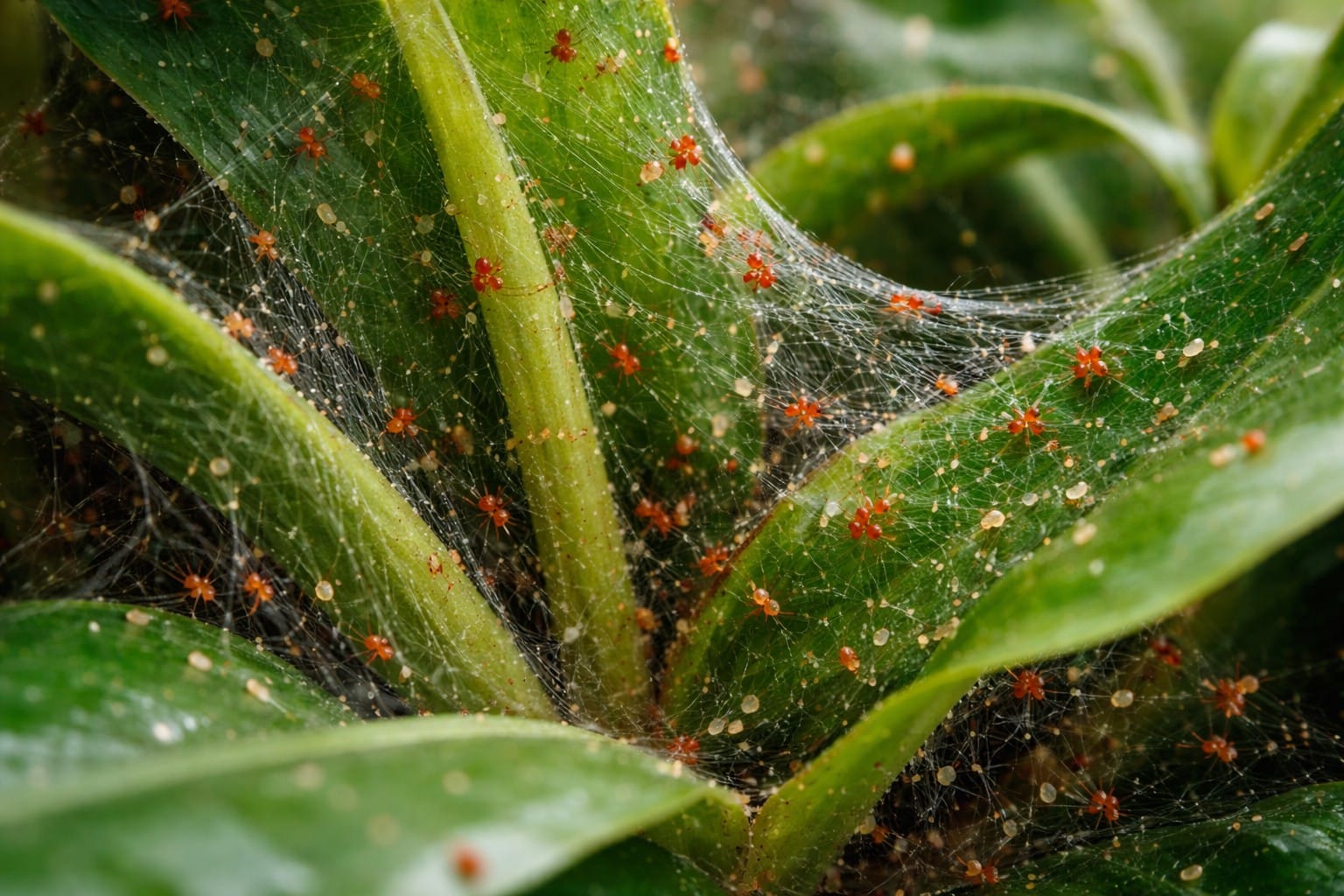
Spider mites on houseplants are one of the most common and frustrating indoor plant problems. These tiny pests are easy to miss at first, but they can quickly weaken, damage, and even kill houseplants if left untreated. Many plant owners mistake spider mite damage for dry air stress or nutrient issues, which allows the infestation to grow worse over time.
This complete guide explains everything you need to know about spider mites on houseplants, including what they are, how to spot them early, why they appear, which plants they attack most, step-by-step treatment methods, natural and chemical solutions, common mistakes, prevention tips, and expert care advice to keep your plants healthy long-term.
What Are Spider Mites
Spider mites are tiny sap-sucking pests, not insects but arachnids, related to spiders and ticks. They are usually red, brown, yellow, or green and are so small that they often look like moving dust.
Key facts about spider mites:
- Size: Less than 1 mm
- Live on the underside of leaves
- Feed by piercing plant cells and sucking sap
- Multiply extremely fast in warm, dry conditions
- Produce fine webbing on plants
Because of their fast reproduction cycle, a small problem can turn into a full infestation within days.
How Spider Mites Damage Houseplants
Spider mites damage plants by draining nutrients from leaf cells. Each bite kills plant cells, leading to visible stress and decline.
Common damage includes:
- Pale or yellow speckled leaves
- Fine white or yellow dots on leaf surfaces
- Dry, crispy leaf edges
- Leaf curling or distortion
- Leaf drop in severe cases
- Thin webbing between leaves and stems
Over time, the plant becomes weak, stops growing, and becomes more vulnerable to disease.
Early Signs of Spider Mites on Houseplants
Catching spider mites early makes treatment much easier.
Early warning signs include:
- Tiny light-colored dots on leaves
- Leaves looking dusty or dull
- Slight webbing near leaf joints
- Slowed growth
- Leaves losing shine
A simple test is to hold a white paper under a leaf and tap it. If tiny specks fall and start moving, spider mites are likely present.
Advanced Signs of Spider Mite Infestation
If untreated, spider mite infestations become severe.
Advanced symptoms include:
- Heavy webbing covering leaves
- Leaves turning yellow or bronze
- Multiple leaves dropping at once
- Entire plant looking dry and stressed
- Visible mites crawling on leaves
At this stage, immediate and aggressive treatment is required.
Why Spider Mites Appear on Houseplants
Spider mites thrive in specific indoor conditions.
Main causes include:
- Dry indoor air
- Warm temperatures
- Poor air circulation
- Dusty leaves
- Weak or stressed plants
- Plants placed near heaters or vents
Indoor environments during winter are especially favorable for spider mites due to low humidity.
Houseplants Most Affected by Spider Mites
While spider mites can attack almost any plant, some are more vulnerable.
Common targets include:
- Calathea and prayer plants
- Alocasia and elephant ear plants
- Fiddle leaf fig
- Hibiscus
- Ivy
- Palms
- Roses
- Croton
Plants with thin or soft leaves are especially attractive to spider mites.
How to Get Rid of Spider Mites on Houseplants
Step 1: Isolate the Plant
Immediately move the infected plant away from others. Spider mites spread quickly and easily.
Isolation prevents the infestation from spreading to healthy plants.
Step 2: Rinse the Plant Thoroughly
Rinsing removes a large number of mites.
How to do it:
- Use lukewarm water
- Spray both sides of leaves
- Focus on leaf undersides
- Repeat every few days
This step alone can significantly reduce mite populations.
Step 3: Prune Heavily Infested Leaves
Remove leaves that are badly damaged or covered in webbing.
Benefits of pruning:
- Reduces mite population
- Improves airflow
- Helps the plant recover faster
Dispose of pruned leaves in sealed bags.
Step 4: Use Insecticidal Soap
Insecticidal soap is one of the most effective treatments.
How it works:
- Breaks down mite exoskeletons
- Safe for most houseplants
- Requires direct contact
Spray thoroughly every 5–7 days for at least 3 weeks.
Step 5: Neem Oil Treatment
Neem oil is a natural and widely used solution.
Benefits:
- Kills mites
- Disrupts reproduction
- Acts as a preventative
Mix according to instructions and spray leaves, especially undersides.
Step 6: Increase Humidity
Spider mites hate humidity.
Ways to increase humidity:
- Use a humidifier
- Group plants together
- Place plants on pebble trays
- Mist regularly (short-term help)
Higher humidity slows mite reproduction.
Natural Home Remedies for Spider Mites
Several household solutions can help when used correctly.
Popular natural options:
- Neem oil spray
- Rubbing alcohol diluted with water
- Mild dish soap solution
- Garlic spray
Always test sprays on one leaf first to avoid plant damage.
Chemical Treatments for Severe Infestations
For severe infestations, stronger treatments may be needed.
Options include:
- Miticides specifically labeled for spider mites
- Systemic treatments (use cautiously indoors)
Always follow label instructions carefully and ensure good ventilation.
How Long Does It Take to Eliminate Spider Mites
Spider mites are stubborn.
Typical timeline:
- Mild infestations: 2–3 weeks
- Moderate infestations: 3–5 weeks
- Severe infestations: 6+ weeks
Consistency is more important than strength. Missing treatments allows mites to return.
Common Mistakes When Treating Spider Mites
Avoid these common errors:
- Treating only once
- Ignoring leaf undersides
- Not isolating infected plants
- Using strong chemicals too quickly
- Forgetting to clean nearby surfaces
Spider mite eggs are resistant to many treatments, so repeated applications are necessary.
Preventing Spider Mites on Houseplants
Prevention is easier than treatment.
Best prevention practices:
- Maintain humidity above 50%
- Regularly wipe leaves
- Inspect plants weekly
- Quarantine new plants
- Avoid placing plants near heat sources
- Keep plants healthy and well-watered
Healthy plants are far less attractive to pests.
Cleaning the Surrounding Area
Spider mites can hide nearby.
Clean:
- Window sills
- Shelves
- Pots
- Plant stands
Use mild soap or alcohol solutions to reduce reinfestation.
Are Spider Mites Harmful to Humans or Pets
Spider mites are not harmful to humans or pets. They do not bite people or animals and are strictly plant pests.
Can Houseplants Recover From Spider Mites
Yes, most plants can recover fully if treated early.
Recovery tips:
- Remove damaged leaves
- Resume proper watering
- Provide good light
- Fertilize lightly after infestation is gone
New healthy growth is a sign of successful recovery.
Frequently Asked Questions
Spider mites are more common in dry indoor air. Misting alone is not enough to control infestations. Neem oil and insecticidal soap are among the safest treatments. Spider mites can return if humidity remains low. Regular inspections are key to prevention.
Final Thoughts
Spider mites on houseplants can be frustrating, but they are completely manageable with the right approach. Early detection, consistent treatment, proper humidity, and good plant care are the keys to success. Instead of reacting in panic, focus on steady, repeated action.
By understanding how spider mites live and spread, you can protect your houseplants, restore damaged ones, and prevent future infestations. With patience and consistency, even heavily affected plants can bounce back and thrive again indoors.