
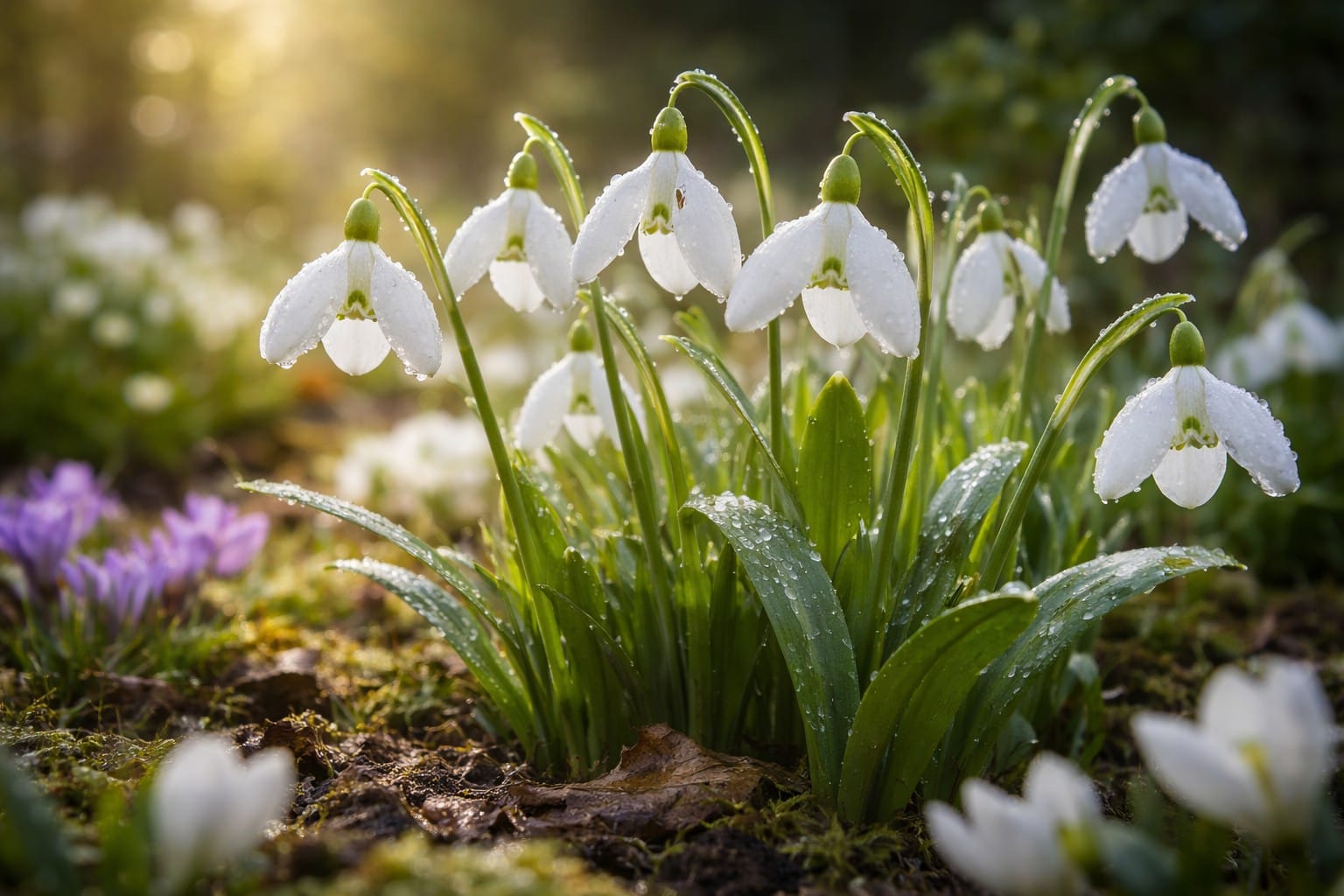
The snowdrop flower, scientifically known as Galanthus, is one of the earliest signs of spring and a symbol of hope, purity, and renewal. Known for its delicate white bell-shaped flowers that emerge even through the snow, snowdrops are treasured by gardeners, nature lovers, and flower enthusiasts worldwide. These resilient little flowers are not only beautiful but also hardy, low-maintenance, and ideal for naturalizing in gardens.
This detailed guide covers everything about snowdrop flowers, including their symbolism, types, planting and care, growing conditions, propagation, common problems, companion planting, uses, and expert tips, providing a complete resource for gardeners and flower lovers.
What Is a Snowdrop Flower
Snowdrops are small perennial bulbs belonging to the genus Galanthus in the Amaryllidaceae family. They typically bloom in late winter to early spring, often while snow still blankets the ground, which is how they got their name.
Key characteristics:
- Flowers: White, nodding, bell-shaped, usually with a green marking on the inner petals
- Height: 3–6 inches (small and delicate)
- Leaves: Narrow, gray-green, grass-like
- Growth habit: Clumping bulbs that naturalize over time
Snowdrops are native to Europe and the Middle East, particularly in woodland areas, meadows, and riverbanks. They thrive in temperate climates and are a favorite in shade gardens, woodland borders, and naturalized lawns.
Snowdrop Flower Meaning and Symbolism
Snowdrops carry deep symbolic meaning, often representing:
- Hope and renewal – first blooms of spring after winter
- Purity and innocence – white color symbolizes cleanliness and simplicity
- Consolation and sympathy – flowers often used in memorial gardens
- Resilience – ability to bloom through frost and snow
Culturally, snowdrops are considered good luck, especially when planted near the home. They are also associated with new beginnings and courage, making them a meaningful addition to gardens and floral arrangements.
Popular Snowdrop Varieties
There are more than 20 species and hundreds of cultivars of snowdrops, offering variations in flower shape, size, and bloom time.
1. Galanthus nivalis (Common Snowdrop)
- Most widespread and well-known
- Pure white, drooping flowers
- Blooms in late winter
2. Galanthus elwesii (Giant Snowdrop)
- Larger flowers than the common snowdrop
- Can grow up to 6 inches tall
- Strong fragrance
3. Galanthus plicatus
- Distinctive folded leaves
- Early to mid-winter blooming
- Often used in woodland gardens
4. Galanthus ‘S. Arnott’
- Popular hybrid cultivar
- Large, pure white flowers
- Reliable early bloom
5. Galanthus ‘Atkinsii’
- Small, compact variety
- Ideal for pots and rock gardens
- Blooms mid-winter
These varieties allow gardeners to create a layered snowdrop display, with staggered bloom times extending the early spring flowering season.
When Do Snowdrops Bloom
- Snowdrops typically bloom from January to March, depending on climate and species
- Blooms appear even through snow, adding early color to winter gardens
- Peak bloom usually lasts 2–3 weeks, with staggered cultivars prolonging display
Ideal Growing Conditions
Snowdrops are hardy and adaptable, but they flourish best with:
- Sunlight: Partial shade to full shade, especially under deciduous trees
- Soil: Moist, well-draining soil rich in organic matter
- Temperature: Cold winter period encourages flowering
- Watering: Consistently moist soil, particularly during active growth
Snowdrops naturally thrive in woodland conditions, making shade gardens, forested borders, and naturalized lawns ideal settings.
How to Plant Snowdrops
Planting snowdrops correctly ensures healthy growth and reliable blooms.
Planting Time
- Plant bulbs in autumn, about 2–3 months before the first frost
- Soil should be cool but not frozen
Planting Steps
- Select a shady or partially shaded location
- Prepare soil by adding compost or leaf mold for fertility and moisture retention
- Plant bulbs 3 inches deep with pointed ends facing up
- Space bulbs 3 inches apart to allow clumping over time
- Water thoroughly after planting
Snowdrops can also be planted under trees, along pathways, or in rock gardens for naturalized effect.
Soil Requirements
- Snowdrops prefer loamy, well-draining soil
- Neutral to slightly acidic pH is ideal
- Mulching with leaf litter mimics woodland conditions and maintains soil moisture
- Avoid waterlogged or compacted soil, which can lead to bulb rot
Watering Snowdrops
- Keep soil evenly moist during growth and flowering
- Reduce watering after flowering and allow foliage to die back naturally
- Avoid wetting leaves excessively, which can promote fungal diseases
Snowdrops’ natural habitats are moist forest floors, so consistent moisture is key.
Fertilizing Snowdrops
- Snowdrops are light feeders
- Apply bulb fertilizer or well-rotted compost in autumn at planting
- Top-dress with compost in spring after flowering to replenish nutrients
- Avoid heavy nitrogen fertilizer, which encourages foliage over flowers
Snowdrop Care After Blooming
Proper post-bloom care ensures healthy bulbs and future blooms:
- Allow foliage to die back naturally; it feeds the bulb for next season
- Remove dead leaves after they yellow
- Divide crowded clumps every 3–5 years in late spring or early summer
- Mulch lightly for protection in colder regions
Propagation
- By bulbs: Divide clumps after foliage dies back
- By seed: Possible but slow; germination can take several years
- Division is the most reliable method for maintaining flower quality
Common Problems
1. Poor Blooming
- Cause: Bulbs planted too shallow or in too much sun
- Solution: Plant in partial shade at correct depth
2. Bulb Rot
- Cause: Waterlogged soil
- Solution: Improve drainage, use raised beds if needed
3. Pests
- Slugs and snails may eat foliage
- Rodents may dig bulbs in garden beds
- Protect with barriers or natural deterrents
4. Diseases
- Fungal leaf spot or mold
- Ensure good airflow and avoid overcrowding
Companion Planting
Snowdrops pair beautifully with other early spring bloomers:
- Crocus for vibrant color contrast
- Winter aconites for bright yellow contrast
- Hellebores for prolonged bloom season
- Ferns and hostas for woodland foliage
These combinations create a naturalized, layered, and aesthetically pleasing spring garden.
Uses of Snowdrop Flowers
- Gardens: Woodland gardens, borders, rockeries, naturalized lawns
- Containers: Ideal for pots in shaded areas
- Cut flowers: Small but elegant in miniature bouquets
- Pollinator gardens: Attract early bees and insects
- Symbolic uses: Represent hope, purity, and renewal in floral displays
Frequently Asked Questions
Are snowdrops hardy?
Yes, they are extremely cold-hardy and bloom even through snow.
How long do snowdrops live?
Bulbs can live and naturalize for decades with proper care.
Can snowdrops be grown indoors?
Yes, in pots with cool, bright but indirect light and consistent moisture.
Do snowdrops need fertilization every year?
Light feeding with compost is enough; heavy fertilizer is unnecessary.
How do I extend snowdrop bloom time?
Plant multiple cultivars with staggered bloom periods and provide consistent moisture.
Final Thoughts
The snowdrop flower (Galanthus) is a true herald of spring, offering delicate beauty, resilience, and symbolic significance. Its pure white, nodding blooms emerging through winter snow are a reminder of hope, renewal, and the persistence of life.
By providing shade, moisture, well-draining soil, and minimal care, gardeners can enjoy snowdrops year after year. Naturalizing them in lawns, woodland gardens, or shaded borders allows these magical flowers to spread, creating carpets of early spring wonder.
Whether admired for their elegance, photographed for their charm, or shared as symbolic gifts, snowdrops remain one of the most enchanting and rewarding flowers to grow.