
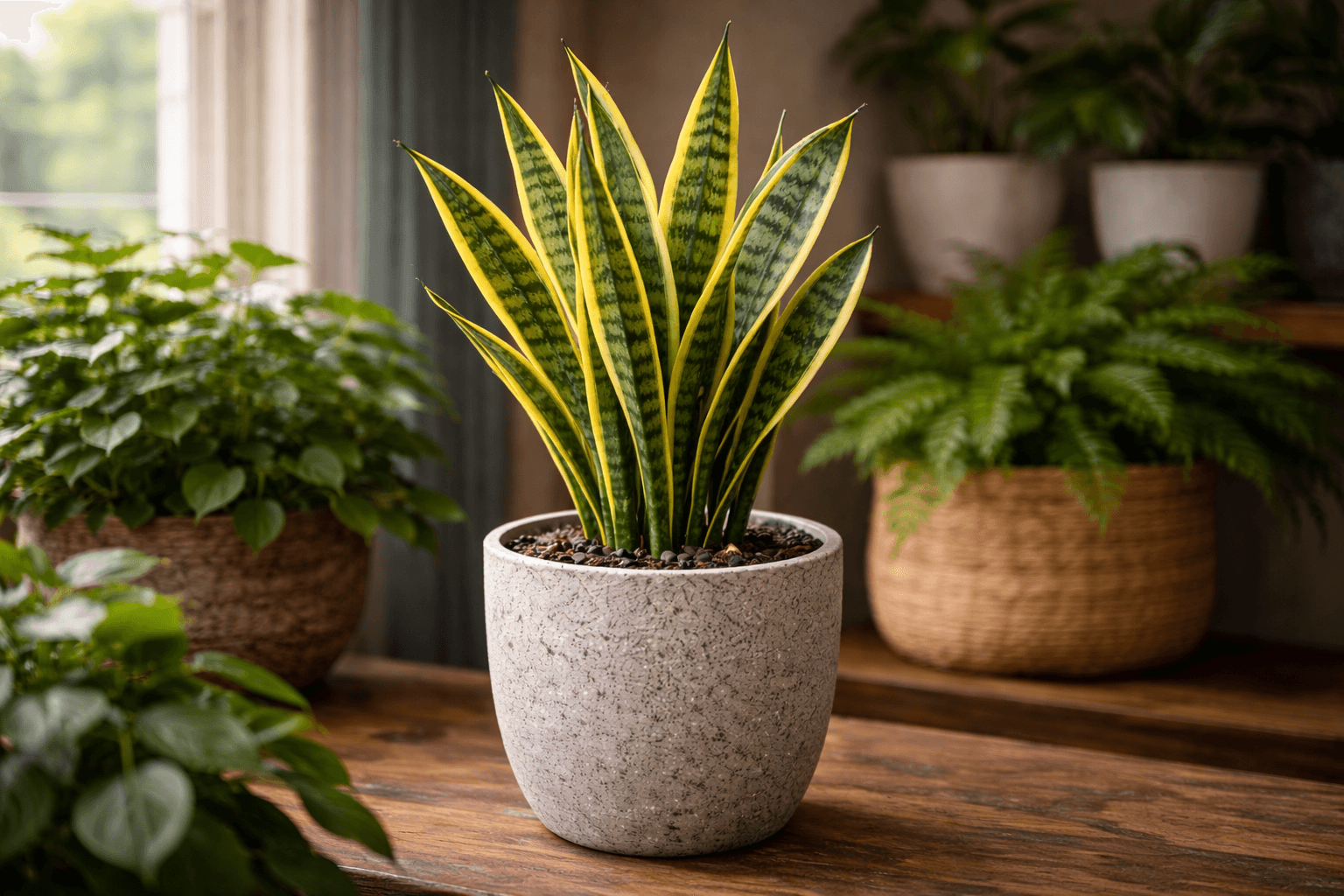
The snake plant is one of the most popular and reliable houseplants in the world. Known for its bold upright leaves, air-purifying qualities, and extreme toughness, the snake plant is perfect for beginners and busy plant owners. It survives neglect, low light, and irregular watering better than most plants, yet still looks clean, modern, and attractive.
This complete guide covers everything about the snake plant, including its meaning, benefits, types, care instructions, watering schedule, light needs, common mistakes, propagation, pet safety, and frequently asked questions. By the end, you’ll know exactly why the snake plant is considered one of the best indoor plants ever.
What Is a Snake Plant?
The snake plant, also called Sansevieria or Dracaena trifasciata, is a hardy indoor plant native to Africa. It gets its common name from its long, stiff, sword-like leaves that resemble snakes standing upright.
Snake plants are loved for their architectural shape and ability to thrive in almost any indoor environment. They are slow-growing but long-living plants that can stay healthy for many years with minimal care.
Key features of snake plants include:
- Tall, upright leaves
- Thick, fleshy leaf structure
- Green leaves with light striping or yellow edges
- Strong tolerance to low light and drought
Meaning and Symbolism of Snake Plant
Snake plants carry strong symbolic meanings in many cultures:
- Protection and strength
- Good luck and positive energy
- Resilience and endurance
- Clean air and health
In Feng Shui, snake plants are believed to absorb negative energy and promote focus, stability, and growth. They are often placed near entrances or workspaces for protection and productivity.
Benefits of Snake Plant
Excellent Air Purifier
Snake plants are known for their air-cleaning abilities. They help remove toxins like formaldehyde, benzene, and xylene from indoor air.
Unlike most plants, snake plants also release oxygen at night, making them a good option for bedrooms.
Extremely Low Maintenance
Snake plants thrive on neglect. They require:
- Infrequent watering
- Minimal fertilizing
- Low to bright indirect light
This makes them ideal for beginners, travelers, and busy households.
Improves Indoor Aesthetics
With their upright growth and sharp leaf lines, snake plants add a modern, clean look to any room. They work well in minimalist, contemporary, and office spaces.
Drought Tolerant
The thick leaves store water, allowing the plant to survive long periods without watering. Overwatering is more dangerous than underwatering for snake plants.
Types of Snake Plants
There are many varieties of snake plants, each with a unique look.
Sansevieria Trifasciata
This is the most common type.
Features include:
- Tall green leaves
- Light gray or silver striping
- Hardy and adaptable
Snake Plant Laurentii
A popular decorative variety.
Key traits:
- Yellow edges along the leaves
- Strong upright growth
- Brightens indoor spaces
Snake Plant Zeylanica
Known for its softer look.
Characteristics:
- Dark green leaves
- Wavy light-green patterns
- More compact growth
Snake Plant Moonshine
A modern favorite.
Features include:
- Silvery-green leaves
- Smooth texture
- Bright appearance in low light
Bird’s Nest Snake Plant
A shorter, compact variety.
Traits include:
- Rosette-style growth
- Short, wide leaves
- Perfect for desks and shelves
How to Care for a Snake Plant
Snake plants are easy to care for, but the right conditions help them thrive.
Light Requirements
Snake plants adapt to many light levels.
Best conditions:
- Bright indirect light for fastest growth
- Tolerates low light
- Avoid harsh direct sunlight
Low light slows growth but does not harm the plant.
Watering Schedule
Watering is the most important part of snake plant care.
Guidelines:
- Water only when soil is completely dry
- Every 2–4 weeks, depending on climate
- Less often in winter
Overwatering can cause root rot, which is the most common snake plant problem.
Soil Requirements
Snake plants need fast-draining soil.
Best soil mix:
- Cactus or succulent mix
- Added perlite or sand for drainage
Avoid heavy, moisture-retaining soil.
Temperature and Humidity
Ideal conditions include:
- Temperature between 60–85°F
- Normal indoor humidity
- Protect from frost and cold drafts
Snake plants prefer warmth but tolerate typical indoor conditions well.
Fertilizing Snake Plants
Snake plants do not need frequent feeding.
Fertilizer tips:
- Feed once or twice during spring and summer
- Use a balanced, diluted fertilizer
- Do not fertilize in winter
Too much fertilizer can damage roots and leaves.
Common Snake Plant Problems and Mistakes
Even tough plants can struggle if basic care rules are ignored.
Common mistakes include:
- Overwatering
- Poor drainage
- Keeping soil constantly wet
- Exposure to freezing temperatures
- Over-fertilizing
Signs of trouble:
- Yellowing leaves
- Mushy or soft base
- Leaf drooping or curling
Fixing watering habits usually solves most issues.
How to Propagate Snake Plant
Snake plants are easy to propagate.
Propagation by Leaf Cuttings
Steps:
- Cut a healthy leaf into sections
- Let cut ends dry for a day
- Plant in well-draining soil
- Water lightly
New growth may take several weeks.
Propagation by Division
This is the fastest method.
Steps:
- Remove plant from pot
- Separate root clusters
- Repot into new containers
Division ensures new plants grow true to the parent variety.
Snake Plant in Pots and Containers
Snake plants grow very well in pots.
Tips for pot selection:
- Use pots with drainage holes
- Choose heavy pots for tall plants
- Avoid oversized containers
Terracotta pots work especially well because they help soil dry faster.
Is Snake Plant Safe for Pets?
Snake plants are toxic to cats and dogs if ingested.
Possible symptoms include:
- Nausea
- Vomiting
- Drooling
Keep snake plants out of reach of pets or choose pet-safe alternatives if needed.
Best Places to Keep a Snake Plant Indoors
Snake plants are versatile and fit many spaces.
Ideal locations include:
- Living rooms
- Bedrooms
- Offices
- Hallways
- Entryways
They handle low light but look best in bright, indirect light.
Interesting Facts About Snake Plant
- Snake plants can live for decades
- They are also called “mother-in-law’s tongue”
- They were once classified as Sansevieria
- They are native to dry regions of Africa
- They are one of the toughest indoor plants
FAQs About Snake Plants
Q: How often should I water a snake plant?
A: Only when the soil is fully dry, usually every 2–4 weeks.
Q: Can snake plants survive low light?
A: Yes, they tolerate low light very well.
Q: Do snake plants grow fast?
A: They are slow to moderate growers.
Q: Can snake plants grow outdoors?
A: Yes, in warm climates without frost.
Q: Why are my snake plant leaves falling over?
A: This is usually caused by overwatering or root rot.
Final Thoughts
The snake plant is a nearly perfect houseplant. It is strong, adaptable, stylish, and incredibly easy to care for. Whether you are a beginner just starting your plant journey or an experienced plant lover looking for a low-maintenance option, the snake plant delivers beauty and benefits with minimal effort. Its air-purifying qualities, bold appearance, and long lifespan make it a timeless favorite for homes and offices alike. If you want a plant that thrives where others fail, the snake plant is an excellent choice.