
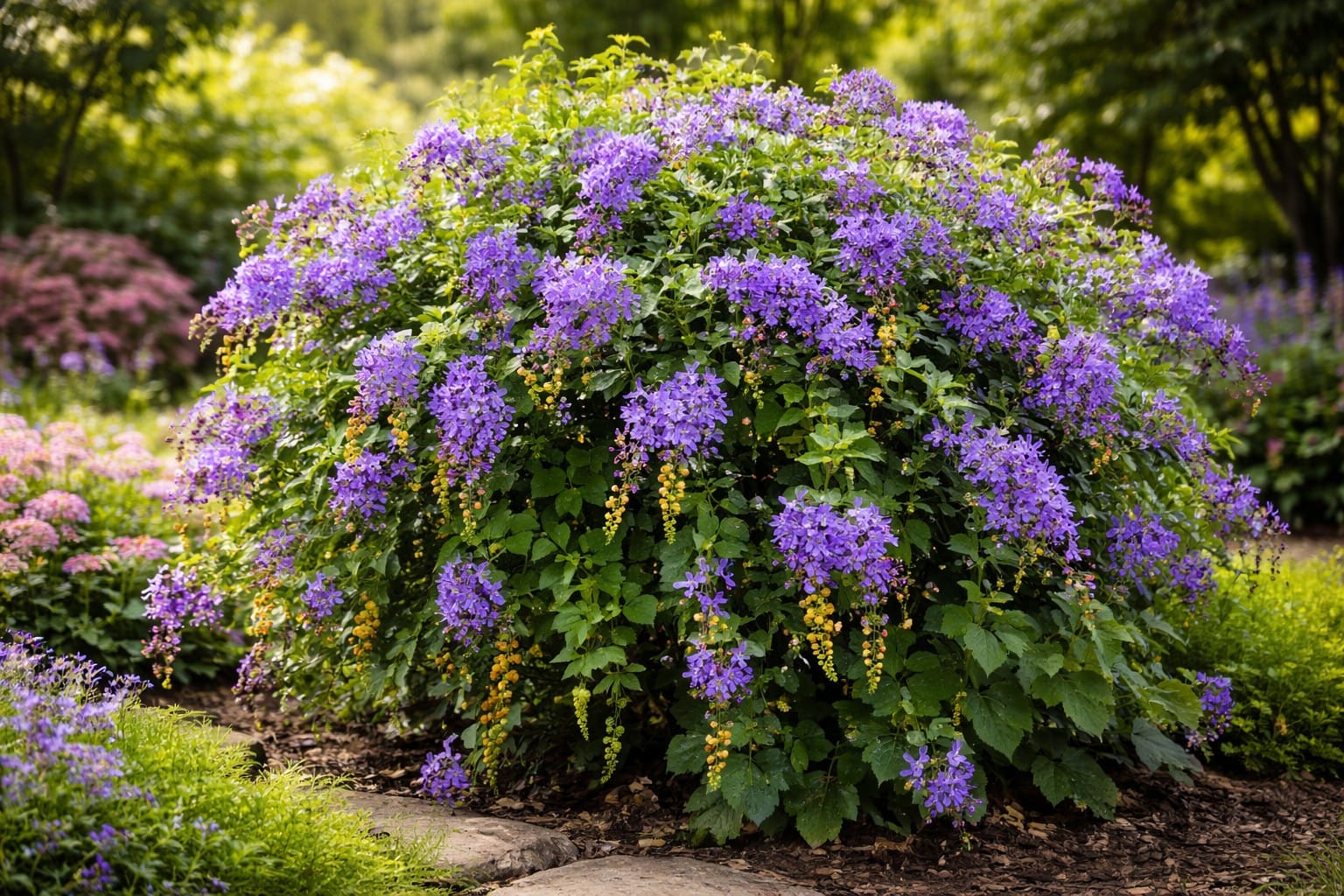
The Sky Flower Plant, also commonly known as Duranta erecta or Golden Dewdrop, is a tropical and subtropical shrub prized for its vibrant blue or purple flowers, ornamental foliage, and bright berries. It is widely used in gardens, borders, and hedges for its showy blooms and ability to attract pollinators like butterflies and bees. Sky Flower is a versatile plant that can be grown in pots, landscapes, or as a decorative shrub.
This comprehensive guide covers everything you need to know about Sky Flower plants, including varieties, planting, care, pruning, propagation, pests, and expert tips to maximize bloom and growth.
What Is a Sky Flower Plant
Sky Flower (Duranta erecta) is a fast-growing, evergreen shrub or small tree. It is native to Central and South America but is widely cultivated in tropical and subtropical gardens around the world.
Key characteristics:
Bright blue or purple flowers clustered on the branches
Golden yellow berries that attract birds
Glossy green foliage that may turn bronze or purple in sun
Moderate to fast growth
Can be trained as a hedge, shrub, or small tree
The plant is often used for ornamental purposes, including hedges, borders, or accent plants in garden designs.
Symbolism and Uses
Sky Flower has both aesthetic and ecological importance.
Symbolism and uses:
Beauty and tranquility in gardens
Attracts pollinators such as bees, butterflies, and hummingbirds
Berries provide food for birds (note: berries are toxic to humans and pets if ingested)
Used in landscaping for hedges, borders, and focal points
Can be grown in containers or as bonsai in tropical climates
Its bright flowers and berries make it an excellent choice for ornamental planting.
Popular Varieties of Sky Flower
Several varieties of Sky Flower are cultivated for garden use:
Duranta erecta ‘Gold Mound’
Compact, golden foliage
Violet-blue flowers
Ideal for borders and low hedges
Duranta erecta ‘Sapphire Showers’
Trailing habit, great for hanging baskets or cascading over walls
Bright blue flowers
Tropical appearance
Duranta erecta ‘Variegata’
Variegated green and yellow leaves
Blue flowers and yellow berries
Adds contrast in mixed plantings
Duranta erecta ‘Geisha Girl’
Small-leaved, compact form
Blue flowers and golden berries
Perfect for container growth
Why Grow Sky Flower Plants
Sky Flower plants offer multiple benefits for gardeners:
Bright, long-lasting blooms
Attractive berries and foliage
Fast-growing and easy to shape
Attracts pollinators
Versatile for hedges, containers, or borders
Low-maintenance once established
Its combination of flowers, foliage, and berries makes it visually striking year-round.
Sun Requirements
Sky Flower thrives in full sun to partial shade:
Full sun: 6–8 hours of sunlight per day
Partial shade tolerated but may reduce flowering
More sun encourages vibrant flower color and berry production
Adequate sunlight is essential for abundant blooms.
Soil Requirements
Sky Flower is adaptable but performs best in well-draining, fertile soil:
Loamy or sandy soil preferred
Slightly acidic to neutral pH
Add compost or organic matter for nutrients
Avoid waterlogged or heavy clay soils
Healthy soil encourages fast growth and better flowering.
Planting Sky Flower
Proper planting ensures strong establishment and long-term health:
Choose a sunny location with well-draining soil
Dig a hole slightly larger than the root ball
Plant at the same depth as in nursery pots
Water thoroughly after planting
Apply mulch around the base to retain moisture
Space plants adequately if planting multiple shrubs for hedges or borders.
Watering Sky Flower Plants
Sky Flower plants prefer moderate watering, especially during establishment:
Water deeply after planting
Maintain consistent moisture for the first 6–8 weeks
Once established, reduce frequency — drought-tolerant for short periods
Container plants require more frequent watering
Avoid overwatering, which can lead to root rot.
Fertilizing
Balanced feeding promotes growth and flowering:
Apply a balanced, slow-release fertilizer in spring
Liquid fertilizer can be used every 4–6 weeks during growing season
High phosphorus fertilizers help enhance flower production
Avoid over-fertilizing, which can encourage excessive leafy growth at the expense of blooms
Organic compost or well-rotted manure can also improve soil quality.
Blooming Season
Sky Flower blooms spring through fall, depending on climate:
Vibrant blue or purple flowers appear in clusters
Flowering peaks in warm months with adequate sunlight
Regular pruning encourages more flowers and a compact shape
The flowers are followed by bright yellow berries, adding visual interest.
Pruning and Training
Pruning helps maintain shape and encourages flowering:
Trim back overgrown stems to shape plant
Remove dead or damaged branches
Prune after flowering for rejuvenation
Can be trained as a hedge, small tree, or cascading shrub
Regular pruning ensures a tidy, attractive plant.
Propagation
Sky Flower can be propagated from seeds or cuttings:
Stem Cuttings
Take semi-hardwood cuttings
Plant in moist, well-draining soil
Keep in partial shade until roots develop
Seeds
Harvest seeds from ripe berries
Plant in seed-starting mix
Germination may take several weeks
Cuttings are faster and more reliable for consistent flower color.
Common Problems and Solutions
Pests
Aphids, whiteflies, spider mites
Use neem oil, insecticidal soap, or manual removal
Yellowing Leaves
Overwatering or nutrient deficiency
Adjust watering and fertilize appropriately
Poor Flowering
Insufficient sunlight or pruning at wrong time
Provide full sun and prune after blooms
Fungal Diseases
Powdery mildew or leaf spots
Ensure good airflow and avoid overhead watering
Companion Planting
Sky Flower pairs well with:
Hibiscus or Bougainvillea for tropical look
Ornamental grasses for texture contrast
Other flowering shrubs for color variety
Ground covers beneath taller shrubs for layered effect
This creates a dynamic, visually appealing garden.
Container Gardening
Sky Flower grows well in pots and hanging baskets:
Use large containers with drainage holes
Well-draining potting soil essential
Provide adequate sunlight and water
Regular pruning helps maintain compact growth
Ideal for patios, balconies, or tropical-themed container gardens.
Frequently Asked Questions
Is Sky Flower toxic
Yes, berries are toxic to humans and pets if ingested
Does it attract pollinators
Yes, attracts bees, butterflies, and birds
How tall does Sky Flower grow
Can grow 6–10 feet tall in gardens; compact varieties smaller
Can it be grown indoors
Yes, if bright light and warmth are available
How often should I water
Moderate watering — more frequent for containers
Expert Tips
Provide full sun for best flowering
Ensure well-draining soil
Prune regularly for shape and more blooms
Feed during growing season for vibrant flowers
Watch for pests and treat promptly
Final Thoughts
The Sky Flower plant (Duranta erecta) is a striking, fast-growing, and versatile flowering shrub perfect for tropical, subtropical, or container gardens. Its vibrant blue or purple blooms, golden berries, and glossy foliage make it a standout plant for hedges, borders, and ornamental designs.
With proper sunlight, well-draining soil, moderate watering, and careful pruning, Sky Flower rewards gardeners with long-lasting color, pollinator-friendly flowers, and year-round appeal, making it a must-have for vibrant and dynamic gardens.