
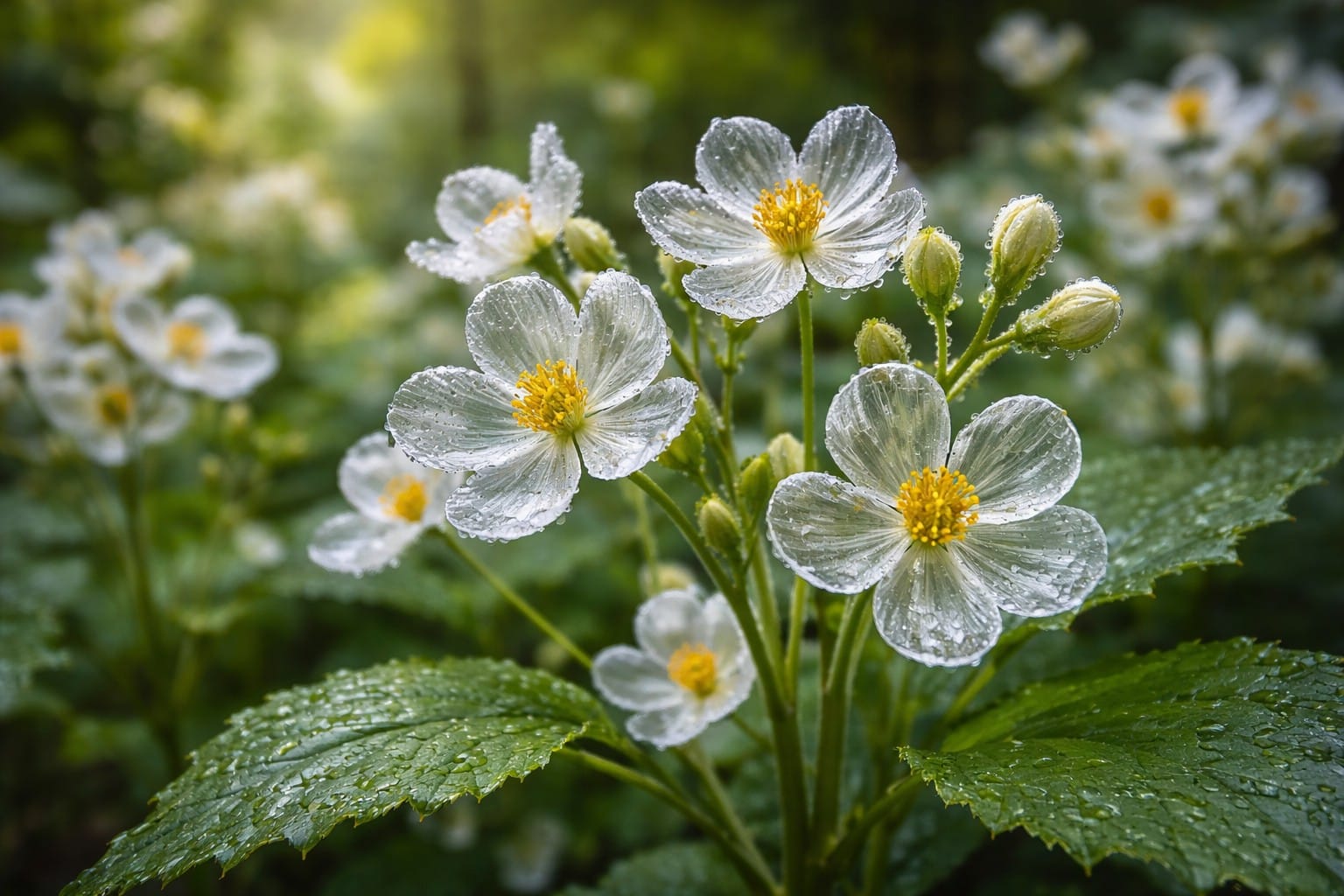
The skeleton flower, scientifically known as Diphylleia grayi, is one of the most fascinating and rare flowers in the world. It gets its name from its unique petals that turn transparent when wet, creating a ghostly, skeletal appearance. Native to the mountains of Japan and China, this flower has captured the imagination of gardeners, nature enthusiasts, and photographers for its magical, almost supernatural beauty.
This comprehensive guide covers everything about the skeleton flower, including its meaning and symbolism, appearance, growing requirements, planting, care, common problems, uses, and expert tips, so you can appreciate or even grow this rare wonder in your own garden.
What Is the Skeleton Flower
The skeleton flower (Diphylleia grayi) is a perennial plant in the Berberidaceae family. It grows naturally in cool, shaded mountain regions, often along streams and in moist forests. What makes it unique is its white petals that become translucent when exposed to water, revealing the delicate veins and giving the flower a ghostly, skeletal look.
Skeleton flowers grow from rhizomes and form a low, leafy clump with broad, umbrella-shaped leaves. The flowers bloom in late spring and early summer and are relatively small, usually 1 to 2 inches across, but their striking translucence makes them unforgettable.
Skeleton Flower Meaning and Symbolism
Due to its unique appearance, the skeleton flower carries rich symbolism:
- Purity and clarity – the petals’ translucent nature symbolizes transparency and honesty
- Fragility and impermanence – it reminds us of fleeting moments and life’s delicate beauty
- Mystery and wonder – its magical transformation evokes awe and fascination
- Resilience and adaptability – it thrives in harsh, shaded mountain conditions
The skeleton flower is often featured in gardens and photography to represent ethereal beauty and fleeting natural moments.
Appearance and Growth Habit
The skeleton flower has distinctive features:
- Petals – white, turning transparent when wet; each flower has 4 petals
- Leaves – broad, umbrella-shaped, deep green
- Height – grows 12–18 inches tall
- Spread – forms small clumps of rhizomes, which can slowly expand
- Blooms – appear in late spring to early summer, small but eye-catching
The flower’s transformation under rain or dew is its most iconic feature, making it a conversation piece in any garden.
Native Habitat and Hardiness
- Native regions: Japan, China, and some parts of the Himalayan mountains
- Climate: cool, humid, temperate mountain regions
- Hardiness zones: USDA zones 4–7
- Shade tolerance: thrives in deep shade under trees or forest canopies
Skeleton flowers are naturally adapted to cool, shaded, and moist environments, so replicating these conditions is key to successful cultivation.
Planting Skeleton Flowers
Skeleton flowers are rare, but can be grown under careful conditions.
Best Time to Plant
- Plant rhizomes in early spring or fall
- Avoid extremely hot or dry periods
Step-by-Step Planting
- Choose a shady or partially shaded location, preferably under trees or along shaded borders.
- Prepare moist, rich, and well-draining soil, adding organic compost.
- Dig a hole slightly larger than the rhizome.
- Place the rhizome horizontally with buds facing up.
- Cover lightly with soil, keeping the crown just below soil surface.
- Water gently to settle the soil.
Container Growing
- Skeleton flowers can also grow in large, shaded containers.
- Use deep pots with well-draining potting mix.
- Provide consistent moisture and shelter from direct sunlight.
Soil Requirements
Skeleton flowers prefer:
- Moist, rich soil with high organic content
- Slightly acidic to neutral pH
- Excellent drainage to prevent rhizome rot
- Avoid heavy clay or waterlogged soil
Mulching with leaf litter mimics its natural forest floor habitat and retains moisture.
Watering Needs
- Keep soil consistently moist, especially during growth and flowering
- Avoid drying out completely
- Water gently to prevent soil compaction
- During dry spells, increase humidity around the plant using mulch or misting
Its unique petals only display the skeletal effect when moisture is present, so proper watering enhances its visual magic.
Fertilizing Skeleton Flowers
- Skeleton flowers are light feeders
- Apply compost or organic fertilizer in early spring
- Avoid excessive nitrogen, which promotes foliage over flowers
- Once established, the plant thrives with minimal fertilization
Skeleton Flower Care
Proper care ensures blooms and plant longevity:
- Shade: Always plant in partial to full shade
- Mulching: Use leaves or bark to retain moisture
- Pruning: Remove dead leaves after flowering to maintain healthy growth
- Winter care: Protect rhizomes with extra mulch in colder zones
Unlike many ornamental flowers, skeleton flowers are low-maintenance once established but sensitive to heat and drought.
Flowering and Bloom Time
- Bloom season: Late spring to early summer (May–June)
- Flower size: 1–2 inches wide
- Unique trait: Petals turn transparent when wet
- Blooms are short-lived individually, but rhizomes produce multiple flowers over several weeks
Propagation
- By seeds: Rare and slow; seeds require stratification (cold treatment)
- By rhizome division: Most reliable and fastest method
- Divide clumps in early spring or fall
- Replant divisions in shaded, moist soil
Propagation requires patience but ensures the magical characteristic of the flower is preserved.
Common Problems
- Heat stress: Leaves may wilt in direct sun
- Drought: Petals lose their translucent effect without moisture
- Pests: Slugs and snails may eat leaves
- Fungal disease: Root rot can occur in poorly drained soil
Prevention: Shade, consistent moisture, good airflow, and mulching.
Uses of Skeleton Flowers
- Gardens: Ideal for shade gardens, woodland-themed landscapes, or along streams
- Photography: Petals turning transparent under rain make it a favorite subject
- Educational purposes: Demonstrates unique adaptations in plants
- Pollinator-friendly: Flowers attract bees and small insects
Skeleton flowers are ornamental and ecological treasures, rather than plants grown for food.
Companion Planting
Good companions include:
- Ferns for added texture
- Hostas for foliage contrast
- Astilbes for shade-loving perennials
- Woodland wildflowers for naturalistic settings
Pairing creates a lush, forest-like garden bed that mimics its native habitat.
Frequently Asked Questions
Do skeleton flowers survive hot climates?
No, they prefer cool, shaded environments. Extreme heat can stress the plant.
How long do the flowers stay transparent?
Petals turn transparent only when wet and return to white when dry.
Can skeleton flowers be grown indoors?
Yes, if a cool, shaded area with high humidity is provided, preferably in a large pot.
Are skeleton flowers rare?
Yes, they are uncommon in cultivation and primarily found in botanical gardens or specialty collections.
Do skeleton flowers spread quickly?
Slowly. They expand via rhizomes but are not aggressive growers.
Final Thoughts
The skeleton flower (Diphylleia grayi) is one of nature’s most enchanting and rare floral wonders. Its magical transparent petals, delicate appearance, and subtle beauty make it a must-have for shade and woodland gardens.
With cool temperatures, partial shade, moist and well-draining soil, and gentle care, gardeners can enjoy the ephemeral magic of this flower each spring. It’s a living example of nature’s ingenuity and a captivating addition for anyone who loves rare, unique, and mesmerizing plants.