
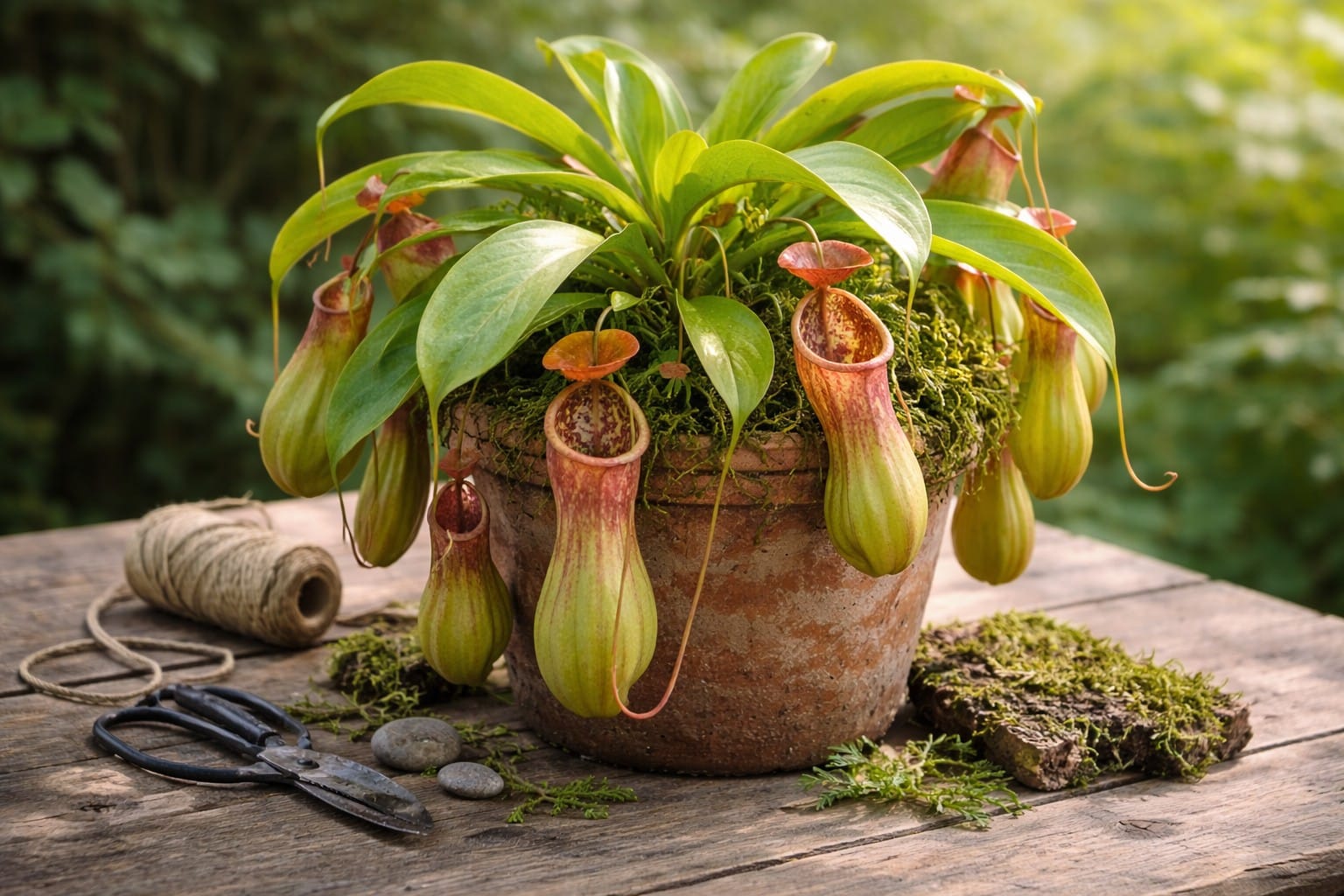
The pitcher plant is a fascinating carnivorous plant known for its unique tubular leaves that trap and digest insects. Its unusual appearance and insect-eating habits make it a standout addition to any plant collection. Whether you’re a beginner or an experienced gardener, pitcher plants are both educational and visually striking, combining exotic beauty with practical pest control.
This guide will cover everything you need to know about pitcher plants: types, care tips, planting, propagation, common problems, benefits, and FAQs. By the end, you’ll be equipped to grow a healthy, thriving pitcher plant in your home or garden.
What is a Pitcher Plant?
Pitcher plants belong to the family Sarraceniaceae, Nepenthaceae, or Cephalotaceae, depending on the species. They are carnivorous plants that attract, trap, and digest insects using specialized pitcher-shaped leaves.
Key features of pitcher plants include:
- Leaves: Modified into tubular structures, often colorful with patterns to attract prey.
- Trapping Mechanism: The pitchers contain digestive fluids that break down insects.
- Flowers: Showy and often large, rising above the pitchers on tall stems.
- Growth: Depending on species, they can grow from a few inches to several feet tall.
Pitcher plants are not only ornamental but also serve as a natural insect control in gardens.
Symbolism and Meaning
- Adaptation and Survival: Represents resilience and efficiency, as it survives in nutrient-poor environments.
- Mystery and Exotic Beauty: Its unusual shape symbolizes curiosity and fascination.
- Educational Value: Offers insight into plant evolution and carnivorous plant ecology.
Popular Types of Pitcher Plants
- Sarracenia (North American Pitcher Plant): Tall, tubular, and often red or green. Found in boggy areas.
- Nepenthes (Tropical Pitcher Plant / Monkey Cups): Vines with hanging pitchers; native to Southeast Asia.
- Darlingtonia californica (Cobra Lily): Distinctive hooded pitcher resembling a cobra; native to Northern California.
- Heliamphora (Sun Pitcher): Native to South America; small pitchers ideal for terrariums and indoor growth.
- Cephalotus follicularis (Australian Pitcher Plant): Compact, ground-hugging species with small pitchers.
Each type has unique pitcher shapes, colors, and growth habits, offering diversity for collectors.
Ideal Growing Conditions
Light
- Most pitcher plants thrive in bright, indirect sunlight.
- Sarracenia and Heliamphora prefer full sun outdoors.
- Nepenthes prefer filtered light or partial shade indoors.
Watering
- Pitcher plants prefer distilled, rain, or reverse osmosis water.
- Keep soil consistently moist but not waterlogged.
- Avoid tap water, which can harm sensitive species due to minerals and chlorine.
Soil
- Use nutrient-poor, acidic soil; common mix: sphagnum moss + perlite + sand.
- Avoid regular potting soil, as fertilizer can kill the plant.
Temperature and Humidity
- Sarracenia: Tolerates temperate climates, requires a winter dormancy period.
- Nepenthes: Thrive in warm, humid tropical conditions.
- Humidity: 50–80% for optimal growth, especially for tropical species.
Fertilization
- Most pitcher plants do not require fertilizer; they get nutrients from insects.
- If indoors, occasional foliar feeding with weak, carnivorous plant fertilizer is acceptable.
How to Plant and Repot Pitcher Plants
Planting
- Use pots with drainage holes and a shallow tray to maintain humidity.
- Fill with sphagnum moss-based mix, keeping the root crown above soil slightly.
- Water lightly to settle the soil around roots.
Repotting
- Repot every 1–2 years, preferably in spring.
- Carefully separate the roots to avoid damage.
- Replace old moss or soil with fresh, acidic mix.
Propagation of Pitcher Plants
Pitcher plants can be propagated through seeds, cuttings, or division:
1. Seeds
- Collect seeds from mature plants.
- Sow on moist sphagnum moss or seed-starting mix.
- Keep warm, humid, and lightly lit until germination (weeks to months).
2. Stem or Leaf Cuttings
- Tropical Nepenthes can be propagated via vine cuttings.
- Root in moist sphagnum moss under high humidity.
3. Division
- Divide clumps of Sarracenia or Heliamphora carefully.
- Each division should have healthy rhizomes and pitchers.
Propagation ensures more plants for indoor displays or garden expansion.
Uses of Pitcher Plants
1. Natural Pest Control
- Attract and digest flies, mosquitoes, and other small insects.
- Reduces insect population naturally in garden areas.
2. Educational and Scientific Interest
- Ideal for classrooms or research to study carnivorous plant behavior.
- Demonstrates adaptation in nutrient-poor environments.
3. Ornamental Landscaping
- Adds exotic beauty with colorful and unusual pitcher shapes.
- Works well as a focal point in terrariums, gardens, or indoor plant displays.
Common Problems and Solutions
- Brown or Wilting Pitchers: Often caused by low humidity or natural aging. Trim dead pitchers.
- Pests: Aphids, mealybugs, and spider mites can infest leaves; use insecticidal soap carefully.
- Fungal Growth: Overwatering and poor airflow cause mold; improve ventilation and reduce moisture on leaves.
- Nutrient Deficiency: Avoid using fertilizers; ensure insects are available or supplement with diluted carnivorous plant food.
- Poor Growth: Often due to insufficient light or wrong soil type. Adjust growing conditions accordingly.
Benefits of Pitcher Plants
- Natural Pest Control: Attract and digest flies, mosquitoes, and other insects.
- Educational and Scientific Interest: Study of carnivorous adaptation is fascinating for students and enthusiasts.
- Aesthetic Appeal: Exotic pitchers and vibrant colors enhance indoor and outdoor spaces.
- Low Nutrient Requirement: Thrives in poor soils where other plants struggle.
Styling Tips
- Display Nepenthes in hanging baskets for tropical vibes indoors.
- Plant Sarracenia outdoors in bog gardens or water features.
- Pair pitcher plants with ferns or mosses for a lush terrarium.
- Use colorful pitchers as focal points in windowsills or patios.
- Maintain humidity by placing pots on pebble trays or misting regularly.
FAQs About Pitcher Plants
Q: Can pitcher plants survive indoors?
A: Yes, with bright indirect light and high humidity. Nepenthes are ideal for indoor conditions.
Q: How often should I water pitcher plants?
A: Keep soil consistently moist using distilled, rain, or reverse osmosis water.
Q: Do pitcher plants need fertilizer?
A: No, they get nutrients from trapped insects. Fertilizer can harm them.
Q: Why are my pitchers turning brown?
A: Natural aging, low humidity, or excessive sunlight. Trim dead pitchers to promote growth.
Q: How long do pitcher plants live?
A: With proper care, pitcher plants can live several years, producing new pitchers annually.
Q: Can pitcher plants eat all types of insects?
A: They primarily trap small flying insects like flies, gnats, and mosquitoes.
Expert Tips for Thriving Pitcher Plants
- Maintain high humidity for tropical species.
- Provide bright indirect light or filtered sunlight outdoors.
- Use only nutrient-poor, acidic soil.
- Water with distilled or rainwater to prevent mineral buildup.
- Remove dead or rotting pitchers to avoid fungal growth.
- For indoor Nepenthes, provide trellis or support for vine growth.
Final Thoughts
The pitcher plant is a captivating, exotic addition to any plant collection. Its striking pitchers, carnivorous feeding habits, and low nutrient requirements make it both educational and decorative. Whether displayed indoors in a terrarium or outdoors in a bog garden, pitcher plants add intrigue, natural pest control, and beauty to any space.
By providing proper light, moisture, soil, and humidity, you can cultivate a healthy pitcher plant that thrives year after year. Its unique adaptation and stunning appearance make it a must-have for plant enthusiasts and collectors looking to add a touch of the extraordinary to their home or garden.