
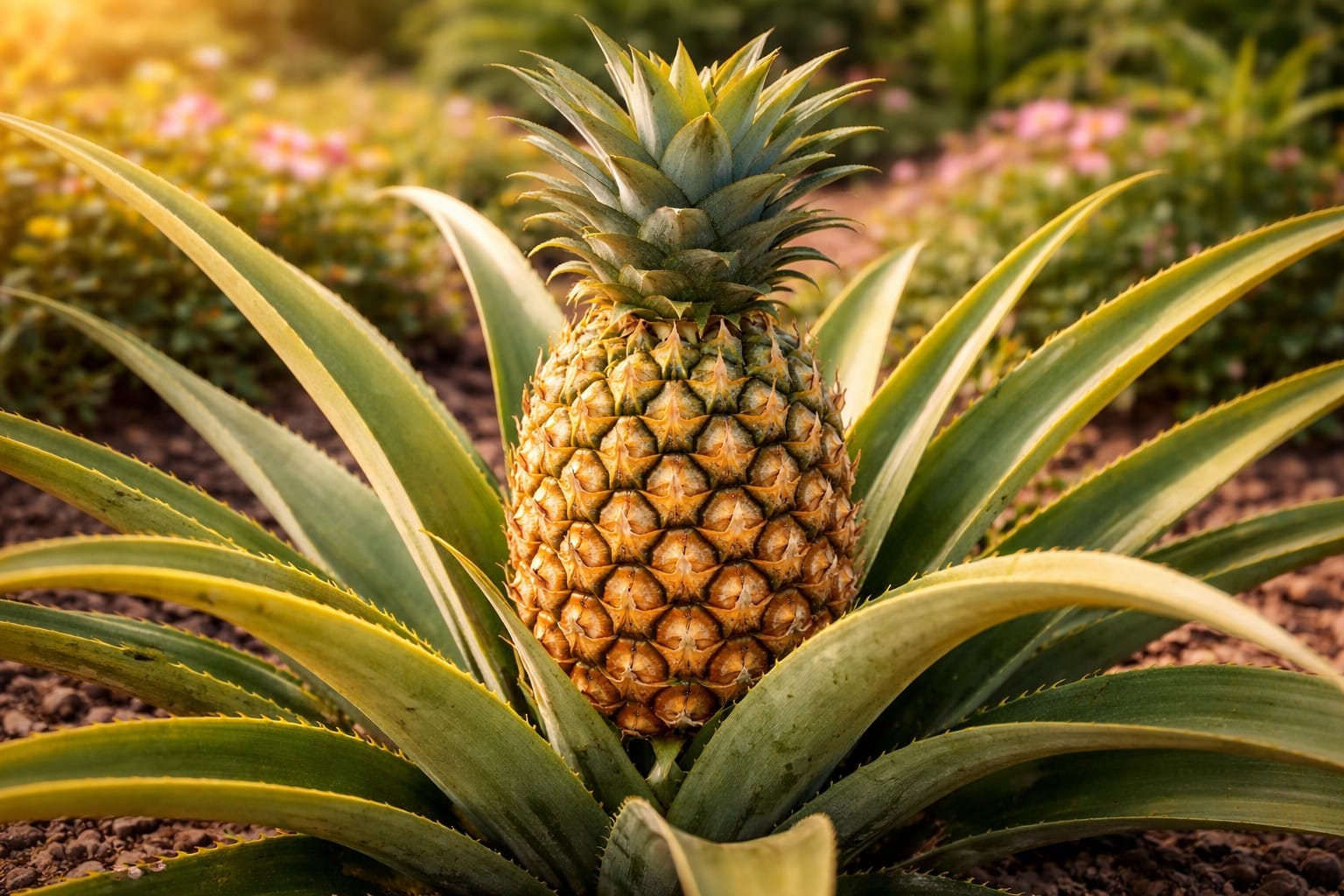
The pineapple plant is a tropical beauty that produces one of the world’s most loved fruits. With its spiky leaves, compact growth, and striking appearance, the pineapple plant works both as a productive fruit plant and a bold ornamental. It can be grown outdoors in warm climates or indoors in containers with the right care.
This complete guide explains everything about growing a pineapple plant, including planting methods, light and soil needs, watering, fertilizing, care, common problems, harvesting fruit, and expert tips for success.
What Is a Pineapple Plant
The pineapple plant (Ananas comosus) is a tropical perennial plant in the bromeliad family. Unlike trees, pineapples grow close to the ground from a central rosette of long, stiff leaves.
Key characteristics of pineapple plants:
Long, spiky green leaves
Compact rosette shape
Single fruit produced per plant
Slow but rewarding growth
Decorative and edible
A pineapple plant produces one fruit per growing cycle, but it can live and produce offsets for many years.
Meaning and Symbolism of Pineapple Plants
Pineapple plants symbolize:
Hospitality and welcome
Warmth and friendship
Prosperity and abundance
Tropical beauty
They are often used as decorative plants to bring a tropical feel into homes and gardens.
Types of Pineapple Plants
Several pineapple varieties are grown worldwide.
Smooth Cayenne
Large, juicy fruit
Low acidity
Common commercial variety
Queen Pineapple
Smaller, sweeter fruit
Strong aroma
Excellent for home gardens
Red Spanish
Firm flesh
More fibrous
Disease resistant
Ornamental Pineapple
Small colorful fruit
Primarily decorative
Popular as houseplants
Where Pineapple Plants Grow Best
Pineapple plants thrive in warm, sunny environments.
Best growing locations:
Tropical and subtropical gardens
Sunny patios and balconies
Indoor containers near bright windows
Greenhouses
They are well suited to container growing.
Soil Requirements
Good drainage is essential for pineapple plants.
Ideal soil conditions:
Well-draining sandy or loamy soil
Slightly acidic pH (4.5–6.5)
Loose texture
Avoid heavy or waterlogged soil
Cactus or bromeliad soil mixes work well in pots.
Sunlight Requirements
Pineapple plants need plenty of light.
Sun needs:
6–8 hours of direct sunlight daily
Bright light indoors
Outdoor full sun preferred
Low light results in slow growth and no fruit.
Watering Pineapple Plants
Pineapple plants prefer moderate watering.
Watering guidelines:
Water when top soil feels dry
Avoid soggy soil
Water rosette lightly in warm weather
Reduce watering in winter
Overwatering causes root rot.
Temperature and Climate
Pineapple plants love warmth.
Ideal temperatures:
65–95°F (18–35°C)
Avoid frost
Protect below 50°F (10°C)
Bring plants indoors in cold climates.
Fertilizing Pineapple Plants
Pineapples benefit from regular feeding.
Fertilizer tips:
Use balanced liquid fertilizer monthly
Apply during spring and summer
Avoid overfertilizing
Flush soil occasionally
Proper feeding supports leaf growth and fruit development.
Growth Timeline and Fruit Production
Pineapple plants grow slowly.
Typical timeline:
Planting: crown or sucker
Leaf growth: 6–12 months
Flowering: 18–24 months
Fruit maturity: 5–6 months after flowering
Total time to harvest is 2–3 years.
How to Grow Pineapple from a Top
Growing pineapple from a store-bought fruit is easy.
Steps:
Cut off the leafy crown
Remove lower leaves
Let crown dry for 1–2 days
Plant in well-draining soil
Water lightly and place in bright light
Roots form in a few weeks.
Pineapple Plant Care
Basic care keeps plants healthy.
Rotate plant for even growth
Remove dead or damaged leaves
Protect from cold and frost
Maintain good air circulation
Healthy plants are more likely to flower.
Encouraging Pineapple Flowering
Flowering can take time.
Tips to encourage blooms:
Ensure full sunlight
Feed regularly
Expose plant to cool nights briefly
Use natural ethylene from apple peels
Mature plants are more likely to flower.
Harvesting Pineapples
Harvesting happens when fruit is ripe.
Signs of ripeness:
Golden yellow color
Sweet aroma
Firm but slightly soft flesh
Cut fruit carefully from plant.
What Happens After Harvest
After fruiting:
Main plant slowly declines
Produces pups or suckers
Remove and plant offsets
Continue growing new plants
Offsets allow continuous pineapple production.
Common Pineapple Plant Problems
Yellow Leaves
Caused by overwatering or poor drainage
Brown Leaf Tips
Caused by low humidity or salt buildup
No Fruit
Insufficient light or immature plant
Pests
Mealybugs and scale insects
Treat pests with neem oil.
Pineapple Plants in Containers
Pineapples grow well in pots.
Container tips:
Use wide pots with drainage holes
Avoid deep containers
Repot only when necessary
Move pots easily for sunlight
Containers control soil and moisture.
Indoor Pineapple Plant Care
Indoor pineapples need bright light.
Place near sunny window
Rotate regularly
Avoid cold drafts
Supplement with grow lights if needed
Ornamental varieties are best indoors.
Health and Safety
Pineapple plants have sharp leaves.
Wear gloves when handling
Keep away from pets
Avoid contact with sharp edges
The fruit is safe and nutritious.
Uses of Pineapple Plants
Pineapple plants are versatile.
Fresh fruit consumption
Decorative houseplants
Tropical landscaping
Gifts and indoor décor
They combine beauty and productivity.
Frequently Asked Questions
Can pineapple plants grow indoors
Yes, with enough sunlight
How long does it take to grow pineapple
About 2–3 years
Does a pineapple plant fruit more than once
One fruit per cycle, but produces offsets
Do pineapple plants need full sun
Yes, for best fruit production
Are pineapple plants easy to grow
Yes, with patience and warmth
Expert Growing Tips
Always use well-draining soil
Provide maximum sunlight
Avoid cold exposure
Feed regularly during growth
Be patient with fruiting
Final Thoughts
The pineapple plant is a rewarding tropical plant that adds beauty, fun, and fresh fruit to your home or garden. While it takes time to produce fruit, the process is simple and satisfying.
With proper sunlight, warm temperatures, and well-draining soil, pineapple plants thrive in containers and landscapes, offering a unique way to grow your own tropical fruit and enjoy an eye-catching plant at the same time.