
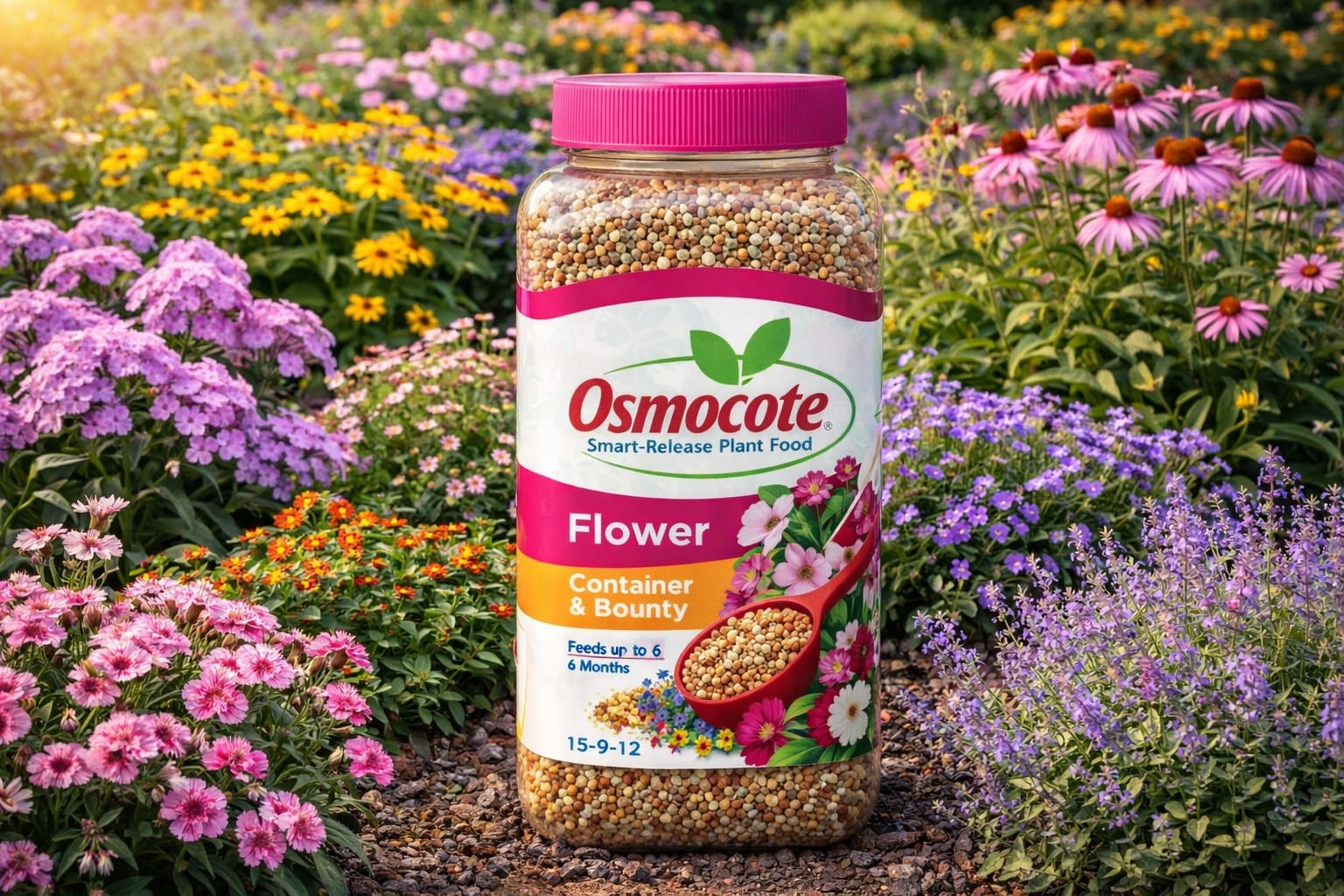
Osmocote Smart-Release Plant Food is one of the most popular and trusted fertilizers for flowering plants — whether in containers, garden beds, hanging baskets, or landscapes. It’s designed to feed your blooms slowly and steadily over time, promoting vigorous growth, abundant flowers, and healthy roots without the risk of overfertilization.
This complete guide covers what Osmocote is, how it works, when to use it, benefits, how to apply it to flower plants, safety tips, common mistakes, and expert advice for the best results.
What Is Osmocote Smart-Release Plant Food
Osmocote is a controlled-release fertilizer formulated to feed plants gradually over a long period. Each pellet is coated with a special polymer that releases nutrients based on soil temperature and moisture. When plants are actively growing and warm, nutrients are released more quickly; when growth slows, release slows too.
This “smart-release” approach makes it easy to:
Feed plants over weeks or months
Reduce fertilizer burn
Simplify feeding schedules
Support balanced growth
Osmocote is popular with both home gardeners and professionals.
Why Use Osmocote for Flowering Plants
Flowering plants — annuals, perennials, shrubs, and bulbs — benefit greatly from steady nutrition.
Key reasons to use Osmocote:
Long-lasting feed: One application can last 3–6 months
Balanced nutrition: Provides nitrogen (N), phosphorus (P), and potassium (K) in correct ratios
Easy to use: No mixing, safe for beginners
Less risk of fertilizer burn: Slow release prevents sudden nutrient spikes
Improves flowering: Steady nutrients help flowers develop and stay strong
Whether growing marigolds, petunias, roses, coneflowers, or hanging baskets, Osmocote helps them flower well.
How Osmocote “Smart-Release” Works
Unlike liquid fertilizers that feed immediately, Osmocote uses a temperature-activated coating:
Warm, moist soil → pellets release nutrients faster
Cool, dry soil → release slows down
This system means:
Plants get nutrients only when they can use them
Less fertilizer washes away
Feeding matches plant growth cycles
The coating breaks down over time, leaving no harmful residue.
Types of Osmocote Plant Food
Osmocote products vary by duration and formulation. Common options include:
Osmocote 14-14-14
Balanced N-P-K, general-purpose feeds
Great for many flowering plants
Osmocote 15-9-12
Optimized for blooming and vigorous plant growth
Osmocote for Flower & Vegetable
Formulated to support blooms and fruits
Duration Options
3-month release — lighter feeding
4-6 month release — longer growing seasons
Always check the label for recommended use.
When to Use Osmocote on Flowers
Osmocote can be used at multiple points:
At planting: Apply into soil or potting mix before planting
Early season: Feed after plants have rooted in spring
Container refresh: For potted flowers early or mid-season
You generally do not need to reapply frequently — one application usually lasts the whole season.
How to Apply Osmocote to Flowering Plants
For garden beds:
- Work a measured amount into the top 2–3 inches of soil
- Water gently to activate pellets
For containers:
- Mix Osmocote into the potting mix before planting
- Alternatively, sprinkle pellets on the surface and water in
- Avoid burying too deep (feed works best near roots)
Typical Rates:
Follow label instructions — often a small number of pellets per gallon of soil or per plant.
Do not apply directly onto plant stems or foliage.
Best Practices for Osmocote Use
✔ Use at planting or early growth — not during dormancy
✔ Water after applying to start release
✔ Combine with good soil, light, and watering practices
✔ Avoid over-applying — more is not better
Because the feed is slow-release, you won’t see immediate greening but will notice stronger growth and blooms over weeks.
Benefits for Flower Plants
Promotes stronger root systems
Supports abundant flowering
Reduces fertilizer burn risk
Works for containers and gardens alike
Feeds in sync with growth cycles
Convenient, low-maintenance feeding schedule
Many gardeners report healthier plants with fewer nutrient deficiencies.
Flower Plants That Benefit Most
Osmocote works especially well for:
Annual flowers (petunias, begonias, impatiens)
Perennials (coneflower, salvia, rudbeckia)
Flowering shrubs (hydrangea, azalea, roses)
Bulbs (lilies, tulips, daffodils)
Hanging baskets and mixed containers
Any plant that blooms heavily benefits from steady nutrition.
Safety and Handling
Osmocote is generally safe when used as directed:
✔ Store in a cool, dry place
✔ Keep out of reach of pets and children
✔ Avoid inhaling dust or pellets
✔ Wash hands after handling
The pellets themselves are not intended for ingestion.
Common Mistakes and How to Avoid Them
1. Applying too much fertilizer
Follow the recommended rate — excess doesn’t speed growth.
2. Not watering after application
Water activates the coating and starts nutrient release.
3. Applying late in season
Apply when plants actively grow; late applications may feed when plants are winding down.
4. Expecting instant results
Osmocote works gradually — results show over weeks.
Osmocote vs Other Fertilizers
Liquid fertilizer: Quick release, frequent feeding
Osmocote: Slow release, low maintenance
Granular feed: Some release all at once, risk burn
Organic amendments: Long-term soil building
Osmocote sits between organic amendments (slow, soil health focus) and liquid feeds (fast, short duration).
When Not to Use Osmocote
Avoid use when:
Plants are dormant
Soil remains cold and roots are inactive
Plants are stressed (shock from repotting or transplanting)
In these situations, wait until plants are actively growing again.
Expert Tips for Maximum Bloom
🔥 Pair Osmocote with good light — many flowers need full sun
🔥 Monitor soil moisture — not too wet, not too dry
🔥 Deadhead spent blooms to prolong flowering
🔥 Mulch beds to retain moisture and reduce stress
🔥 Watch for nutrient deficiencies (chlorosis or weak stems)
Balanced care + balanced feeding = best results.
Frequently Asked Questions
How long does Osmocote feed?
Typically 3–6 months depending on formulation and conditions.
Can I use Osmocote on all flowers?
Yes — it’s safe for most ornamentals, annuals, and perennials.
Is Osmocote safe around pets?
Generally yes if used as directed, but avoid ingestion.
Do I need to reapply mid-season?
Usually not if you choose the appropriate duration product.
Can Osmocote burn plants?
It is low-risk, but over-application can still cause issues.
Final Thoughts
Osmocote Smart-Release Plant Food is a top choice for gardeners who want strong, healthy flower growth with minimal fuss. Its slow, temperature-controlled nutrient release ensures that plants get the right food at the right time, without frequent feeding or risk of fertilizer damage.
Used properly with good light, soil, and water practices, Osmocote helps flower plants bloom longer, fuller, and more beautifully, making it a valuable tool for both new and seasoned gardeners.
If you want, I can tailor specific Osmocote application rates for particular flowers (e.g., roses, annual containers, hydrangeas) — just tell me what plants you’re growing!