
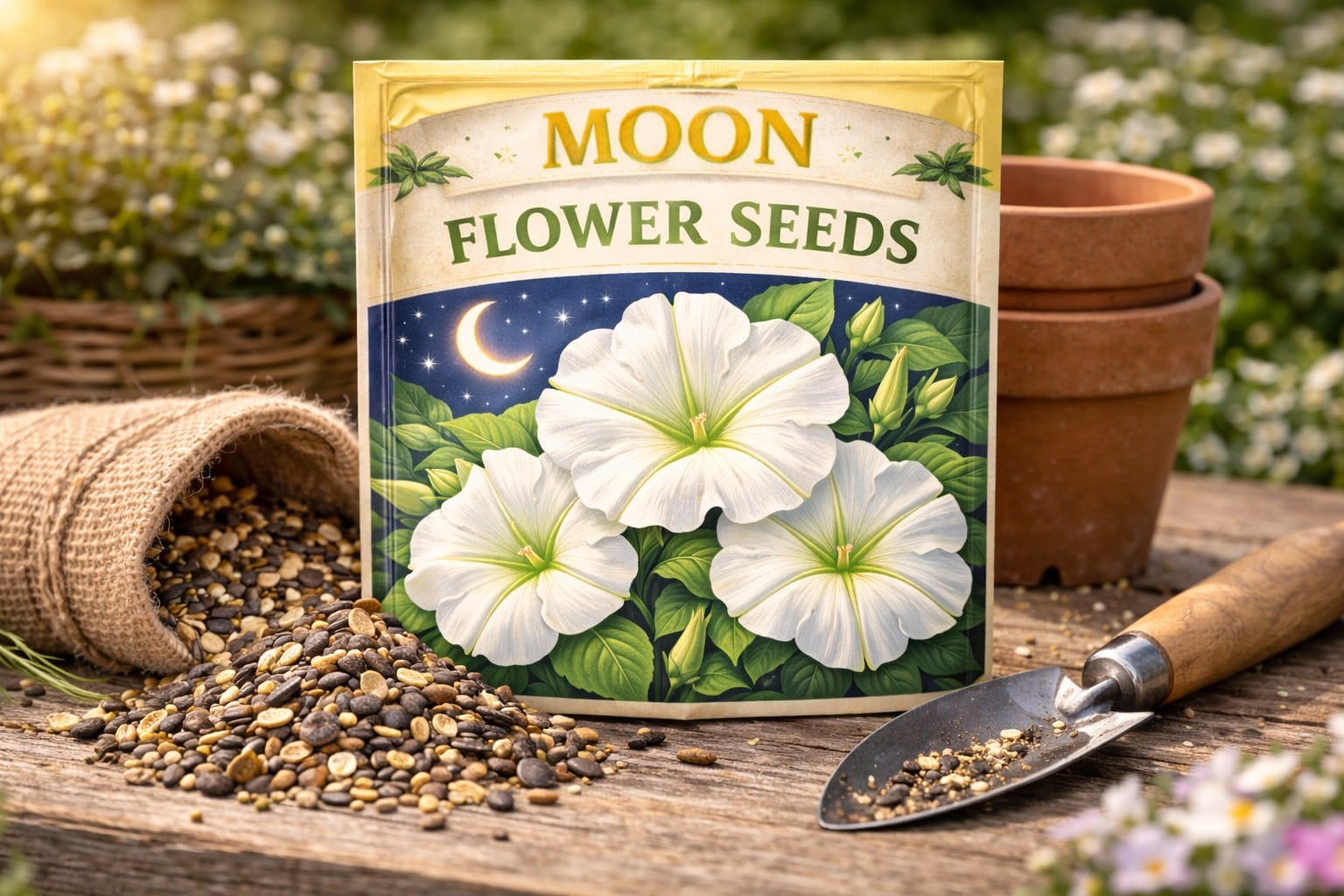
Moon flower seeds grow into one of the most enchanting night-blooming plants in the garden. Known for their large white flowers that open at dusk and glow in moonlight, moon flowers create a magical atmosphere with their beauty and sweet fragrance. These fast-growing climbers are perfect for fences, trellises, arches, and balconies.
This complete guide explains everything you need to know about moon flower seeds, including types, seed preparation, planting steps, growing conditions, care, common problems, harvesting seeds, storage, and expert tips.
What Are Moon Flower Seeds
Moon flower seeds come from the moonflower plant (Ipomoea alba), a tropical night-blooming vine in the morning glory family. Unlike morning glories that bloom in daylight, moon flowers open their blooms in the evening and stay open through the night.
Key features of moon flowers:
Large white or pale cream trumpet-shaped blooms
Strong, sweet nighttime fragrance
Fast-growing climbing vines
Heart-shaped green leaves
Attracts night pollinators like moths
Moon flower seeds have a hard outer shell, which requires preparation before planting.
Meaning and Symbolism of Moon Flowers
Moon flowers are rich in symbolism and cultural meaning.
They commonly represent:
Mystery and magic
Dreams and intuition
Peace and calm
Romantic love
New beginnings
Because they bloom at night, moon flowers are often associated with the moon, spirituality, and quiet beauty.
Types of Moon Flower Seeds
While Ipomoea alba is the most common, related varieties exist.
Common Moonflower (Ipomoea alba)
Pure white flowers
Strong fragrance
Most popular garden variety
Purple Moonflower
Lavender or pale purple blooms
Less common
Softer fragrance
Bush Moonflower
Compact growth habit
Suitable for containers
Smaller vines
When to Plant Moon Flower Seeds
Moon flower seeds need warm soil to germinate.
Best planting time:
After the last frost in spring
When soil temperature reaches 65°F (18°C) or higher
Late spring to early summer
Moon flowers grow quickly and bloom in mid to late summer.
Preparing Moon Flower Seeds for Planting
Moon flower seeds must be prepared before planting due to their hard seed coat.
Seed preparation steps:
Nick the seed coat with a nail file
Soak seeds in warm water for 12–24 hours
Discard floating seeds
This process speeds up germination and improves success rates.
Soil Requirements
Moon flowers grow best in:
Well-draining soil
Moderately fertile soil
Neutral to slightly acidic pH
Too rich soil produces excessive leaves and fewer flowers.
How to Plant Moon Flower Seeds
Step-by-Step Planting
Choose a sunny location
Loosen soil and remove weeds
Plant seeds ½ inch deep
Space seeds 12–18 inches apart
Water gently
Seeds typically germinate in 7–14 days.
Container Planting
Use large pots with drainage holes
Choose climbing supports
Plant 2–3 seeds per pot
Thin to strongest plant
Ideal Growing Conditions
Moon flowers thrive in:
Full sun to partial shade
Warm temperatures
Good air circulation
Support structures like trellises or fences
They require at least 6 hours of sunlight daily for strong growth and flowering.
Watering Moon Flowers
Watering tips:
Water deeply 1–2 times per week
Keep soil evenly moist
Avoid soggy soil
Increase watering during hot weather
Inconsistent watering can cause bud drop.
Fertilizing Moon Flowers
Moon flowers are light feeders.
Fertilizing guidelines:
Mix compost into soil before planting
Use balanced fertilizer once a month
Avoid high nitrogen fertilizers
Excess fertilizer results in leafy vines with few flowers.
Growth and Blooming Timeline
Growth stages:
Germination: 7–14 days
Vine growth: 4–6 weeks
Bud formation: 6–8 weeks
Blooming: mid to late summer
Flowers open at dusk and close by morning.
Caring for Moon Flower Plants
Basic care ensures healthy vines.
Care tips:
Provide strong trellis support
Guide vines early
Remove spent flowers
Trim excessive growth
Moon flowers can grow 10–15 feet in one season.
Common Problems and Solutions
Seeds Not Germinating
Caused by lack of scarification or cold soil
Always nick and soak seeds
No Flowers
Caused by excess nitrogen or shade
Reduce fertilizer and increase sun exposure
Wilting
Caused by underwatering or heat stress
Water consistently
Pests
Aphids, spider mites, caterpillars
Treat with neem oil or insecticidal soap
Diseases
Fungal leaf spots from wet leaves
Water at soil level and improve airflow
Harvesting Moon Flower Seeds
Saving seeds allows future planting.
When to harvest:
Seed pods turn brown and dry
Pods split open naturally
How to harvest:
Collect dry pods
Remove seeds
Dry seeds thoroughly
Store properly
Storing Moon Flower Seeds
Proper storage maintains seed viability.
Storage tips:
Keep seeds in cool, dry place
Store in paper envelopes or airtight jars
Label with date and variety
Seeds remain viable for 2–3 years.
Growing Moon Flowers Indoors
Moon flowers can be started indoors.
Indoor tips:
Start seeds in biodegradable pots
Provide bright light
Transplant carefully outdoors
Avoid root disturbance
They perform best outdoors once temperatures rise.
Moon Flowers and Pollinators
Moon flowers attract night-active pollinators.
They support:
Moths
Nocturnal insects
Beneficial garden biodiversity
Planting moon flowers helps maintain ecological balance.
Frequently Asked Questions
Are moon flower seeds easy to grow?
Yes, with proper seed preparation and warm soil.
Do moon flowers bloom every night?
Yes, during peak bloom season.
Can moon flowers grow in pots?
Yes, with large containers and support.
Are moon flowers invasive?
They self-seed in warm climates; manage by removing seed pods.
Are moon flowers toxic?
Seeds can be toxic if ingested; keep away from pets and children.
Expert Growing Tips
Always scarify seeds
Provide strong vertical support
Limit nitrogen fertilizer
Water consistently
Harvest seeds before pods split
Final Thoughts
Moon flower seeds offer gardeners a chance to grow a mysterious, fragrant, and magical night-blooming vine. Their glowing white flowers, fast growth, and easy care make them perfect for evening gardens, patios, and moonlit walkways.
With proper seed preparation, sunlight, and support, moon flower seeds grow into stunning vines that transform the garden after sunset, filling the night air with beauty and fragrance.