
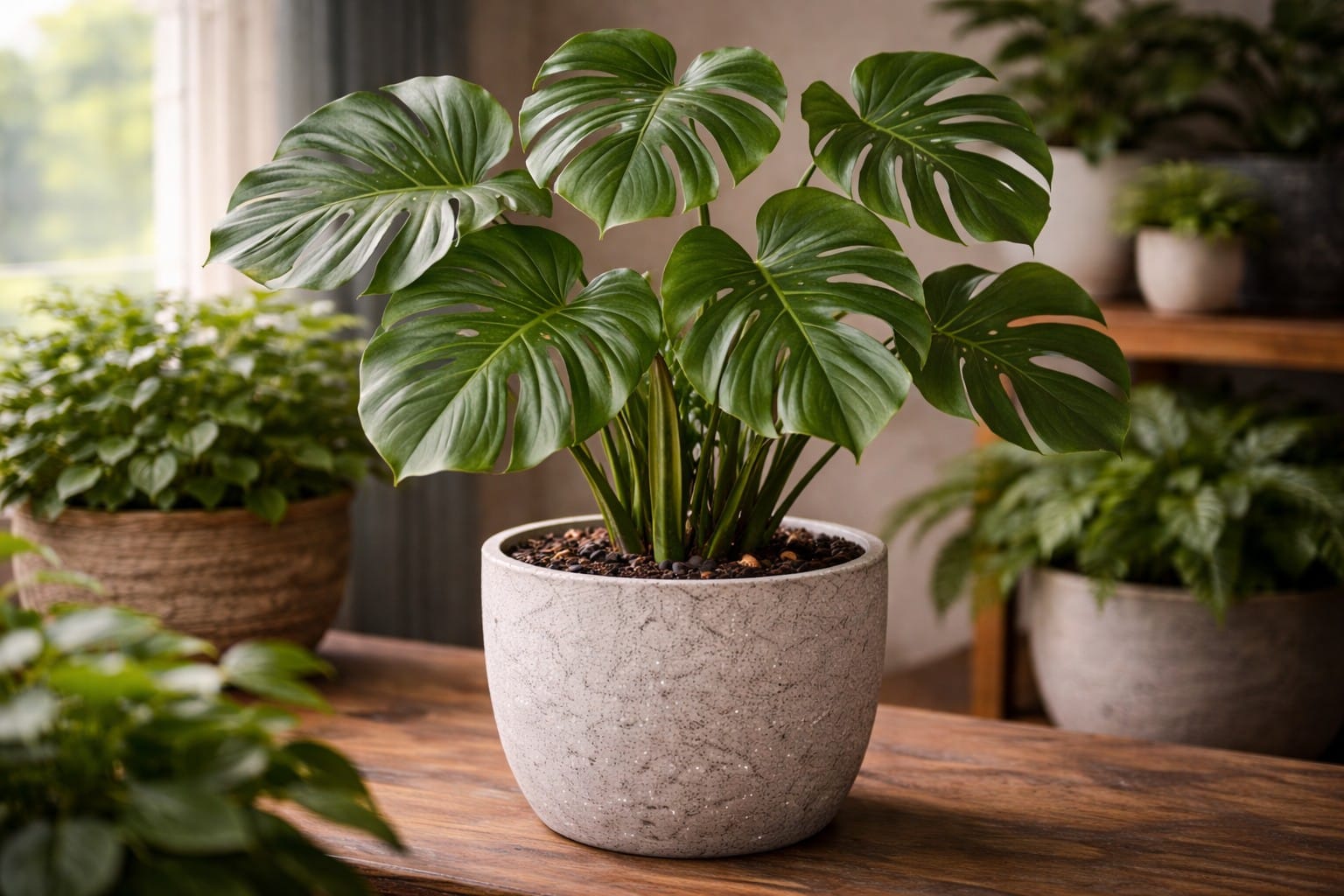
The monstera plant is more than just a trendy houseplant. It is a bold, fast-growing tropical plant that brings life, texture, and personality into indoor spaces. With its large green leaves and natural splits, monstera has become a symbol of modern interior design and indoor gardening. Despite its dramatic look, it is surprisingly easy to care for when you understand its natural habits.
This in-depth, long-form guide covers everything you need to know about the monstera plant. You will learn what it is, where it comes from, what it needs to thrive, how to grow it faster, how to fix common problems, how to propagate it, and how to keep it healthy for years. This is a complete, practical, and beginner-friendly resource.
What Is a Monstera Plant?
The monstera plant, scientifically called Monstera deliciosa, is a tropical evergreen plant native to the rainforests of Central and South America. In the wild, it grows on the forest floor when young and later climbs trees as it matures, using aerial roots for support.
The plant is famous for its large, glossy leaves that develop natural holes and splits known as fenestrations. These openings are not random. In nature, they help the plant survive heavy rain and allow sunlight to pass through to lower leaves.
Key characteristics of the monstera plant include:
- Large, heart-shaped green leaves
- Natural holes and splits as leaves mature
- Fast growth under the right conditions
- A climbing growth habit
- Strong aerial roots
Because of its size and structure, monstera is often used as a statement plant in homes and offices.
Meaning and Symbolism of Monstera Plant
The monstera plant carries powerful symbolic meaning across cultures and modern design.
Common meanings include:
- Growth and expansion
- Strength and resilience
- Longevity and stability
- Abundance and success
In many homes, monstera represents personal growth and forward movement. Its expanding leaves are often seen as a sign of progress, making it a popular plant for workspaces and creative environments.
Benefits of Growing a Monstera Plant
Visual Impact and Interior Design
Monstera instantly fills a room with life. Its large leaves create a bold focal point and soften hard lines in modern spaces. It works well in minimalist, tropical, bohemian, and contemporary interiors.
Easy to Grow Indoors
Despite its exotic look, monstera is forgiving and adaptable. It tolerates a range of indoor conditions and bounces back well from minor mistakes.
Improves Indoor Environment
Monstera helps improve indoor air quality by increasing oxygen levels and creating a fresher indoor atmosphere. Large-leaf plants also help reduce stress and improve mood.
Long Lifespan
With proper care, a monstera plant can live for many years and grow larger over time, becoming more impressive with age.
Types of Monstera Plants
There are several popular monstera varieties, each with unique features.
Monstera Deliciosa
This is the classic and most common monstera.
- Large leaves with deep splits
- Strong, upright growth
- Ideal as a floor plant
Monstera Adansonii
Often called the Swiss cheese vine.
- Smaller leaves with many holes
- Vining growth habit
- Suitable for hanging baskets
Monstera Albo Variegata
A rare and highly valued variety.
- White and green marbled leaves
- Slower growth
- Needs bright indirect light
Monstera Thai Constellation
A stable variegated variety.
- Cream-colored speckles
- More predictable variegation
- Compact growth compared to Albo
Light Requirements for Monstera Plant
Light plays a major role in leaf size and splitting.
Best lighting conditions:
- Bright, indirect light
- Near an east- or north-facing window
- Filtered sunlight through curtains
Low light will not kill the plant, but it slows growth and reduces leaf splits. Direct sunlight can scorch leaves, causing brown patches.
A good rule is bright light without harsh sun rays touching the leaves.
Watering a Monstera Plant Properly
Watering is the most important part of monstera care.
Guidelines for watering:
- Water when the top 2 to 3 inches of soil feel dry
- Water thoroughly until excess drains out
- Empty the drainage tray
On average, monstera needs watering once every 7 to 10 days during the growing season and less often in winter.
Overwatering causes root rot, while underwatering leads to drooping and dry leaf edges.
Best Soil for Monstera Plant
Monstera needs soil that drains well but still holds some moisture.
Ideal soil mix includes:
- High-quality indoor potting soil
- Perlite for airflow
- Orchid bark or coco chips for structure
The soil should feel light and airy, not dense or muddy.
Temperature and Humidity Needs
Monstera thrives in warm, humid conditions.
Ideal conditions:
- Temperature between 65–85°F
- Medium to high humidity
- No exposure to cold drafts
Low humidity may cause brown leaf edges. Increasing humidity with a humidifier or grouping plants together helps.
Supporting Monstera Growth
Monstera is a climbing plant and benefits from support.
Using a Moss Pole or Stake
- Attach stems gently to a moss pole
- Encourages upward growth
- Promotes larger leaves with deeper splits
Without support, monstera spreads outward and takes more space.
Pruning and Shaping Monstera
Pruning keeps the plant healthy and manageable.
When to prune:
- Remove yellow or damaged leaves
- Cut leggy stems
- Shape the plant for balance
Always use clean, sharp tools to prevent disease.
Fertilizing Monstera Plant
Monstera is a moderate feeder.
Fertilizer tips:
- Feed once a month in spring and summer
- Use balanced liquid fertilizer
- Stop feeding in fall and winter
Too much fertilizer causes leaf burn and weak growth.
Common Monstera Problems and Solutions
Yellow Leaves
Usually caused by overwatering or poor drainage.
Brown Leaf Edges
Often due to low humidity or inconsistent watering.
No Leaf Splits
Caused by low light, young plant age, or lack of support.
Drooping Leaves
May indicate underwatering or temperature stress.
Most issues are solved by adjusting light and watering habits.
How to Propagate Monstera Plant
Propagation is easy and rewarding.
Propagation by Stem Cuttings
Steps:
- Cut below a node with at least one leaf
- Place cutting in water or soil
- Keep in bright, indirect light
- Roots form in 2 to 4 weeks
Water vs Soil Propagation
Water allows easy root monitoring. Soil helps faster adjustment after planting. Both methods work well.
Repotting Monstera Plant
Monstera grows fast and needs repotting every 1 to 2 years.
Signs it needs repotting:
- Roots growing out of drainage holes
- Soil dries too fast
- Slowed growth
Choose a pot one size larger with drainage holes.
Is Monstera Safe for Pets?
Monstera is toxic to cats and dogs if ingested.
Symptoms include:
- Mouth irritation
- Drooling
- Vomiting
Keep it out of reach of pets and children.
Best Places to Keep a Monstera Indoors
Ideal locations:
- Bright living rooms
- Near large windows with filtered light
- Offices and open spaces
Avoid dark corners and direct sun exposure.
Interesting Facts About Monstera
- Leaf holes develop as the plant matures
- Each leaf pattern is unique
- Monstera can grow over 20 feet outdoors
- The fruit is edible only when fully ripe
- Aerial roots help absorb moisture and support climbing
FAQs About Monstera Plant
Q: How fast does monstera grow?
A: It grows quickly in warm, bright conditions with regular feeding.
Q: Can monstera survive low light?
A: Yes, but growth will slow and leaves may not split.
Q: Should I mist my monstera?
A: Misting helps humidity but is not required if indoor humidity is normal.
Q: Why are my monstera leaves curling?
A: Curling is usually caused by underwatering or low humidity.
Q: Can monstera grow outdoors?
A: Yes, in warm, frost-free climates.
Final Thoughts
The monstera plant is a perfect mix of beauty, strength, and ease of care. Its dramatic leaves, fast growth, and forgiving nature make it one of the best indoor plants for homes and offices. When given bright indirect light, proper watering, airy soil, and basic support, monstera rewards you with larger leaves and impressive growth year after year. Whether you are a beginner or an experienced plant lover, monstera is a plant that grows with you and becomes more stunning over time.