
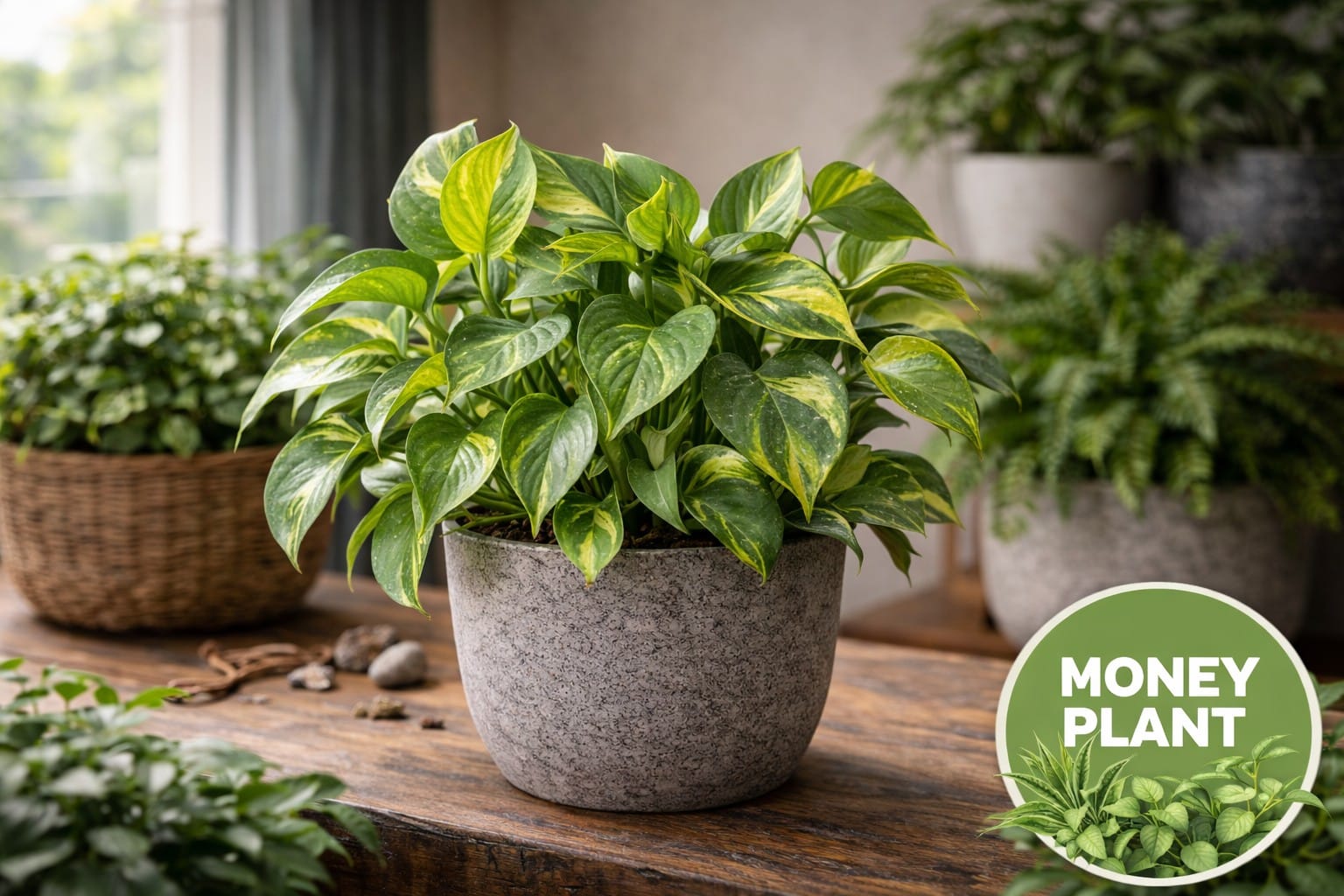
The money plant, also known as Pothos, Devil’s Ivy, or Epipremnum aureum, is one of the most popular and easiest houseplants grown around the world. Loved for its heart-shaped leaves, trailing vines, and low-maintenance nature, the money plant is perfect for homes, offices, and apartments. It is often associated with good luck, prosperity, and positive energy, making it a favorite choice for indoor gardening.
Beyond symbolism, the money plant is a hardy and adaptable plant that thrives in many conditions. It improves indoor air quality, grows quickly, and looks beautiful in hanging baskets, pots, water jars, or climbing on walls and poles. In this complete guide, you’ll learn everything about the money plant, including types, care, watering, light needs, propagation, common problems, benefits, and expert tips to keep it healthy and lush.
What Is a Money Plant?
The money plant is a tropical evergreen vine native to Southeast Asia and the Pacific Islands. It belongs to the Araceae family and is known for its long, trailing stems and glossy green leaves, often marked with yellow, white, or light green patterns.
Key characteristics of the money plant include:
- Heart-shaped, waxy leaves
- Fast-growing trailing or climbing vines
- Ability to grow in soil or water
- Tolerance to low light and irregular watering
- Long lifespan with minimal care
Money plants are commonly grown as indoor plants, but they can also thrive outdoors in warm, humid climates.
Why the Money Plant Is So Popular
The money plant is popular because it combines beauty, symbolism, and ease of care. It suits beginners and busy people who want greenery without constant attention.
Reasons people love money plants include:
- Very low maintenance
- Grows well in water and soil
- Adapts to different light conditions
- Helps purify indoor air
- Ideal for hanging baskets and shelves
- Believed to attract good luck and wealth
Its ability to survive neglect while still looking attractive makes it one of the best houseplants for everyday homes.
Types of Money Plants
There are several popular varieties of money plants, each with unique leaf colors and patterns.
Golden Money Plant
This is the most common variety, featuring green leaves with yellow variegation. It grows quickly and is very hardy.
Marble Queen Money Plant
This variety has white and green marbled leaves. It needs slightly brighter light to maintain its variegation.
Jade Money Plant
Jade pothos has solid deep green leaves and is one of the toughest varieties, ideal for low-light areas.
Neon Money Plant
Known for its bright lime-green leaves, this variety adds a pop of color to indoor spaces.
Satin Money Plant
This type has dark green leaves with silver spots and a slightly velvety texture.
Each variety is easy to care for and suitable for indoor growing.
Ideal Growing Conditions for Money Plant
Light Requirements
Money plants prefer bright, indirect sunlight, but they are very adaptable.
- Grows well in low to medium light
- Bright indirect light encourages faster growth
- Direct sunlight can scorch the leaves
- Low light may reduce leaf size and variegation
They are perfect for rooms with filtered light or near windows with curtains.
Watering
Watering correctly is key to a healthy money plant.
- Water when the top 1–2 inches of soil feel dry
- Avoid overwatering, which causes root rot
- Reduce watering during winter
- Plants grown in water need fresh water every 7–10 days
Money plants prefer slightly moist soil but tolerate short dry periods well.
Soil
Money plants grow best in well-draining soil.
- Use regular indoor potting mix
- Add sand or perlite for better drainage
- Avoid heavy or compacted soil
Good drainage prevents root rot and keeps the plant healthy.
Temperature and Humidity
Money plants thrive in warm conditions.
- Ideal temperature: 65–85°F (18–30°C)
- Avoid cold drafts and frost
- Average indoor humidity is sufficient
They grow faster in humid environments but adapt well to normal indoor air.
Growing Money Plant in Water
One unique feature of the money plant is its ability to grow entirely in water.
- Place a healthy cutting in a glass jar
- Submerge only the nodes, not the leaves
- Change water every 7–10 days
- Keep in bright, indirect light
Water-grown money plants are decorative and perfect for desks and shelves, though soil-grown plants usually grow faster long-term.
Propagation of Money Plant
Money plants are extremely easy to propagate, making them ideal for sharing.
Propagation in Water
- Cut a healthy stem with 2–3 nodes
- Place the cutting in water
- Roots develop within 1–2 weeks
- Transfer to soil or continue growing in water
Propagation in Soil
- Plant the cutting directly into moist soil
- Keep soil lightly moist until roots form
- New growth appears in a few weeks
Propagation helps create fuller plants and new pots without buying more plants.
Pruning and Training
Regular pruning keeps money plants bushy and attractive.
- Trim long vines to control length
- Pruning encourages side growth
- Remove yellow or damaged leaves
Money plants can be trained to:
- Trail from hanging baskets
- Climb moss poles or trellises
- Spread along shelves or walls
Common Problems and Solutions
Yellow Leaves
- Overwatering
- Poor drainage
- Low light
Reduce watering and improve light exposure.
Brown Leaf Tips
- Dry air
- Irregular watering
Mist occasionally and maintain consistent watering.
Slow Growth
- Lack of light
- Nutrient deficiency
Move to brighter light and fertilize lightly.
Root Rot
- Caused by waterlogged soil
- Use well-draining pots and soil
Fertilizing Money Plants
Money plants are light feeders.
- Use balanced liquid fertilizer every 4–6 weeks
- Fertilize during spring and summer
- Avoid over-fertilizing
Too much fertilizer causes weak growth and leaf burn.
Benefits of Money Plant
- Improves indoor air quality
- Reduces stress and enhances mood
- Adds greenery with minimal effort
- Helps regulate humidity
- Believed to attract positive energy and prosperity
Its air-purifying ability makes it a great choice for bedrooms, offices, and living rooms.
Money Plant and Vastu/Feng Shui Beliefs
In many cultures, money plants are believed to bring luck, wealth, and harmony.
- Often placed in living rooms or offices
- Avoid placing in bathrooms or near sharp objects
- Healthy growth is associated with positive energy
While symbolic, these beliefs add to the plant’s popularity.
Is the Money Plant Good for Beginners?
Yes, the money plant is one of the best plants for beginners. It tolerates mistakes, grows quickly, and recovers easily from pruning or neglect.
Even with basic care, it continues to thrive, making it ideal for first-time plant owners.
Frequently Asked Questions About Money Plant
Money plants can live for many years with proper care. They grow faster in bright indirect light but survive in low light. They can be grown in water or soil. Money plants are mildly toxic to pets if ingested, so keep them out of reach. Regular pruning keeps them bushy and healthy.
Final Thoughts
The money plant is a perfect blend of beauty, simplicity, and symbolism. Its trailing vines, glossy leaves, and easy-care nature make it suitable for any indoor space. Whether grown in soil, water, hanging baskets, or climbing displays, the money plant adapts effortlessly and rewards you with lush green growth.
With proper light, moderate watering, and occasional pruning, the money plant will thrive for years, adding freshness, positivity, and natural beauty to your home or office. Simple yet powerful, it truly earns its place as one of the most loved houseplants worldwide.