
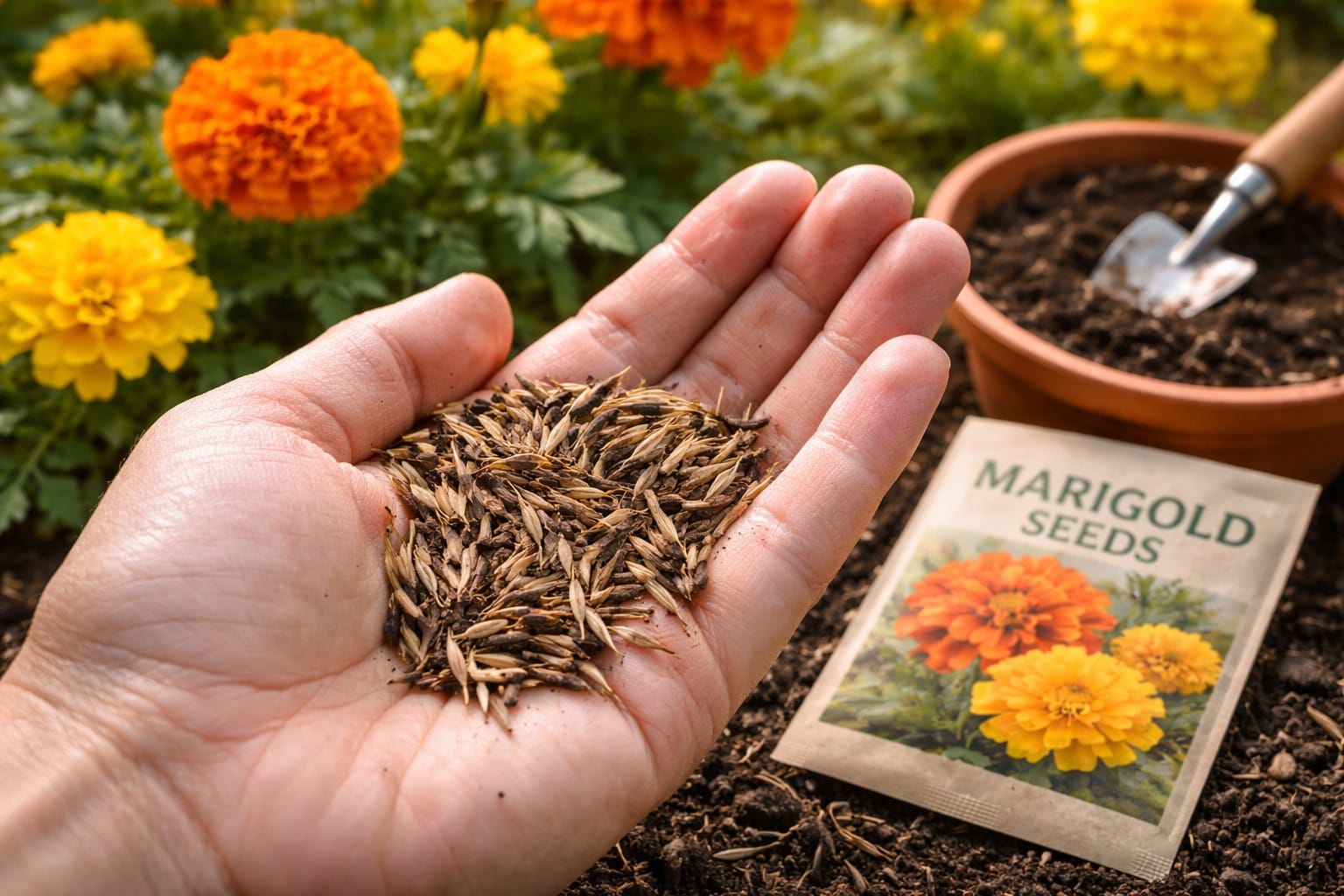
Marigold flower seeds are some of the easiest and most rewarding seeds to grow for both beginner and experienced gardeners. Marigolds are known for their bright orange, yellow, and red blooms, cheerful appearance, and strong scent that naturally repels certain garden pests. They bloom profusely, require minimal care, and are perfect for borders, containers, and companion planting.
This complete guide covers everything you need to know about marigold flower seeds, including seed types, planting steps, soil and sunlight needs, watering, fertilizing, care, common problems, harvesting seeds, storage, and expert tips for vibrant blooms.
What Are Marigold Flower Seeds
Marigold flower seeds come from Tagetes species, a genus in the Asteraceae family. There are annual and perennial varieties, but most garden marigolds are annuals that bloom from spring until frost. Marigold seeds are small, elongated, and easy to handle, making them excellent for direct sowing.
Key characteristics of marigolds:
- Brightly colored flowers in orange, yellow, red, and bi-color
- Daisy-like or pom-pom blooms
- Strong scent that repels pests like nematodes and aphids
- Fast-growing and hardy in most climates
- Compact to medium-height plants
Meaning and Symbolism of Marigolds
Marigolds carry cultural and symbolic significance in many parts of the world.
Common meanings include:
- Positivity and happiness
- Protection and strength
- Devotion and remembrance (especially in cultural rituals)
- Healing and renewal
Marigolds are often used in festivals, religious ceremonies, and seasonal decorations.
Types of Marigold Flower Seeds
Marigolds come in several popular types suitable for gardens and containers.
African Marigolds (Tagetes erecta)
- Tall, robust plants
- Large blooms
- Perfect for bold garden borders
French Marigolds (Tagetes patula)
- Compact and bushy
- Small to medium-sized blooms
- Excellent for containers, edging, and flower beds
Signet Marigolds (Tagetes tenuifolia)
- Small flowers and finely divided foliage
- Edible petals
- Ideal for attracting pollinators
Triploid or Hybrid Varieties
- Bred for larger or unusual colors
- Prolonged blooming season
- Often more uniform in appearance
Choosing the right type depends on your garden space, climate, and desired flower size.
When to Plant Marigold Flower Seeds
Timing is important to ensure strong seedlings.
- Start seeds indoors 6–8 weeks before the last frost
- Direct sow outdoors after all danger of frost has passed
- Marigolds prefer soil temperatures of 70–75°F (21–24°C) for optimal germination
Preparing Marigold Seeds for Planting
Marigold seeds are generally ready to sow with minimal preparation, but you can:
- Soak seeds in warm water for a few hours to speed germination (optional)
- Use seed trays or small pots for indoor starting
Soil Requirements
Marigolds thrive in well-draining soil and tolerate slightly poor soil conditions.
- Light, sandy or loamy soil
- Neutral to slightly acidic pH (6.0–7.0)
- Enriched soil is optional, but avoid excessive nitrogen
Proper drainage prevents root rot and fungal diseases.
How to Plant Marigold Flower Seeds
Direct Sowing Outdoors
- Choose a sunny location
- Loosen soil and remove weeds
- Sow seeds ¼–½ inch deep
- Space seeds 6–12 inches apart depending on variety
- Water lightly and keep soil moist until germination
Indoor Seed Starting
- Use seed trays with moist potting mix
- Sow seeds ¼ inch deep
- Place trays in a warm, bright location
- Transplant seedlings outdoors after last frost
Seeds typically germinate within 5–14 days.
Sunlight Requirements
Marigolds grow best in:
- Full sun (6–8 hours daily)
- Partial shade tolerated but may reduce flowering
- More sunlight = stronger, bushier plants with more blooms
Watering Marigolds
Marigolds prefer consistent moisture, especially during early growth.
- Water seedlings gently until established
- Mature plants are drought-tolerant but perform best with moderate watering
- Avoid wetting foliage to reduce fungal diseases
Fertilizing Marigolds
Marigolds are light feeders.
- Use a balanced fertilizer at planting (optional)
- Fertilize sparingly during growth
- Excess nitrogen promotes leaf growth over blooms
Most gardeners find marigolds bloom profusely without fertilizer.
Growth and Blooming Timeline
Typical timeline:
- Germination: 5–14 days
- Seedling stage: 3–4 weeks
- First blooms: 8–10 weeks after sowing
- Full bloom: throughout summer until frost
Deadheading spent blooms encourages continuous flowering.
Caring for Marigold Plants
Marigolds are easy to maintain with minimal care.
- Deadhead regularly to prolong flowering
- Thin overcrowded seedlings
- Remove damaged or diseased foliage
- Mulch around base to retain moisture and control weeds
Common Problems and Solutions
Poor Flowering
- Caused by too much shade or over-fertilization
- Move plants to sunnier location and reduce nitrogen
Root Rot or Fungal Diseases
- Caused by poor drainage
- Improve soil drainage and avoid overhead watering
Pests
- Aphids, spider mites, and nematodes
- Companion planting with marigolds naturally repels pests
Leggy Growth
- Caused by insufficient light
- Ensure full sun and thin crowded plants
Harvesting Marigold Seeds
Saving seeds ensures future planting.
- Wait until flower heads dry and petals fall
- Cut seed heads and let dry completely
- Remove seeds and store in a cool, dry place
Storing Marigold Seeds
- Use paper envelopes or airtight containers
- Label with variety and date
- Store in a cool, dark place
- Seeds remain viable for 2–3 years
Marigolds in Containers
- Choose pots with drainage holes
- Use light, well-draining potting soil
- Ensure full sun exposure
- Ideal for patios, balconies, and small garden spaces
Landscape Uses
Marigolds are versatile and functional in the garden.
- Flower borders and beds
- Companion planting with vegetables to repel pests
- Pollinator gardens for bees and butterflies
- Containers and hanging baskets
- Edging and pathways for bright color
Frequently Asked Questions
Are marigold flower seeds easy to grow?
Yes, they are beginner-friendly and germinate quickly.
Do marigolds need fertilizer?
Only lightly, if at all. Too much nitrogen reduces blooms.
Can marigolds bloom the first year?
Yes, they are fast-growing annuals.
Are marigolds deer and pest resistant?
Yes, their scent deters many pests and deer.
Do marigolds need full sun?
Full sun is best for abundant flowering.
Expert Growing Tips
- Sow seeds in full sun for best results
- Avoid overwatering to prevent root rot
- Deadhead regularly to prolong blooming
- Companion plant with vegetables for natural pest control
- Harvest seeds for future planting
Final Thoughts
Marigold flower seeds are perfect for gardeners seeking bright, cheerful, and low-maintenance flowers. Their vibrant colors, long blooming season, and natural pest-repelling properties make them an essential addition to flower beds, containers, and vegetable gardens.
With proper planting, sunlight, and occasional care, marigold seeds grow into strong, colorful plants that brighten any garden and attract pollinators, making them one of the easiest and most rewarding flowers to grow from seed.