
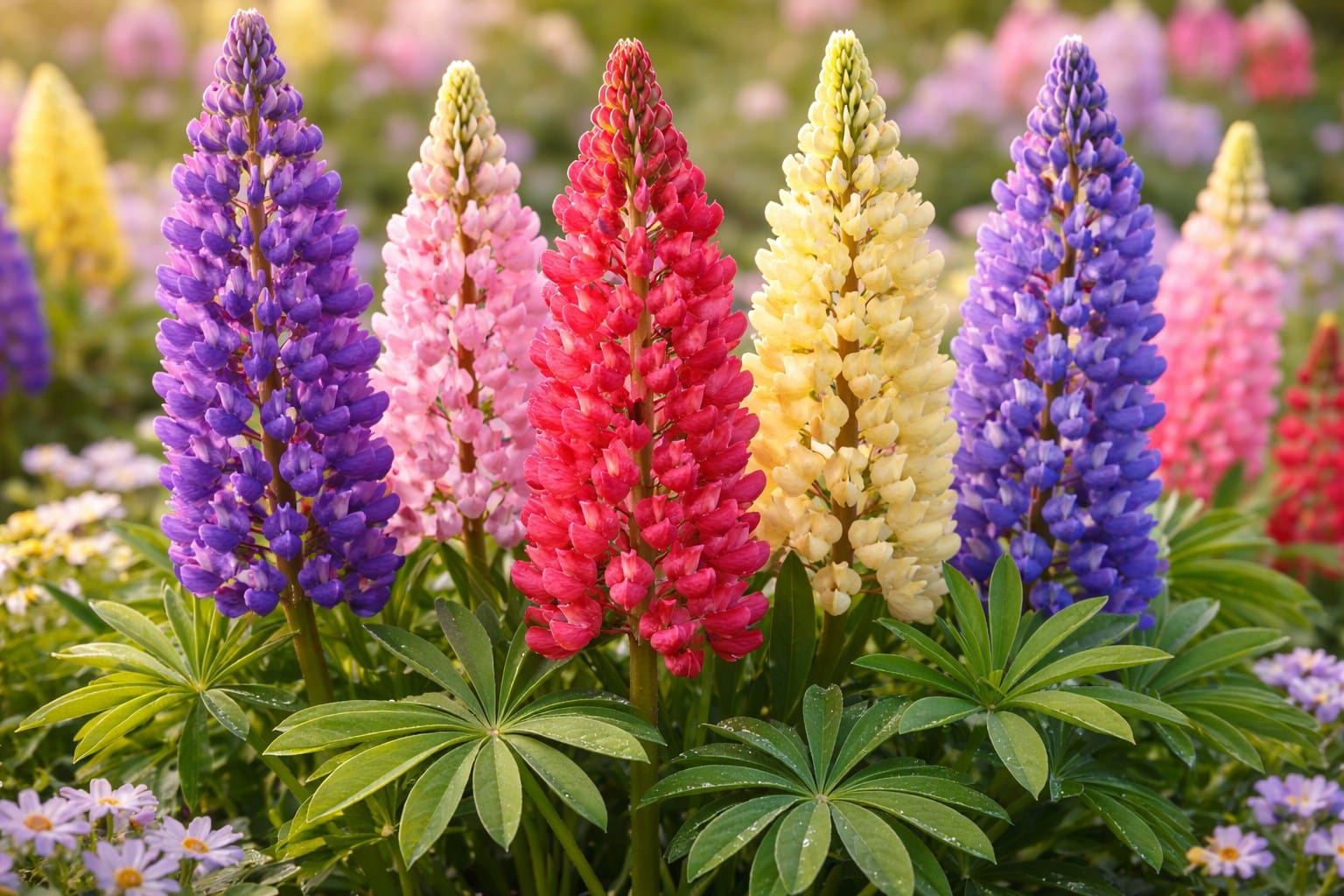
The lupine flower is admired for its tall, colorful spikes and wild, meadow-like beauty. Lupines bring height, texture, and vibrant color to gardens while also improving soil health. Often seen in cottage gardens, wildflower meadows, and natural landscapes, lupines are hardy, pollinator-friendly, and surprisingly easy to grow when planted in the right conditions.
This complete guide covers everything about lupine flowers, including their meaning, popular types, growing requirements, planting steps, care tips, common problems, uses, and expert advice to help you grow healthy, long-lasting lupines.
What Is a Lupine Flower
Lupine, also called lupin, belongs to the genus Lupinus. These flowering plants are members of the legume family and are known for their upright flower spikes made up of pea-like blossoms. Lupines can be annuals or perennials, depending on the species.
Lupines are native to North America, Europe, and parts of the Mediterranean. Their deep roots help them survive tough conditions and improve soil quality by fixing nitrogen.
Lupine Flower Meaning and Symbolism
Lupine flowers carry uplifting symbolism.
Common meanings include:
Imagination and creativity
Happiness and positivity
Renewal and growth
Strength through resilience
Because lupines thrive in poor soil and harsh environments, they are often associated with endurance and optimism.
Types of Lupine Flowers
There are many lupine species and hybrids.
Garden Lupines
These are the most common ornamental types.
They produce tall, colorful spikes
They bloom in late spring to early summer
They come in blue, purple, pink, red, white, and yellow
Wild Lupines
Native species often used in restoration projects.
They are drought-tolerant
They support native wildlife
They have a more natural appearance
Tree Lupines
Shrub-like lupines grown in mild climates.
They grow larger than garden types
They bloom for longer periods
Choosing the right type depends on climate and garden style.
When Do Lupines Bloom
Lupines bloom in late spring to early summer, typically from May to June. In cooler climates, blooms may last longer, while warmer areas may see earlier flowering.
With deadheading, some varieties can rebloom lightly later in the season.
Ideal Growing Conditions for Lupines
Lupines thrive in specific conditions.
They prefer:
Full sun to light shade
Cool to mild temperatures
Well-draining soil
Low to moderate fertility
Lupines do not like heat, humidity, or heavy clay soil.
Soil Requirements for Lupines
Soil quality is crucial for lupine success.
Best soil characteristics include:
Loose and sandy or loamy texture
Excellent drainage
Slightly acidic to neutral pH
Low nitrogen content
Too much fertilizer reduces flowering.
How to Plant Lupine Seeds or Plants
Lupines are commonly grown from seed.
Best Time to Plant
Plant seeds in early spring or fall. Transplants should be planted in spring.
Seed Planting Steps
Scarify seeds by nicking or soaking
Plant seeds ¼ inch deep
Space plants 12 to 18 inches apart
Water gently after planting
Seeds germinate in 2 to 4 weeks.
Growing Lupines in Containers
Lupines can be grown in containers but require care.
Container tips include:
Use deep pots for taproots
Choose excellent drainage
Use light, well-draining soil
Avoid frequent transplanting
Lupines dislike root disturbance.
Watering Lupine Plants
Lupines are drought-tolerant once established.
Watering guidelines:
Water regularly during establishment
Reduce watering after plants mature
Avoid soggy soil
Water deeply but infrequently
Overwatering leads to root rot.
Fertilizing Lupines
Lupines are low feeders.
Fertilizing tips:
Avoid nitrogen-heavy fertilizers
Use compost sparingly
Let lupines fix nitrogen naturally
Too much fertilizer results in leafy growth and fewer flowers.
Mulching Lupines
Mulch helps keep roots cool.
Good mulch options include:
Pine needles
Bark chips
Straw
Avoid heavy mulch around the crown.
Lupine Care After Blooming
Proper care extends plant life.
After flowering:
Deadhead spent blooms
Cut back stems to encourage growth
Leave foliage until it naturally fades
Deadheading may encourage a second bloom.
Do Lupines Come Back Every Year
Perennial lupines return for several years.
However:
Some varieties are short-lived
Self-seeding often replaces old plants
Naturalized areas see ongoing growth
Allowing seeds to fall ensures continuity.
Common Problems With Lupines
Lupines can face challenges.
Common issues include:
Poor flowering from excess nitrogen
Root rot in wet soil
Heat stress
Aphids and slugs
Correct site selection prevents most problems.
Pests and Diseases
Possible pests include:
Aphids
Slugs
Snails
Diseases may include powdery mildew in humid conditions.
Good airflow and proper spacing help reduce disease risk.
Lupines and Pollinators
Lupines are excellent pollinator plants.
They attract:
Bees
Butterflies
Native insects
They are especially important for native bee populations.
Using Lupine Flowers in Gardens
Lupines are versatile garden plants.
Common uses include:
Cottage gardens
Wildflower meadows
Borders and back-of-bed planting
Naturalized landscapes
Their tall spikes add vertical interest.
Companion Plants for Lupines
Good companion plants include:
Poppies
Daisies
Ornamental grasses
Yarrow
These plants complement lupines’ form and color.
Are Lupines Toxic
Some lupine species are toxic if ingested.
Safety notes:
Seeds and foliage may be harmful to pets
Avoid planting near grazing animals
Use caution around children
Ornamental lupines are grown for beauty, not consumption.
Lupine Flower in History and Culture
Lupines have been cultivated for centuries. While some species were historically used as food after processing, modern ornamental lupines are valued mainly for their beauty and ecological benefits.
They symbolize strength, imagination, and resilience.
Frequently Asked Questions
Lupines prefer cool climates and well-draining soil. They bloom in late spring and attract pollinators. Lupines improve soil health through nitrogen fixation. Avoid rich soil and excess fertilizer. Many lupines are short-lived but reseed naturally.
Final Thoughts
The lupine flower brings wild elegance, vibrant color, and ecological value to gardens. With their tall spikes, pollinator appeal, and soil-improving qualities, lupines are perfect for gardeners who love natural beauty and low-maintenance plants.
When planted in the right location and left mostly undisturbed, lupines reward you with stunning spring blooms and a garden that feels alive, balanced, and connected to nature.