
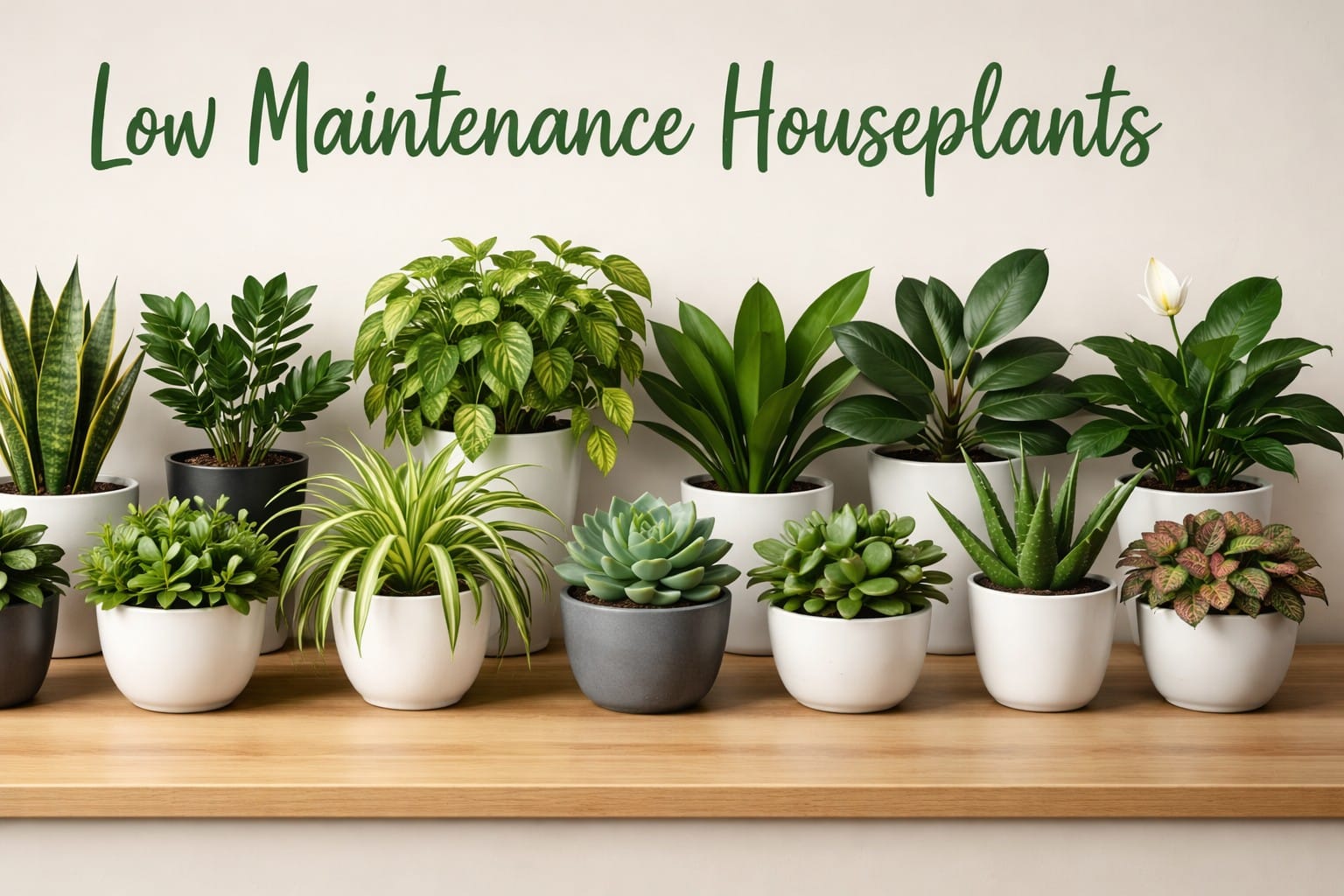
Houseplants are a beautiful way to bring nature indoors, improve air quality, and boost your mood. But not everyone has the time or patience to care for high-maintenance plants. That’s where low maintenance houseplants come in. These plants are resilient, forgiving, and perfect for beginners, busy professionals, or anyone who wants a green home without constant attention.
This guide will cover everything you need to know about low maintenance houseplants: the easiest varieties, care tips, placement, watering, common mistakes, and expert advice to keep your indoor garden thriving.
Why Choose Low Maintenance Houseplants
Low maintenance houseplants are ideal because they:
- Require minimal care: Perfect for busy schedules or forgetful plant owners.
- Adapt to different environments: Can tolerate low light, irregular watering, or fluctuating temperatures.
- Improve indoor air: Many still purify air and boost oxygen levels.
- Add style and life: Enhance your home decor with minimal effort.
These plants are resilient and forgiving, making it easy to enjoy greenery without stress.
Top Low Maintenance Houseplants
Here are some of the most popular and easy-to-care-for indoor plants:
1. Snake Plant (Sansevieria)
- Description: Tall, upright leaves with green and yellow stripes.
- Light: Low to bright indirect light.
- Water: Water every 2–3 weeks; drought-tolerant.
- Benefits: Purifies air; extremely hardy.
- Tips: Avoid overwatering; leaves rot in soggy soil.
2. ZZ Plant (Zamioculcas zamiifolia)
- Description: Thick, waxy leaves; feather-like growth.
- Light: Low to bright indirect light.
- Water: Water sparingly; drought-tolerant.
- Benefits: Nearly indestructible; ideal for beginners.
- Tips: Yellow leaves mean overwatering.
3. Pothos (Epipremnum aureum)
- Description: Trailing vines with heart-shaped leaves, sometimes variegated.
- Light: Low to bright indirect light.
- Water: Water when soil feels dry.
- Benefits: Easy to propagate; works in hanging baskets or shelves.
- Tips: Prune regularly to control length.
4. Spider Plant (Chlorophytum comosum)
- Description: Arching green leaves with white stripes; produces pups.
- Light: Bright, indirect light.
- Water: Keep soil slightly moist; avoid overwatering.
- Benefits: Air-purifying; adaptable to various conditions.
- Tips: Plant pups in new pots for propagation.
5. Peace Lily (Spathiphyllum)
- Description: Glossy green leaves with white, hood-shaped flowers.
- Light: Low to medium indirect light.
- Water: Keep soil moist; wilts slightly when thirsty.
- Benefits: Filters toxins; low maintenance despite flowers.
- Tips: Remove dust from leaves to encourage photosynthesis.
6. Aloe Vera
- Description: Succulent with thick, fleshy leaves containing gel.
- Light: Bright, indirect sunlight.
- Water: Allow soil to dry between watering.
- Benefits: Air-purifying and medicinal uses.
- Tips: Avoid overwatering; use well-draining soil.
7. Rubber Plant (Ficus elastica)
- Description: Large, glossy leaves; can grow tall indoors.
- Light: Medium to bright indirect light.
- Water: Keep soil moderately moist.
- Benefits: Adds height and texture; improves indoor air.
- Tips: Wipe leaves to remove dust; prune as needed.
8. Cast Iron Plant (Aspidistra elatior)
- Description: Large, dark green leaves; extremely hardy.
- Light: Low to medium indirect light.
- Water: Water when topsoil dries.
- Benefits: Survives neglect, low light, and temperature fluctuations.
- Tips: Avoid drafts and sudden temperature changes.
9. Jade Plant (Crassula ovata)
- Description: Succulent with thick leaves and woody stems.
- Light: Bright, indirect light.
- Water: Allow soil to dry between watering.
- Benefits: Low-maintenance; symbolic of luck.
- Tips: Prune occasionally; avoid overwatering.
10. Philodendron
- Description: Heart-shaped leaves; trailing or climbing varieties.
- Light: Low to bright indirect light.
- Water: Water when top inch of soil is dry.
- Benefits: Easy to grow and propagate; versatile for indoor spaces.
- Tips: Provide support for climbing types; prune for shape.
How to Care for Low Maintenance Houseplants
Even “low maintenance” plants benefit from basic care:
Light Requirements
- Most low maintenance plants can tolerate low to medium light, but grow faster with bright indirect light.
- Succulents like aloe and jade need more sunlight to thrive.
- Rotate plants to ensure even growth and prevent leaning.
Watering Tips
- Check soil moisture before watering; many low-maintenance plants prefer soil to dry slightly between watering.
- Avoid overwatering — the #1 cause of plant death.
- Use pots with drainage holes to prevent root rot.
Soil and Pots
- Use well-draining soil suitable for plant type.
- Succulents need gritty, sandy soil; tropical plants prefer loamy, moisture-retentive soil.
- Decorative outer pots are fine as long as inner pots allow drainage.
Humidity and Temperature
- Most low maintenance plants thrive in average room temperatures (60–75°F / 15–24°C).
- Tropical plants like philodendron and peace lily prefer higher humidity.
- Avoid placing plants near cold drafts or heating vents.
Fertilization
- Fertilize during the growing season (spring and summer) every 4–6 weeks.
- Use a balanced indoor plant fertilizer.
- Skip fertilizing in winter when growth slows.
Common Mistakes to Avoid
- Overwatering: Even resilient plants can die if soil is soggy.
- Ignoring light needs: Low-maintenance doesn’t mean no-light.
- Overcrowding: Reduces airflow, encouraging pests or disease.
- Neglecting cleaning: Dusty leaves can reduce photosynthesis.
- Using the wrong soil: Succulents in dense soil may rot; tropicals in sandy soil may dry out too fast.
Creative Display Ideas for Low Maintenance Houseplants
- Hanging Baskets: Ideal for trailing plants like pothos and spider plants.
- Window Sills: Perfect for succulents and aloe that need sunlight.
- Plant Corners: Combine larger plants like rubber plants and cast iron plants for a tropical effect.
- Shelving Displays: Use shelves for smaller plants like philodendron and jade plants.
- Decorative Pots: Match the pot with room style; low-maintenance plants don’t require constant repotting.
Expert Tips for Success
- Inspect plants regularly for pests like gnats or spider mites.
- Rotate plants to ensure even growth and light exposure.
- Wipe leaves to remove dust and improve air purification.
- Group plants with similar light and water needs together for convenience.
- Start with hardy varieties like snake plants, ZZ plants, or pothos for beginners.
FAQs About Low Maintenance Houseplants
Q: What is the easiest low maintenance houseplant?
A: Snake plants and ZZ plants are extremely resilient and nearly indestructible.
Q: How often should I water low maintenance plants?
A: Water when the top inch of soil is dry; succulents need less frequent watering than tropical plants.
Q: Can low maintenance plants purify air?
A: Yes, most common low-maintenance plants like snake plants, peace lilies, and spider plants improve indoor air quality.
Q: Are low maintenance plants safe for pets?
A: Some, like spider plants and cast iron plants, are safe. Others, like peace lilies and philodendrons, are toxic if ingested. Always check plant safety.
Q: Can I propagate low maintenance plants?
A: Yes, many can be propagated through cuttings, leaf division, or pups (e.g., spider plant and pothos).
Final Thoughts
Low maintenance houseplants are perfect for busy lifestyles, beginners, or anyone who wants a green, healthy home without constant attention. From resilient snake plants and ZZ plants to versatile pothos and philodendrons, these plants can survive neglect, low light, and irregular watering while still beautifying your space.
By understanding their light, water, soil, and general care needs, you can enjoy a thriving indoor garden with minimal effort. With proper placement, occasional maintenance, and a little attention, low maintenance houseplants will bring life, style, and even cleaner air to your home every day.