
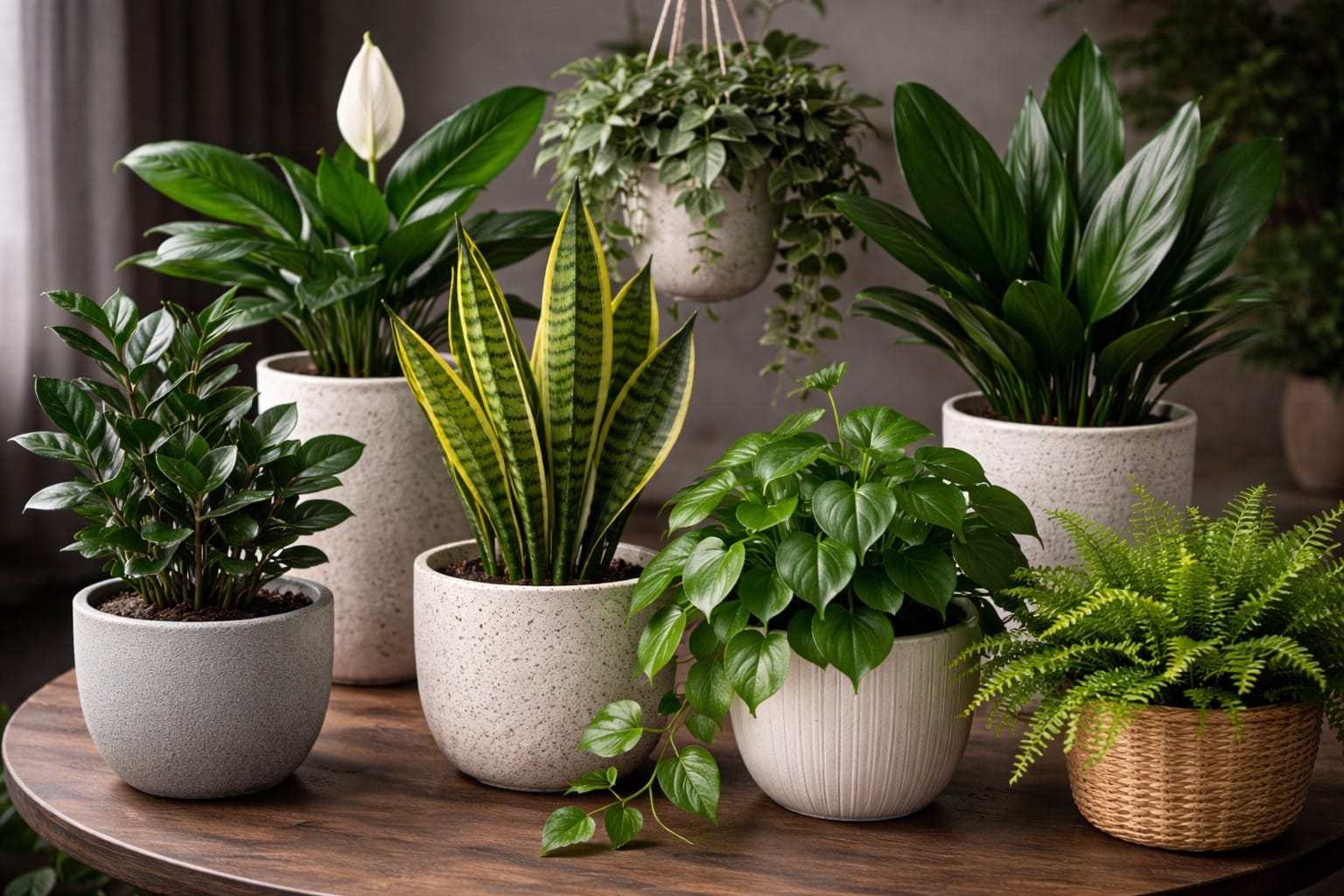
Houseplants that improve air quality and don’t need much light are perfect for modern homes, apartments, and offices where sunlight is limited. These plants do more than decorate a space. They help create a fresher indoor environment while thriving in corners, hallways, bedrooms, and rooms with small or shaded windows. The best part is that they do this with very little effort, making them ideal for beginners and busy people.
This detailed guide covers the best low-light houseplants that help improve indoor air quality, how they work, which rooms they suit best, how to care for them properly, common mistakes, and expert tips to keep them healthy long-term.
How Houseplants Improve Indoor Air Quality
Houseplants improve indoor air quality mainly through natural biological processes. Leaves absorb carbon dioxide and release oxygen, while roots and soil microorganisms help break down airborne pollutants. Plants also increase humidity slightly, which can make indoor air feel more comfortable.
Indoor plants may help with:
- Absorbing certain airborne pollutants
- Increasing oxygen levels
- Reducing dryness caused by air conditioning
- Creating a fresher indoor feel
- Supporting a calmer, healthier living space
While plants are not a replacement for ventilation, they are a valuable addition to indoor environments.
What Makes a Good Low-Light Air-Improving Plant
Not all plants can handle low light and indoor conditions. The best low-light air-friendly houseplants share a few key traits.
They usually:
- Tolerate low to medium indirect light
- Grow slowly and steadily
- Adapt well to indoor humidity
- Require infrequent watering
- Maintain healthy leaves year-round
These plants survive where sunlight is limited and care is minimal.
Snake Plant
The snake plant is one of the best houseplants for low light and air quality.
Why it stands out:
- Thrives in low, medium, and bright light
- Releases oxygen even at night
- Extremely drought tolerant
- Very resistant to pests
Its tall, upright leaves make it ideal for bedrooms, offices, and corners.
Care basics:
- Water every 2–3 weeks
- Let soil dry completely
- Avoid overwatering
Snake plants are among the easiest and toughest indoor plants.
ZZ Plant
The ZZ plant is perfect for low-light indoor spaces.
Why it’s excellent:
- Thick roots store water
- Handles very low light
- Shiny leaves trap dust particles
- Minimal maintenance required
It is commonly used in offices and apartments with limited windows.
Care basics:
- Water only when soil is dry
- Low to medium light
- Well-draining soil
Too much water is the only real danger.
Peace Lily
Peace lilies are known for their elegant look and adaptability.
Why they are a good choice:
- Tolerate low to medium light
- Help maintain indoor humidity
- Visually show when they need water
- Attractive glossy leaves and white blooms
They work well in bedrooms and living rooms.
Care basics:
- Water when leaves slightly droop
- Keep soil lightly moist
- Avoid direct sunlight
Peace lilies prefer consistent but gentle care.
Spider Plant
Spider plants are simple, reliable, and effective.
Why they work well indoors:
- Tolerate low to bright indirect light
- Help reduce indoor air dryness
- Easy to grow and propagate
- Safe for most indoor spaces
Their arching leaves and baby plantlets add life to shelves and hanging baskets.
Care basics:
- Water when top soil dries
- Bright indirect light for best growth
- Trim brown tips occasionally
They adapt well to different environments.
Dracaena
Dracaena plants are popular for indoor spaces with limited light.
Why they’re effective:
- Adapt to low light
- Tall structure improves air circulation
- Slow, steady growth
- Long lifespan indoors
Common varieties include Janet Craig and Massangeana.
Care basics:
- Allow soil to dry slightly
- Bright indirect to low light
- Use filtered water if possible
They are excellent for offices and corners.
Chinese Evergreen
Chinese evergreens are among the most dependable low-light plants.
Why they are ideal:
- Thrive in low light
- Adapt well to indoor humidity
- Decorative patterned leaves
- Low maintenance
They are especially popular in apartments and workspaces.
Care basics:
- Water moderately
- Avoid cold drafts
- Low to medium indirect light
They remain attractive even in dim rooms.
Cast Iron Plant
The cast iron plant lives up to its name.
Why it’s a great choice:
- Tolerates very low light
- Handles temperature changes
- Rarely affected by pests
- Extremely long-lasting
It’s ideal for hallways and shaded rooms.
Care basics:
- Water sparingly
- Avoid direct sunlight
- Slow growth is normal
This plant thrives on neglect.
Pothos
Pothos is one of the most adaptable houseplants.
Why it’s popular:
- Grows in low to bright indirect light
- Easy to care for
- Helps freshen indoor spaces
- Trails beautifully from shelves
It’s a favorite for beginners.
Care basics:
- Water when top soil dries
- Trim regularly to keep full
- Avoid soggy soil
Pothos recovers quickly from stress.
Benefits of Low-Light Air-Friendly Houseplants
These plants offer more than decoration.
Key benefits include:
- Fresher indoor feel
- Reduced dryness
- Natural stress relief
- Improved mood
- Better room aesthetics
They make indoor spaces feel calmer and more alive.
Best Rooms for Low-Light Air-Improving Plants
These plants work well in many areas of the home.
Ideal locations include:
- Bedrooms
- Offices
- Bathrooms with small windows
- Hallways
- Living rooms with indirect light
Matching plants to room conditions ensures long-term success.
Watering Tips for Low-Light Houseplants
Low-light plants usually need less water.
Important rules:
- Always check soil before watering
- Overwatering causes root rot
- Pots must have drainage holes
When in doubt, wait a few more days.
Soil and Pot Choice
Proper soil keeps plants healthy.
Best practices:
- Use light, well-draining potting mix
- Avoid heavy garden soil
- Choose pots with drainage
Good drainage is essential for low-light plants.
Common Mistakes to Avoid
Even tough plants can struggle with poor care.
Avoid these mistakes:
- Overwatering
- No drainage holes
- Placing plants in total darkness
- Using harsh direct sunlight
- Ignoring dust buildup on leaves
Simple care habits make a big difference.
How Many Plants Are Needed
More plants generally create a greater effect.
Helpful guidelines:
- One medium plant per small room
- Multiple plants for larger spaces
- Grouping plants improves humidity
Balance beauty with available space.
Are These Plants Safe for Pets
Some low-light plants are toxic to pets.
Pet owners should be cautious with:
- Snake plant
- Dracaena
- Peace lily
Pet-safe options include spider plants and some palms.
Frequently Asked Questions
Low-light houseplants do not clean air overnight, but they support a healthier indoor environment. Snake plants and ZZ plants are among the best for low light. Overwatering is the most common mistake. Low light does not mean no light. With basic care, these plants live for many years indoors.
Final Thoughts
Houseplants that improve air quality and don’t need much light are ideal for indoor spaces where sunlight is limited. They offer beauty, calm, and a fresher indoor feel without demanding constant care or bright windows.
By choosing tough, adaptable plants like snake plants, ZZ plants, dracaena, and peace lilies, you can enjoy greenery that fits your lifestyle. With simple watering habits, proper placement, and patience, these low-light houseplants will thrive and quietly enhance your indoor environment for years to come.