
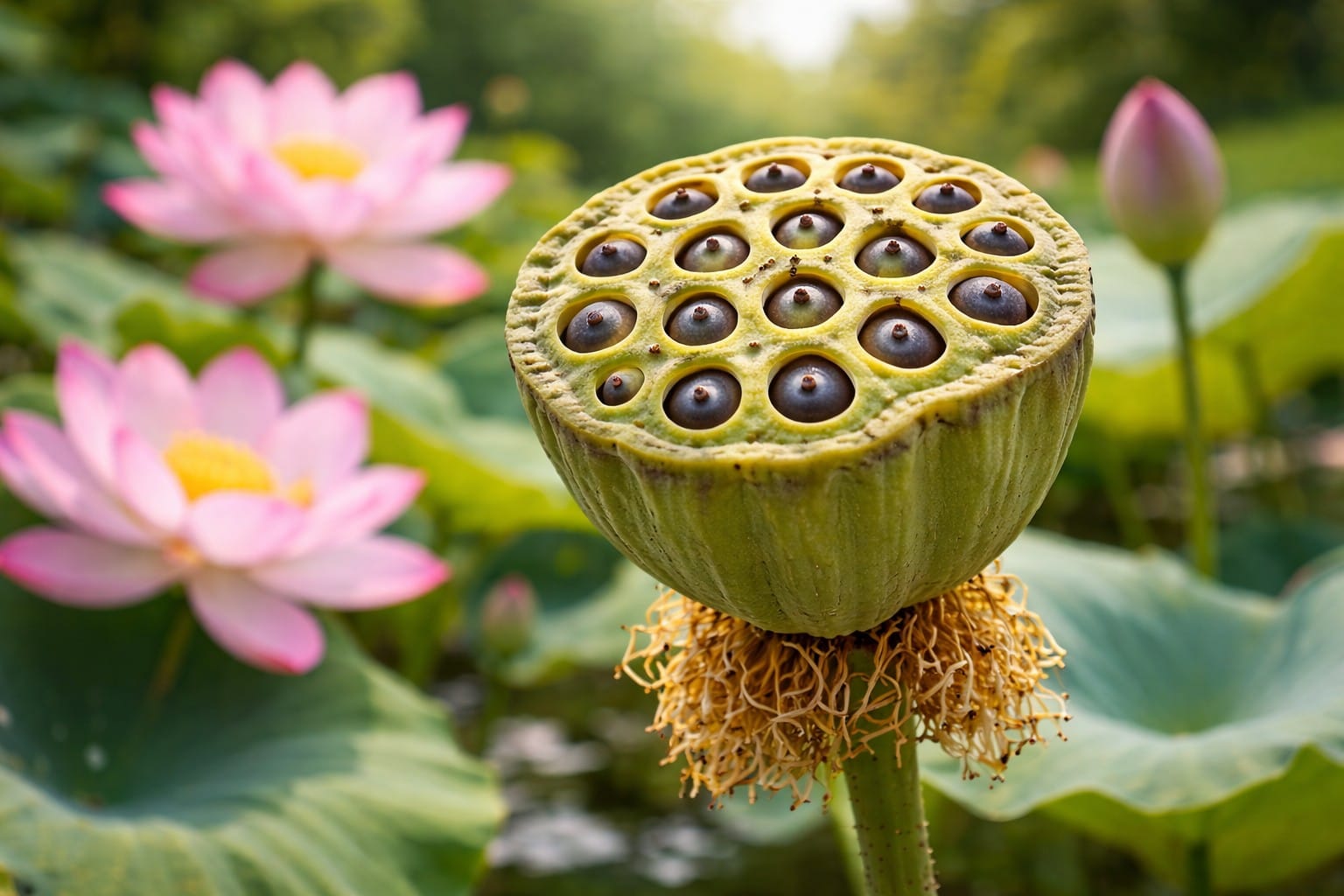
Lotus flower seed pods are the source of lotus seeds, the starting point for growing magnificent aquatic lotus plants (Nelumbo nucifera). Known for their large, fragrant blooms and floating leaves, lotus plants are prized for ponds, water gardens, and indoor containers. Lotus seeds come from the distinctive seed pods that form after flowering, making them both beautiful and functional.
This complete guide covers everything about lotus flower seed pods, including harvesting seeds, planting, soil and water requirements, care, common problems, storage, and expert tips for successful lotus growth.
What Are Lotus Flower Seed Pods
A lotus flower seed pod is the green, cone-shaped structure that forms at the center of a lotus flower after it blooms. Each pod contains multiple seeds, which are:
- Round or oval
- Hard-shelled and durable
- Often brown or green depending on maturity
- Capable of remaining viable for years under proper storage
Lotus seed pods are both ornamental and functional, allowing gardeners to propagate new lotus plants.
Meaning and Symbolism of Lotus Flowers
Lotus flowers and seeds are highly symbolic:
- Purity and enlightenment
- Rebirth and spiritual growth
- Peace and resilience
- Beauty and serenity
Lotus seeds themselves symbolize potential, growth, and the promise of new beginnings, making them popular in gardens and cultural rituals.
Types of Lotus Flower Seeds
Lotus seeds are categorized by the type of lotus plant they come from:
Sacred Lotus (Nelumbo nucifera)
- Large, fragrant flowers
- Pink, white, or red blooms
- Commonly used in ponds and temples
American Lotus (Nelumbo lutea)
- Yellow flowers
- Hardy in cooler climates
- Native to North America
Dwarf Lotus Varieties
- Smaller blooms and leaves
- Ideal for container water gardens
- Easy to manage
Decorative or Hybrid Varieties
- Mixed colors or unusual petal shapes
- Bred for ornamental ponds
- Often more vigorous bloomers
Harvesting Lotus Flower Seed Pods
Harvesting the seed pods is key to obtaining viable seeds:
- Wait until the seed pod turns brown and firm
- Remove the pod carefully from the plant
- Break open the pod to reveal seeds inside
- Collect mature seeds that are hard-shelled and dark in color
Immature green seeds may not germinate successfully.
Preparing Lotus Seeds for Planting
Lotus seeds require scarification due to their hard shell:
- Rub seeds gently with sandpaper or a file to nick the outer coating
- Soak seeds in warm water for 24–48 hours until they swell and sprout a small root
- Change water daily to prevent mold
- Once seeds show root growth, they are ready to plant
Scarification ensures faster and more reliable germination.
Soil and Container Requirements
Lotus seeds grow in aquatic conditions, so container and soil setup is important:
- Use heavy clay or loam soil; avoid light potting soil that floats
- Shallow, wide containers 12–24 inches in diameter work best
- Add 3–4 inches of soil at the bottom
- Submerge the container in water 2–4 inches above the soil
Proper soil and water depth allow lotus roots to anchor and grow robustly.
How to Plant Lotus Seeds
Step-by-Step Planting
- Prepare scarified seeds in warm water until sprouted
- Fill container with clay soil
- Place seeds gently on soil, pressing slightly
- Add 2–4 inches of water above soil
- Keep water warm and sunlight exposure at least 6 hours per day
Germination occurs in 1–3 weeks, depending on temperature and seed viability.
Indoor vs Outdoor Planting
- Indoors: Use large bowls or tanks near a sunny window
- Outdoors: Place containers in garden ponds or water features once warm
Lotus plants prefer temperatures above 70°F (21°C) for best growth.
Sunlight Requirements
- Full sun is essential for lotus plants
- At least 6–8 hours of direct sunlight daily
- More sun ensures larger blooms and stronger growth
Partial shade may reduce flowering and weaken plants.
Watering and Maintenance
Lotus seeds require constant water coverage:
- Maintain 2–4 inches of water above soil
- Avoid allowing soil to dry out
- Fertilize sparingly once leaves appear
- Remove yellowing leaves to encourage new growth
Proper water depth and temperature are crucial for survival and flowering.
Fertilizing Lotus Plants
- Use aquatic plant fertilizer tablets
- Apply once seedlings have 4–6 leaves
- Avoid fertilizing during germination phase
- Over-fertilization can damage young plants
Regular feeding supports lush foliage and abundant blooms.
Growth and Blooming Timeline
Typical growth for lotus plants:
- Germination: 1–3 weeks
- Seedling growth: 4–6 weeks
- First leaves reach surface: 2–3 months
- Flowering: 3–6 months, depending on climate
Lotus plants are slow starters but reward patience with majestic blooms.
Caring for Lotus Plants
Basic care ensures long-term success:
- Provide full sun and warm water
- Maintain stable water depth
- Thin out overcrowded plants annually
- Protect from frost in temperate climates
- Remove spent flowers and seed pods to encourage new blooms
Common Problems and Solutions
Seeds Not Germinating
- Caused by lack of scarification or cold water
- Properly nick and soak seeds
Yellowing Leaves
- Caused by nutrient deficiency or low sunlight
- Fertilize appropriately and ensure sun exposure
Pests
- Aphids and snails may attack leaves
- Use gentle, aquatic-safe treatments
Fungal Diseases
- Mold on seeds during soaking
- Change water daily and discard unhealthy seeds
Harvesting Lotus Seeds for Storage
- Collect fully mature, hard-shelled seeds from dried seed pods
- Clean seeds thoroughly
- Dry seeds in a cool, shaded area for several days
Properly dried seeds remain viable for several years.
Storing Lotus Seeds
- Use airtight containers or paper envelopes
- Store in a cool, dry, dark place
- Label with variety and harvest date
- Seeds can remain viable for 5–10 years under ideal conditions
Lotus Seeds in Containers
- Choose wide, shallow containers for indoor ponds
- Provide heavy clay soil and 2–4 inches of water
- Keep in warm, sunny location
- Protect from cold drafts or frost
Dwarf varieties are ideal for small container ponds.
Landscape Uses
Lotus plants from seed are versatile in water gardens:
- Garden ponds and water features
- Patio containers or ornamental bowls
- Complement koi ponds and aquatic plants
- Create serene, meditative garden spaces
Frequently Asked Questions
Are lotus seeds easy to grow?
Yes, with scarification and warm water, they germinate reliably.
Do lotus seeds need full sun?
Yes, they require at least 6–8 hours of sunlight daily.
Can lotus grow indoors?
Yes, in large containers with full sunlight and warm water.
How long do lotus seeds remain viable?
Seeds can last 5–10 years if stored properly.
Do lotus seeds require fertilization?
Yes, but only after leaves have developed and are floating on the water surface.
Expert Growing Tips
- Scarify seeds before planting
- Keep water temperature warm (above 70°F)
- Provide at least 6 hours of sun daily
- Use heavy clay soil for root anchoring
- Remove dead leaves and flowers to promote new growth
Final Thoughts
Lotus flower seed pods provide gardeners with the starting point for growing beautiful, serene aquatic plants. With proper preparation, warm sunlight, and stable water conditions, lotus seeds grow into magnificent blooms with floating leaves that bring elegance and tranquility to ponds, containers, and water gardens.
By harvesting, scarifying, and planting lotus seeds carefully, you can enjoy the symbolic beauty, fragrance, and calm presence of lotus flowers in your garden for years to come.