
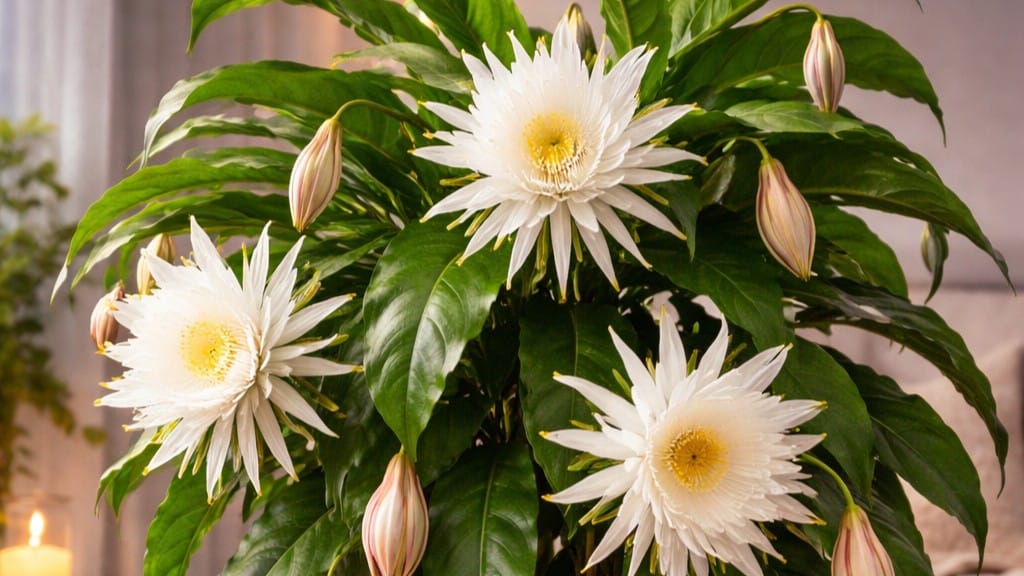
The Kadupul flower plant, also known as the Epiphyllum oxypetalum or “Queen of the Night,” is a rare and mystical cactus species famed for its fragrant, large, white flowers that bloom only at night. Native to tropical rainforests, Kadupul flowers are celebrated for their beauty and rarity, as blooms appear once a year and wilt within hours.
This complete guide covers everything you need to know about the Kadupul flower plant, including its characteristics, care requirements, growing conditions, propagation, common issues, and expert tips to enjoy this elusive bloom.
What Is the Kadupul Flower Plant
Kadupul flower is a nocturnal flowering cactus and epiphytic plant, meaning it often grows on other plants in the wild without harming them.
Key characteristics:
Large, fragrant, white blooms that open at night
Epiphytic growth habit
Long, flat succulent stems
Rare, fleeting flowers lasting only a few hours
Tropical origin
The plant is famous in folklore and often regarded as a symbol of ephemeral beauty.
Meaning and Symbolism
Kadupul flowers carry deep cultural and spiritual significance.
Common meanings include:
Ephemeral beauty and the fleeting nature of life
Mystery and elegance
Purity and peace
Spiritual awakening
Because the flower blooms at night and vanishes quickly, it is often associated with precious, once-in-a-lifetime moments.
Kadupul Flower Varieties
While Kadupul is a specific species, closely related night-blooming epiphyllums include:
Epiphyllum oxypetalum
Classic Kadupul cactus
Large, fragrant white blooms
Night-blooming
Epiphyllum anguliger
Also called fishbone cactus
Smaller flowers, slightly less fragrant
Unique zig-zag stems
Epiphyllum hookeri
Popular cultivated variety
Blooms more frequently under ideal conditions
Large white flowers
Why Grow Kadupul Flower Plant
Kadupul flowers are rare, exotic, and highly rewarding for gardeners willing to meet their needs.
Benefits of growing Kadupul:
Spectacular nocturnal flowers
Fragrant blooms
Unique architectural stems
Conversation starter and ornamental appeal
Excellent for night gardens
Due to its short bloom duration, careful timing ensures you don’t miss the magical opening.
Sun Requirements
Kadupul flowers thrive in indirect light or partial shade.
Light guidelines:
Bright but filtered sunlight
Avoid harsh direct sun — can scorch stems
Morning sun ideal in tropical climates
Indoor placement near east-facing windows works well
Proper light encourages strong growth and more frequent flowering.
Soil Requirements
Kadupul plants need well-draining, aerated soil similar to other epiphytic cacti.
Soil requirements:
Cactus or orchid potting mix
Add perlite or coarse sand for drainage
Slightly acidic to neutral pH
Avoid waterlogged soil
Good drainage prevents root rot, which is fatal for epiphyllums.
How to Plant Kadupul Flower
Planting properly ensures long-term health.
Planting tips:
Use a large pot with drainage holes
Fill with epiphytic cactus mix
Plant stems just deep enough to stabilize them
Water lightly after planting
Place in bright, indirect sunlight
Kadupul can also be mounted on bark or grown in hanging baskets.
Watering Kadupul Flower Plant
Watering is crucial — too much kills, too little stresses.
Watering guidelines:
Water when the top 1–2 inches of soil are dry
Reduce watering during winter (resting period)
Avoid waterlogging
Increase humidity slightly if indoor air is dry
Overwatering can cause stem and root rot.
Temperature and Climate
Kadupul prefers tropical or subtropical climates.
Temperature needs:
Daytime: 70–85°F (21–29°C)
Nighttime: 60–70°F (15–21°C)
Avoid frost — it is sensitive to cold
Protect from extreme heat or dry winds
Indoor growing is possible with careful control.
Fertilizing Kadupul Flower
Fertilizing encourages stem growth and flowering.
Fertilizer tips:
Use balanced, water-soluble cactus fertilizer
Feed every 4–6 weeks during growing season
Stop fertilizing during winter rest
Avoid high nitrogen — promotes foliage, not flowers
Organic compost can also supplement nutrients.
Blooming Season
Kadupul flowers are nocturnal and ephemeral, typically blooming once per year.
Blooming details:
Flowers open at night and close by early morning
Blooms last 6–12 hours
Flowering season varies by climate — usually summer
Requires mature, healthy stems for bloom
Patience is key; the reward is an unforgettable floral display.
Pruning and Training
Pruning helps maintain plant shape and encourages flowering.
Pruning tips:
Remove dead or damaged stems
Trim older stems to promote new growth
Support long stems in hanging baskets or trellises
Use clean tools to avoid infections
Do not over-prune; new growth is essential for flowering.
Propagating Kadupul Flower
Kadupul is propagated easily from cuttings.
Propagation steps:
Take healthy stem segments
Let cuttings dry for 1–2 days to callous
Plant in well-draining soil
Keep in indirect sunlight until roots form
Propagation allows gardeners to expand their collection.
Growing Kadupul in Containers
Kadupul adapts well to containers.
Container tips:
Use wide, shallow pots
Ensure excellent drainage
Position in bright, indirect light
Support trailing or climbing stems
Container growth allows indoor night-bloom observation.
Common Problems and Solutions
Stem Rot
Caused by overwatering
Water less and improve drainage
Yellowing Stems
Too much sun or water stress
Move to filtered light, adjust watering
No Flowering
Plant too young, insufficient light, or wrong season
Ensure mature stems, good light, and proper care
Pests
Mealybugs or spider mites
Treat with insecticidal soap or neem oil
Kadupul Flower in Garden Design
Kadupul is perfect for night gardens or tropical-themed spaces.
Design ideas:
Night gardens for evening enjoyment
Hanging baskets to display cascading stems
Near patios or balconies for fragrance
Combine with ferns or orchids
Its blooms are a magical centerpiece when timed right.
Frequently Asked Questions
Does Kadupul flower bloom every year
Yes, typically once per year, depending on conditions
Can Kadupul grow indoors
Yes, with bright indirect light and proper care
How long do Kadupul blooms last
Usually 6–12 hours
Is Kadupul easy to grow
Moderate care — not difficult but needs correct light, water, and patience
Can I propagate from cuttings
Yes, stem cuttings root easily
Expert Tips for Enjoying Kadupul Flowers
Provide bright, indirect sunlight
Ensure well-draining soil
Water moderately, avoid soggy soil
Feed during growing season
Support long stems
Observe the night bloom — it only lasts a few hours
Final Thoughts
The Kadupul flower plant (Epiphyllum oxypetalum) is a rare, mystical, and breathtaking plant. Its ephemeral night-blooming flowers make it highly prized among gardeners and plant enthusiasts.
With proper sunlight, well-draining soil, careful watering, and patient observation, Kadupul rewards you with fragrant, otherworldly blooms that create unforgettable magical moments, making it a truly special plant for any tropical, container, or night garden.