
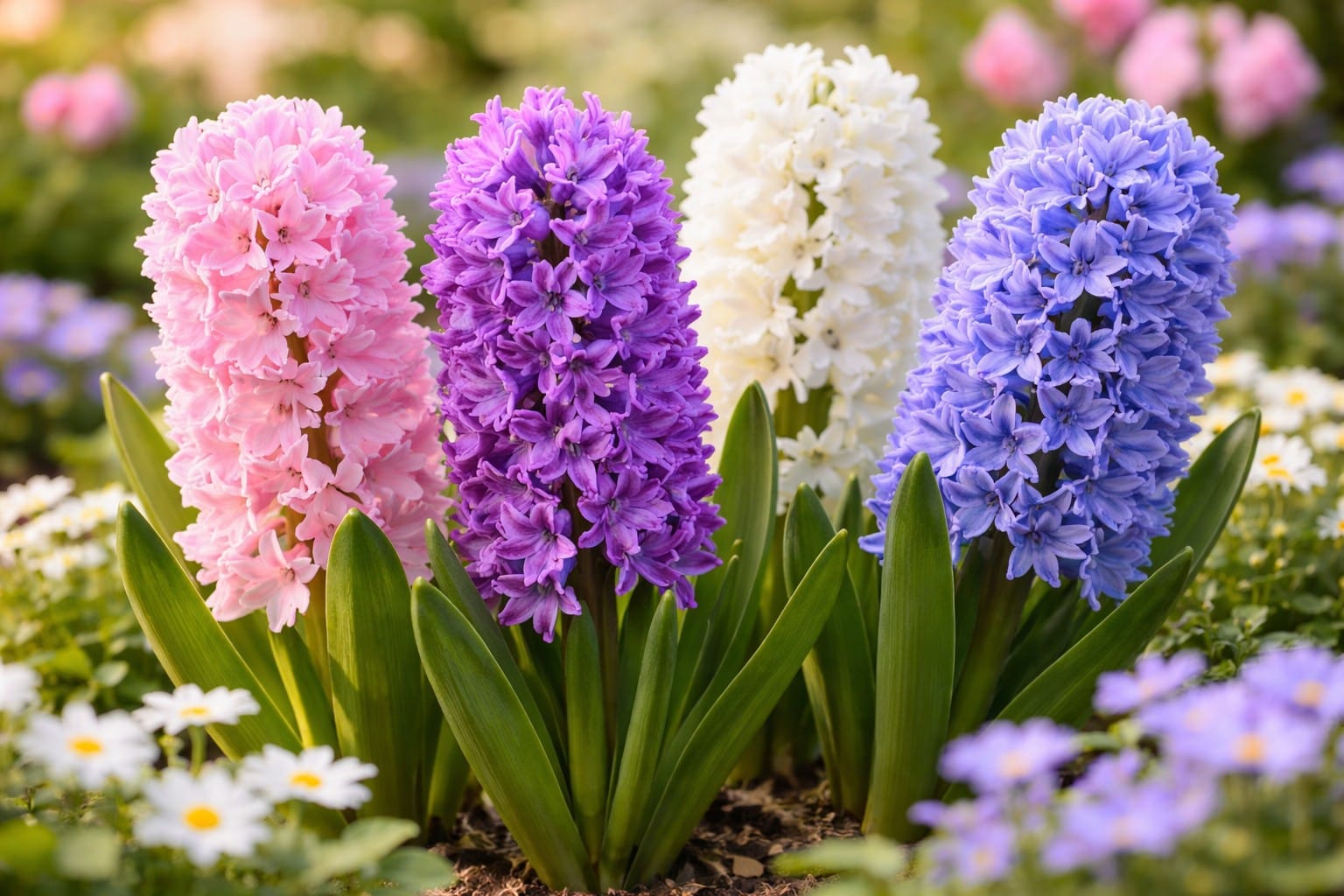
The hyacinth flower is loved for its rich fragrance, compact blooms, and vibrant colors. It is one of the most popular spring-flowering plants, often associated with renewal, love, and beauty. Whether grown in gardens, pots, or indoors, hyacinths bring strong scent and bold color to any space with minimal effort when cared for properly.
This complete guide covers everything about the hyacinth flower, including its meaning, types, growing requirements, planting steps, care tips, common problems, indoor forcing, uses, and frequently asked questions.
What Is a Hyacinth Flower
Hyacinth is a bulb-grown flowering plant from the genus Hyacinthus. It produces dense spikes of small, star-shaped flowers that bloom in early to mid-spring. Native to the eastern Mediterranean and parts of the Middle East, hyacinths have been cultivated for centuries for both ornamental and fragrant purposes.
Each bulb produces one thick flower stalk surrounded by upright, glossy green leaves. Despite their compact size, hyacinths make a big impact due to their intense scent and vivid colors.
Hyacinth Flower Meaning and Symbolism
Hyacinth flowers carry deep symbolic meaning that varies by color.
General meanings include:
Rebirth and spring renewal
Beauty and joy
Peace and sincerity
Color meanings:
Blue hyacinth represents sincerity and calm
Purple hyacinth symbolizes royalty and spirituality
Pink hyacinth expresses love and playfulness
White hyacinth stands for purity and peace
Yellow hyacinth can symbolize jealousy or cheerfulness, depending on context
Hyacinths are often used in spring celebrations and meaningful floral arrangements.
Types of Hyacinth Flowers
There are several varieties of hyacinths grown worldwide.
Common Garden Hyacinth
This is the most popular type, known for thick flower spikes and strong fragrance.
Roman Hyacinth
Produces looser flower spikes and is often used for indoor forcing.
Multiflora Hyacinth
Creates multiple flower stalks from one bulb, offering a more natural look.
Each type comes in a wide range of colors, making hyacinths versatile for design and landscaping.
When Do Hyacinths Bloom
Hyacinths bloom in early to mid-spring, usually between March and April, depending on climate. Indoors, forced hyacinths can bloom during winter months.
Bloom time lasts about 2 to 3 weeks, but the fragrance often feels longer due to its strength.
Ideal Growing Conditions for Hyacinth
Hyacinths are easy to grow when planted in the right conditions.
They prefer:
Full sun to partial shade
Well-draining soil
Cool winters for proper bulb development
Moderate moisture
Hyacinths need a cold period to bloom, which makes them ideal for temperate climates.
How to Plant Hyacinth Bulbs
Planting hyacinth bulbs correctly is key to healthy blooms.
Best Time to Plant
Plant bulbs in fall, about 6 to 8 weeks before the ground freezes.
Step-by-Step Planting
Choose healthy, firm bulbs
Dig holes 4 to 6 inches deep
Space bulbs 4 to 6 inches apart
Place bulbs with pointed end facing up
Cover with soil and water lightly
Once planted, bulbs remain dormant through winter and sprout in spring.
Soil Requirements for Hyacinth
Soil quality affects bloom size and bulb health.
Best soil conditions include:
Loose and well-draining soil
Slightly acidic to neutral pH
Organic matter mixed in
Avoid heavy clay soil, as it can trap moisture and rot bulbs.
Growing Hyacinths in Pots
Hyacinths grow very well in containers.
Pot growing tips:
Use pots with drainage holes
Choose a well-draining potting mix
Plant bulbs close but not touching
Water lightly after planting
Container-grown hyacinths are perfect for patios, balconies, and indoor displays.
Indoor Hyacinth Forcing
Forcing hyacinths indoors allows winter blooms.
Steps for forcing:
Chill bulbs in the refrigerator for 10 to 12 weeks
Plant in pots or water-forcing vases
Place in a cool, dark area until shoots appear
Move to bright light once leaves grow
Keep soil moist but not wet
Indoor hyacinths bloom beautifully but are usually not reused outdoors.
Watering Hyacinth Plants
Hyacinths do not like excess water.
Watering guidelines:
Water after planting
Keep soil slightly moist during growth
Reduce watering after flowering
Avoid waterlogged soil
Overwatering is one of the most common causes of bulb rot.
Fertilizing Hyacinths
Hyacinths are light feeders.
Fertilizing tips:
Add compost at planting time
Use balanced bulb fertilizer in early spring
Avoid over-fertilizing
Healthy soil usually provides enough nutrients.
Hyacinth Flower Care After Blooming
After flowering, proper care helps bulbs store energy.
Post-bloom care includes:
Removing spent flowers
Allowing leaves to yellow naturally
Continuing light watering
Avoid cutting leaves too early
Leaves help the bulb recharge for the next season.
Do Hyacinths Come Back Every Year
Yes, hyacinths are perennial in suitable climates.
However:
Blooms may be smaller each year
Some gardeners replace bulbs annually
Naturalized bulbs return with care
Cold winters help improve repeat blooming.
Common Problems With Hyacinths
Hyacinths are generally low-maintenance but can face issues.
Common problems include:
Bulb rot from excess moisture
Floppy flower stems due to warmth
Poor blooms from lack of cold period
Pests such as squirrels digging bulbs
Using proper planting depth and drainage prevents most issues.
Pests and Diseases
Hyacinths are relatively pest-resistant.
Possible issues include:
Aphids
Slugs
Bulb rot
Protect bulbs with mesh or mulch if animals are a problem.
Are Hyacinths Toxic
Yes, hyacinths are toxic if ingested.
Important safety notes:
Bulbs are especially toxic
Can cause skin irritation when handled
Keep away from pets and children
Wearing gloves when planting is recommended.
Hyacinth Uses in Gardens and Homes
Hyacinths are used in many ways.
Common uses include:
Spring garden beds
Borders and pathways
Container displays
Indoor floral décor
Fragrant cut flower arrangements
Their strong scent makes them ideal for entryways and patios.
Companion Plants for Hyacinths
Hyacinths pair well with other spring bulbs.
Good companions include:
Tulips
Daffodils
Crocus
Muscari
These combinations create layered spring color displays.
Hyacinth Flower in History and Culture
The hyacinth flower has roots in Greek mythology, associated with the story of Hyacinthus, symbolizing beauty and tragic love. Over time, it became a symbol of rebirth and spring renewal across Europe and Asia.
Today, hyacinths remain a classic spring flower worldwide.
Frequently Asked Questions
Hyacinths bloom in spring and prefer cool temperatures. They grow best from bulbs planted in fall. Hyacinths can be grown indoors through forcing. Proper drainage and a cold period are essential for strong blooms. Bulbs are toxic and should be handled with care.
Final Thoughts
The hyacinth flower is a perfect choice for gardeners who want bold color, powerful fragrance, and easy care. Whether planted in garden beds, containers, or grown indoors, hyacinths bring life and freshness to early spring landscapes.
With the right planting time, proper soil, and minimal maintenance, hyacinths reward you with unforgettable blooms year after year. Their beauty, scent, and symbolism make them one of the most cherished spring flowers in gardens around the world.