
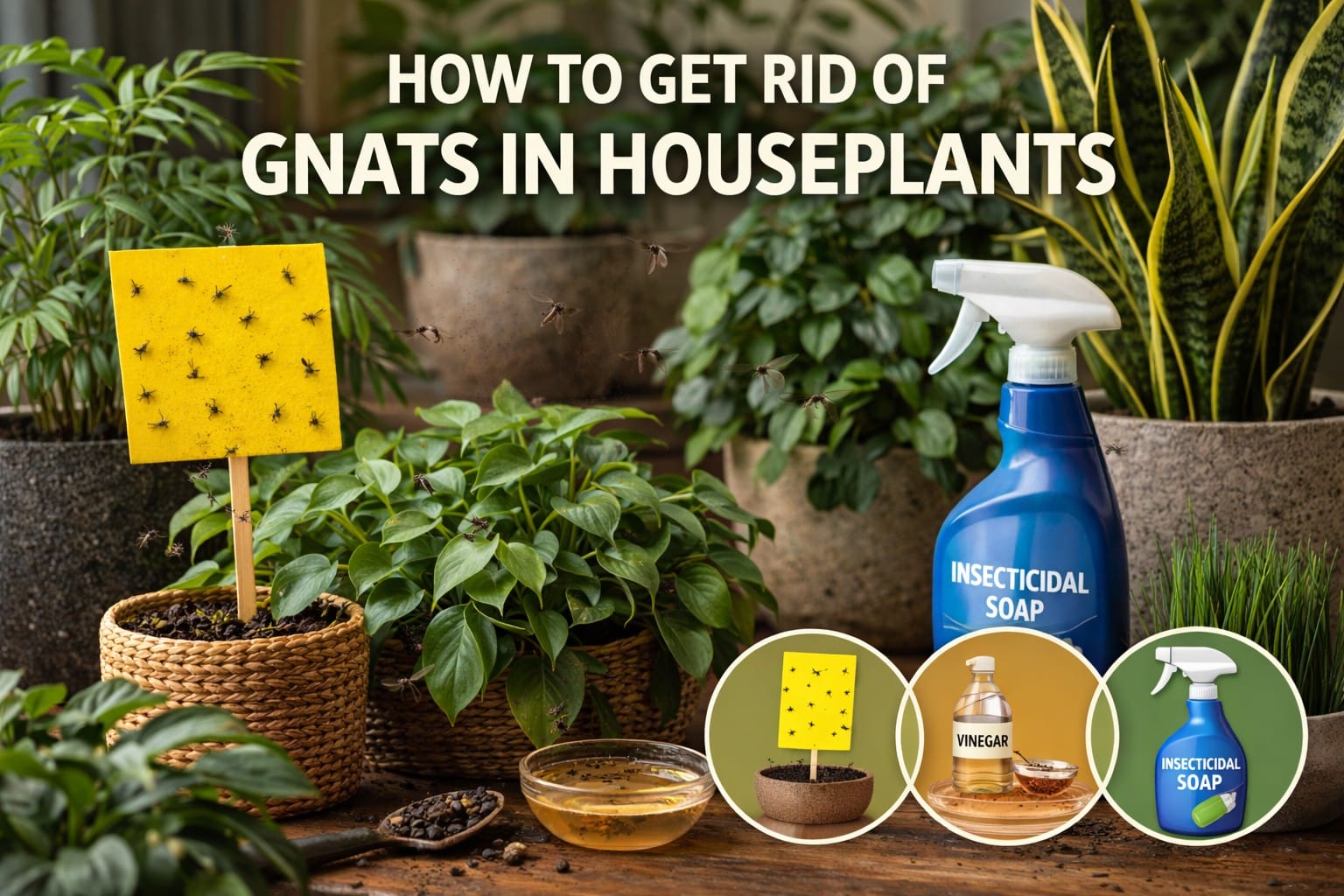
Houseplants bring beauty, air purification, and a sense of calm to any home. But there’s one small pest that can quickly turn your indoor garden into a nightmare: gnats. These tiny, flying insects may seem harmless, but they can wreak havoc on your plants and make your home feel uncomfortable.
If you’ve noticed small black flies hovering around your plants, or your soil is crawling with larvae, don’t worry — this guide covers everything you need to identify, treat, and prevent gnats in houseplants. By the end, you’ll know exactly how to keep your indoor garden healthy, safe, and gnat-free.
What Are Gnats and Why They Attack Houseplants
Gnats are small, mosquito-like insects, and the ones that infest houseplants are usually fungus gnats. They are attracted to moist, organic-rich soil and often appear in homes during spring and summer when humidity is higher.
While adult gnats are mostly harmless to humans, their larvae can damage plants by feeding on roots, organic matter, and seedlings, which can stunt growth and cause yellowing leaves.
Signs of a Gnat Infestation
- Small black flies hovering around pots or soil
- Sticky traps catching tiny insects
- Visible larvae (tiny, white worms) in the top layer of soil
- Yellowing leaves or slow plant growth
- Overly wet or moldy soil
Gnats often start small. If you ignore them, they can multiply quickly, creating a frustrating cycle.
Common Causes of Gnats in Houseplants
Understanding why gnats appear is key to preventing future infestations. They are drawn to:
- Overwatering – Damp soil is the perfect breeding ground for larvae.
- Poor drainage – Waterlogged pots allow larvae to survive.
- Organic debris – Dead leaves, petals, or mulch in the soil attract gnats.
- Humid indoor environments – Fungus gnats thrive in warmth and moisture.
The Mistake Most Plant Owners Make
Many people think gnats “appear out of nowhere,” but most infestations start weeks before adults are visible, as eggs hatch and larvae feed in the soil. Early detection is key.
How to Get Rid of Gnats in Houseplants
Here’s a step-by-step strategy to eliminate gnats effectively:
Step 1: Adjust Watering Practices
- Let the top 1–2 inches of soil dry out before watering again
- Avoid watering on a schedule; check soil moisture first
- Ensure all pots have drainage holes to prevent standing water
Gnats thrive in damp soil, so drying out the top layer can break their life cycle.
Step 2: Clean Up Soil and Pots
- Remove dead leaves and plant debris
- Clear fallen petals and old mulch
- Consider scrubbing or rinsing pots before repotting
Clean soil and pots reduce places for adult gnats to lay eggs.
Step 3: Use Sticky Traps
- Yellow sticky traps attract adult gnats
- Place traps close to the soil and foliage
- Replace traps every 1–2 weeks
Sticky traps don’t solve the root problem, but they reduce adult numbers and prevent new eggs.
Step 4: Natural Soil Treatments
- Cinnamon – Sprinkle on the soil surface; it inhibits fungal growth that larvae feed on
- Diatomaceous Earth – Dust on top of soil; larvae dehydrate and die
- Neem Oil Soil Drench – Mix neem oil with water and pour into soil; disrupts larval growth
- Hydrogen Peroxide Solution – Mix 1 part 3% hydrogen peroxide with 4 parts water; water soil lightly to kill larvae
These natural remedies are safe for pets and humans when used correctly.
Step 5: Repotting (for Severe Infestations)
If gnats persist:
- Gently remove the plant from its pot
- Shake off old soil and inspect roots for larvae
- Replant in fresh, sterile potting mix
- Wash or disinfect the old pot before reuse
Repotting resets the environment and removes most eggs and larvae.
Step 6: Biological Controls
- Beneficial Nematodes – Microscopic worms that eat gnat larvae in soil
- Predatory Insects – Hypoaspis mites target larvae in soil
Biological controls are eco-friendly and work well for ongoing infestations.
Prevention: Stop Gnats Before They Start
Prevention is the most effective long-term strategy. Here’s how:
- Water plants only when needed
- Use sterile, high-quality potting soil
- Keep soil free from decaying debris
- Add a layer of sand or small gravel on top to deter egg-laying
- Ensure good air circulation around plants
- Inspect new plants before bringing them home
DIY Gnat Traps You Can Make at Home
- Apple Cider Vinegar Trap – Fill a small jar with vinegar, add a few drops of dish soap, cover loosely, poke holes
- Wine or Beer Trap – A container with leftover wine or beer attracts and traps gnats
- Sticky Paper – Yellow sticky notes placed near soil catch adult gnats
DIY traps are cheap, safe, and effective, especially combined with other control methods.
Troubleshooting Persistent Gnats
Even after treatment, gnats can reappear. Here’s how to handle stubborn cases:
- Recheck watering habits – Overwatering is the #1 cause
- Replace the soil entirely – Sometimes larvae survive in old soil
- Move plants to a drier location – Reduce humidity
- Combine multiple methods – Sticky traps, soil treatment, and repotting together work best
Seasonal Care Tips
Spring & Summer
- Plants grow faster, so check soil moisture daily
- Fertilize lightly to support growth
- Humid conditions may require more frequent monitoring
Fall & Winter
- Growth slows; water less often
- Avoid placing plants near heating vents or cold drafts
- Reduce top-dressing mulch to prevent mold
FAQs About Gnats in Houseplants
Q: Can gnats kill my plants?
A: Adult gnats are harmless, but larvae can damage roots, especially seedlings and young plants.
Q: How long does it take to eliminate gnats?
A: With proper treatment, most infestations are gone in 2–4 weeks.
Q: Are chemical sprays effective indoors?
A: They can kill adults temporarily but often don’t solve the larval problem and may harm pets.
Q: Can I use vinegar traps near cats or dogs?
A: Yes, they are safe, but keep them out of reach to prevent spills.
Q: How can I prevent gnats when buying new plants?
A: Inspect soil, avoid overly wet plants, and consider repotting in sterile soil before introducing them indoors.
Expert Tips for Long-Term Success
- Inspect plants regularly for signs of pests
- Avoid letting soil stay soggy for long periods
- Rotate plants occasionally to improve airflow and light exposure
- Consider using cat- and child-safe natural remedies for ongoing prevention
- Maintain a clean plant environment, free of decaying debris and stagnant water
Final Thoughts
Gnats in houseplants are a common, frustrating problem, but they are completely manageable. By combining proper watering, soil maintenance, natural remedies, traps, and preventive measures, you can eliminate gnats and protect your indoor garden.
Remember, the key is prevention and consistency. Healthy soil, proper watering, and vigilant monitoring will keep your plants thriving while keeping gnats at bay. With patience and the strategies in this guide, your houseplants can flourish pest-free all year round.