
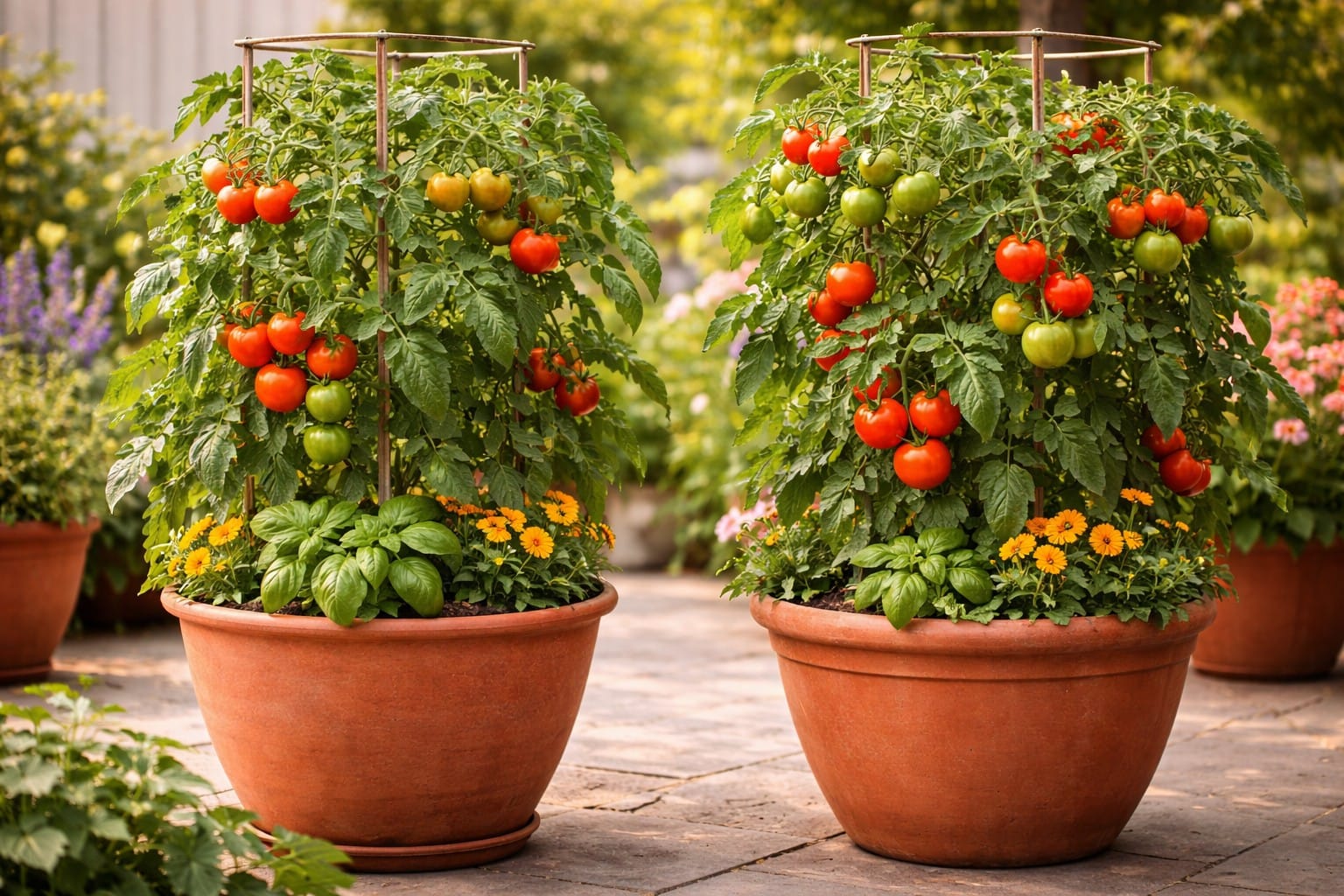
Growing tomato plants in flower pots is a great solution for gardeners with limited space, balconies, patios, or urban gardens. Container gardening allows you to enjoy fresh, homegrown tomatoes even if you don’t have a backyard. With proper care, tomato plants can thrive in pots, producing healthy foliage, flowers, and delicious fruit.
This detailed guide covers choosing the right pots, tomato varieties, planting, watering, fertilizing, support, pruning, pest control, and expert tips to grow a successful tomato container garden.
Why Grow Tomato Plants in Flower Pots
Container-grown tomatoes offer many advantages:
Grow tomatoes in small spaces like balconies or patios
Easier to control soil, watering, and fertilizer
Reduces risk of soil-borne diseases
Portable — you can move plants for optimal sunlight
Perfect for beginner gardeners or apartment dwellers
Tomatoes are one of the most rewarding plants to grow in pots because of their flowers and delicious fruits.
Choosing the Right Tomato Variety
Some tomato varieties perform better in pots due to their size and growth habit.
Determinate Varieties
Also called bush tomatoes
Compact growth — ideal for small pots
Produce fruit over a shorter period
Examples: ‘Patio Princess,’ ‘Bush Early Girl’
Indeterminate Varieties
Vine tomatoes — keep growing and producing throughout the season
Require staking or cages
Examples: ‘Cherry Tomatoes,’ ‘Beefsteak Tomatoes,’ ‘Sungold’
Cherry or Grape Tomatoes
Small fruits
Compact growth
Excellent for containers
Continuous flowering and fruiting
Recommended for Pots
Choose determinate or dwarf varieties for small containers
Indeterminate varieties need bigger pots and strong support
Selecting the Right Flower Pot
Pot selection is crucial for healthy tomato plants.
Size
Minimum 12–18 inches deep and wide for one plant
Bigger pots allow more root growth and better yield
Multiple plants require larger containers
Material
Plastic: Lightweight, retains moisture
Terracotta or clay: Breathable, good for drainage but dries faster
Fabric grow bags: Lightweight, excellent drainage and aeration
Drainage
Ensure pot has drainage holes
Add gravel or mesh at the bottom to prevent waterlogging
Soil Requirements
Healthy, nutrient-rich soil ensures strong growth and flowers.
Potting Mix
Use high-quality potting soil, not garden soil
Mix in compost or organic matter
Add perlite or vermiculite for drainage and aeration
Soil pH
Slightly acidic soil, pH 6.0–6.8
Avoid overly alkaline soil
Fertility
Tomatoes are heavy feeders — need balanced nutrients for flowers and fruit
Planting Tomato in Pots
Planting correctly is essential for growth and flower development.
Steps:
- Fill pot with potting mix, leaving 2–3 inches at the top
- Remove tomato seedling from nursery pot
- Plant deeper than it was in the pot — up to the first set of leaves
- Water thoroughly after planting
- Place in a location with 6–8 hours of direct sunlight
Planting deeper encourages strong root development, which supports flowers and fruit.
Watering Tomato Plants
Container tomatoes dry out faster than garden soil.
Tips:
Water when top 1–2 inches of soil are dry
Avoid soggy soil — overwatering causes root rot
Mulch surface to retain moisture and reduce evaporation
During flowering and fruiting, increase watering slightly
Container plants may need daily watering in hot climates
Consistent moisture supports flower formation and prevents blossom drop.
Fertilizing Tomato Plants
Tomatoes are heavy feeders — proper nutrition promotes flowers and fruit.
Fertilizer Tips:
Use balanced fertilizer at planting
Switch to high-phosphorus fertilizer when flowers appear
Liquid fertilizer every 2 weeks or slow-release pellets at planting
Organic options: compost tea, fish emulsion, or well-rotted manure
Avoid excessive nitrogen — encourages leafy growth at the expense of flowers.
Supporting Tomato Plants
Most tomato plants need support, especially in pots.
Methods:
Stakes: Drive a wooden or metal stake into the pot
Tomato cages: Circular cage supports plant as it grows
Trellises: Ideal for indeterminate varieties
Tie stems loosely with soft ties or garden twine
Support prevents stem breakage and keeps flowers and fruit healthy.
Pruning and Flower Care
Pruning encourages more flowers and fruit.
Tips:
Remove suckers from indeterminate varieties
Trim lower leaves to improve airflow
Pinch off flowers only if plant is stressed — most flowers will become fruit
Regular pruning prevents disease and encourages robust growth
Common Problems and Solutions
Blossom Drop
Cause: High temperatures, inconsistent watering, or low pollination
Solution: Maintain consistent soil moisture, ensure sunlight, and gently shake flowers to aid pollination
Yellowing Leaves
Cause: Overwatering, nutrient deficiency, or pests
Solution: Adjust watering, fertilize, and inspect for pests
Pests
Aphids, whiteflies, tomato hornworms
Use neem oil, insecticidal soap, or remove pests manually
Fungal Diseases
Powdery mildew or blight in humid conditions
Provide good airflow, avoid overhead watering, remove infected leaves
Flowering and Fruit Production
Proper care ensures healthy flowers and bountiful fruit.
Tips for abundant blooms:
Ensure at least 6–8 hours sunlight
Keep soil fertile and well-watered
Support stems to prevent stress
Pollinate flowers if indoors (hand pollination with a brush or shake flowers)
Healthy flowers will develop into juicy tomatoes within weeks.
Companion Planting in Pots
Grow companion plants to improve health and flower production:
Basil: Enhances flavor and deters pests
Marigold: Repels nematodes and insects
Chives or garlic: Repels pests and improves growth
Avoid planting cabbage family or fennel in the same pot
Harvesting
Harvest when tomatoes are firm and fully colored:
Pick gently to avoid damaging stems
Regular harvesting encourages new flowers and fruits
Harvest early-morning for best flavor and shelf life
Expert Tips
Use large pots for healthier flowers and fruit
Consistent watering is key to prevent blossom drop
Support indeterminate varieties properly
Fertilize during flowering for more blooms
Rotate crops in containers to prevent soil-borne diseases
Final Thoughts
Growing tomato plants in flower pots is a rewarding and practical way to enjoy fresh, homegrown tomatoes even in limited space. With the right pot, soil, sunlight, watering, fertilization, and support, your container-grown tomatoes can produce healthy flowers, abundant fruits, and a bountiful harvest.
Whether growing determinate bush varieties or indeterminate vine types, container gardening makes tomatoes accessible to urban gardeners, balcony growers, and anyone wanting a productive small-space garden.