
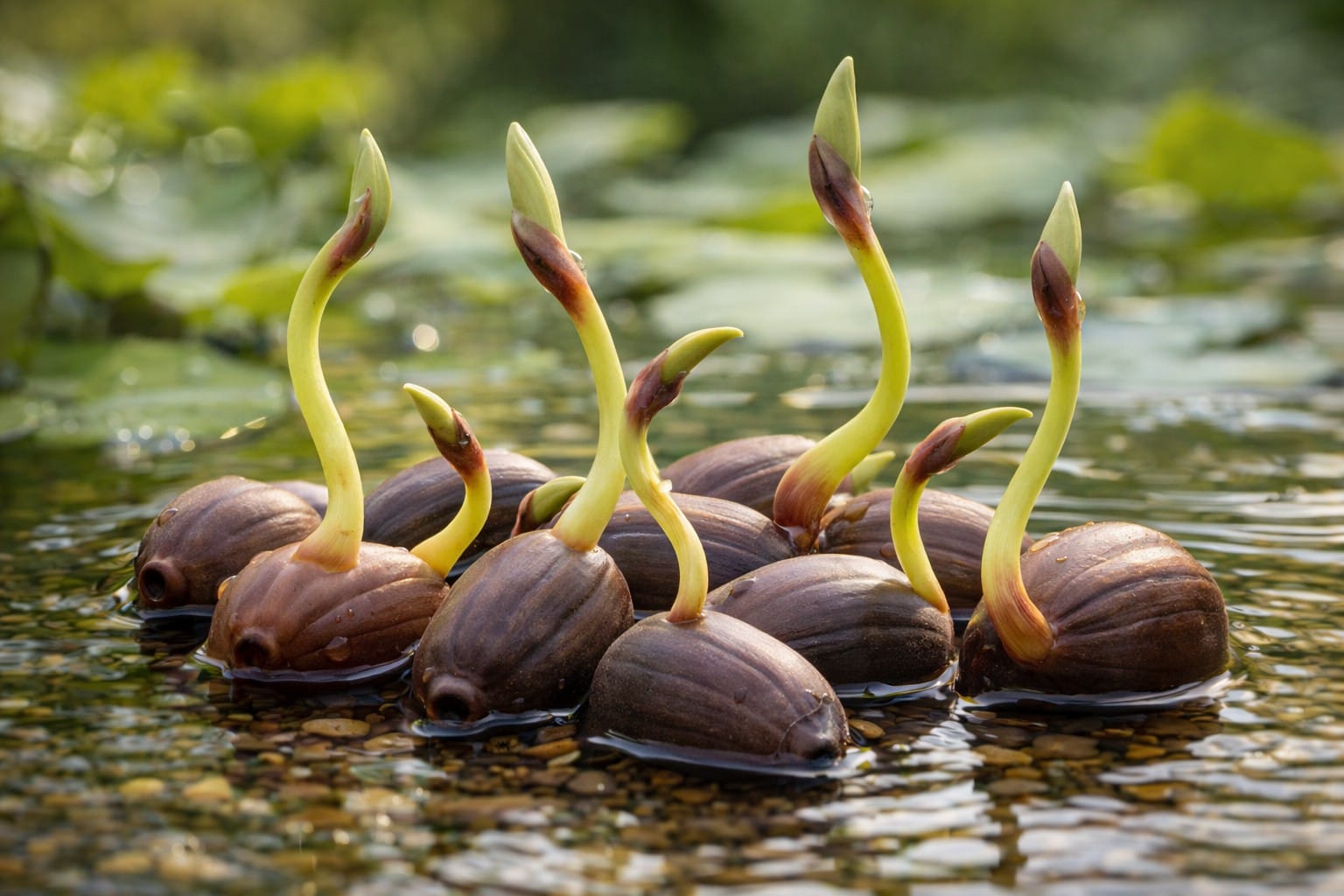
Germinating lotus flower seeds is the exciting first step to growing these stunning aquatic plants. Lotus flowers (Nelumbo nucifera) are famous for their large blooms, unique foliage, and spiritual symbolism. Starting lotus from seed is cost-effective, rewarding, and surprisingly simple if you follow the correct method.
This guide covers everything you need to know about germinating lotus seeds, including seed selection, scarification, soaking, planting, care, common mistakes, and expert tips for healthy seedlings and blooms.
Understanding Lotus Flower Seeds
Lotus seeds are hard and durable, designed to survive harsh conditions. Their tough shell protects the embryo inside and can allow seeds to remain viable for years.
Key points about lotus seeds:
They require scarification (scratching or nicking) to germinate efficiently
They are best grown in containers or ponds before transplanting
Germination is affected by warmth, moisture, and light
Proper preparation ensures faster, stronger sprouting.
Selecting Lotus Seeds
Not all lotus seeds are equal. Look for:
Seeds that are firm and free from cracks
Dark brown or black mature seeds
Plump and heavy seeds (indicates healthy embryo)
Fresh seeds from reliable sources
Avoid seeds that are soft, damaged, or pale, as these are unlikely to germinate.
Scarification: Preparing Lotus Seeds for Germination
Scarification helps water penetrate the hard seed coat.
Methods:
Manual Filing or Sanding – Lightly file or sand one side of the seed until the inner cream-colored layer is visible
Avoid cutting too deep – Do not damage the embryo inside
Rinse seeds – Remove debris after filing
Scarification is critical; without it, germination can take months or fail completely.
Soaking Lotus Seeds
After scarification, soaking softens the seed and triggers sprouting.
Steps:
Place seeds in a container of warm water (70–85°F / 21–29°C)
Change water daily to prevent mold or bacterial growth
Wait for small sprouts or roots to appear (usually 1–2 weeks)
Discard any seeds that rot during soaking
Warm water and patience are key.
Preparing Containers for Germination
Choose the right container to start lotus seedlings:
Shallow containers or seed trays
Fill with muddy soil or clay-based aquatic soil
Water depth of 1–2 inches over soil
Avoid using standard garden soil — lotus prefers nutrient-rich aquatic soil
Containers can be placed outdoors or indoors with plenty of light.
Planting Germinated Lotus Seeds
Once sprouts appear:
Make a small hole (1–2 inches deep) in the mud
Place the seed with the sprout pointing upward
Cover lightly with soil
Add water gently, keeping the seed submerged but not floating
Avoid disturbing the delicate sprout.
Light and Temperature Requirements
Lotus seeds require warmth and sunlight to grow:
Optimal temperature: 75–85°F (24–29°C)
Full sun for at least 6–8 hours per day
Indoor light: Use grow lights if natural sunlight is insufficient
Consistent warmth encourages rapid leaf and root development
Too cold or shaded conditions slow growth significantly.
Watering and Care for Lotus Seedlings
Lotus seedlings are aquatic and need shallow water:
Maintain 1–2 inches of water over soil
Increase water depth as seedlings grow
Remove debris or algae from container surface
Keep seedlings protected from strong wind or pests
Once seedlings develop several leaves, they are ready for larger containers or ponds.
Transplanting Lotus Seedlings
After 4–6 weeks or when seedlings have 2–3 leaves:
Choose larger pond containers or outdoor ponds
Plant in rich aquatic soil
Gradually increase water depth (4–6 inches, then deeper as plants mature)
Protect young plants from extreme temperature fluctuations
Proper transplantation ensures strong growth and healthy blooms.
Common Mistakes When Germinating Lotus Seeds
Failing to scarify seeds properly
Using cold water for soaking
Letting water stagnate, causing mold or rot
Planting seeds too deep or upside-down
Exposing seedlings to harsh sunlight or cold too early
Avoiding these mistakes improves germination success.
Expert Tips for Healthy Lotus Growth
Use fresh, high-quality seeds
Patience is key — lotus can take 1–3 weeks to sprout
Provide consistent warmth and sunlight
Keep water clean and shallow initially
Gradually increase water depth as plants grow
Healthy seedlings develop strong roots, stems, and eventually stunning blooms.
Harvesting Seeds from Lotus Flowers
Mature lotus flowers produce seeds that can be saved for future planting:
Wait until seed pods turn brown and hard
Remove seeds from pods carefully
Dry seeds thoroughly before storage
Store in a cool, dry place for 1–2 years
Proper seed collection ensures a sustainable lotus planting cycle.
Final Thoughts
Germinating lotus flower seeds is a rewarding process that brings beauty, serenity, and exotic appeal to your garden or pond. By following proper scarification, soaking, planting, and care techniques, you can grow strong lotus seedlings that will eventually produce large, elegant blooms and healthy seeds.
With patience, warmth, and sunlight, even beginners can successfully germinate lotus seeds and enjoy these iconic flowers year after year. 🌸🌿💧