
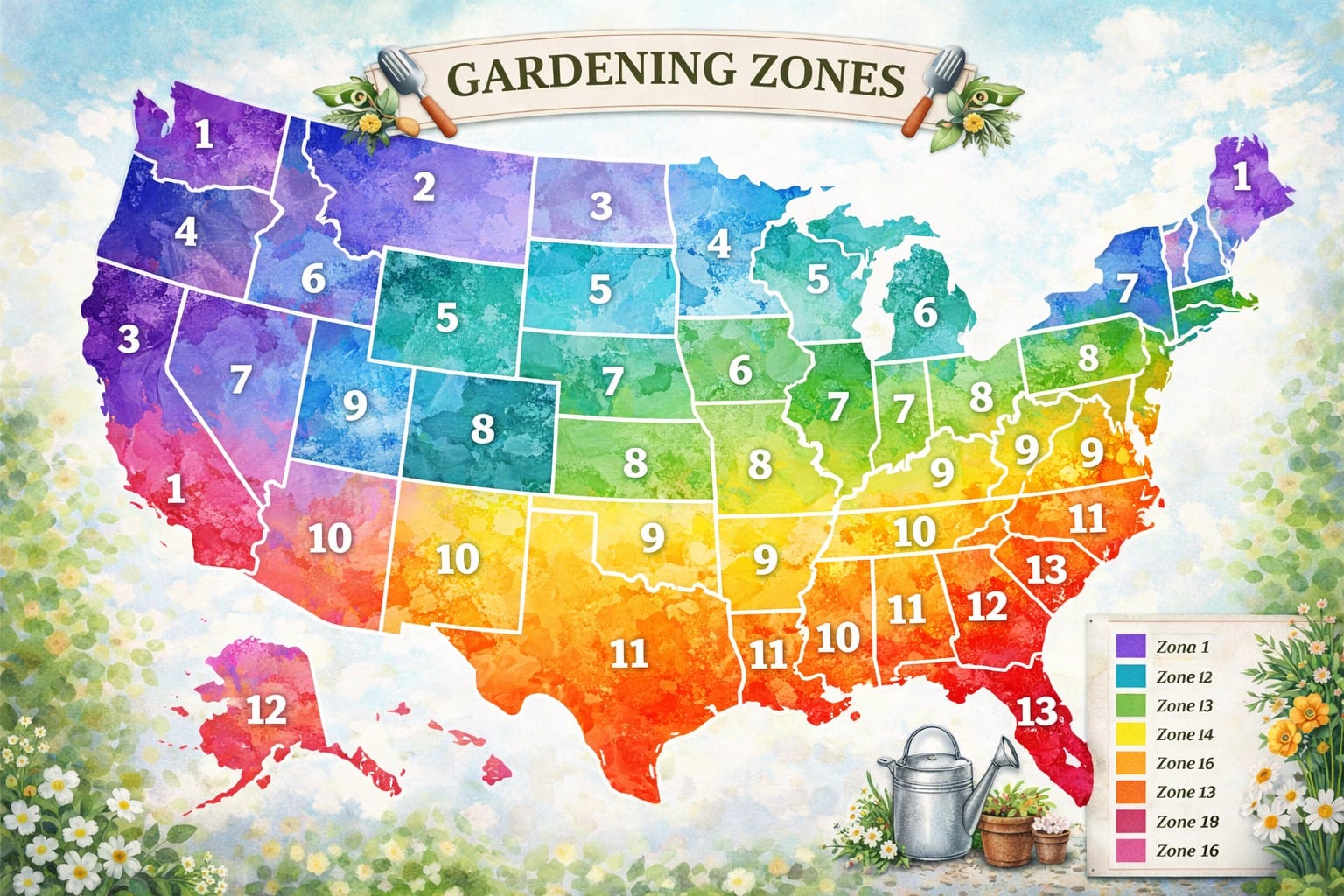
Gardening zones are one of the most important concepts every gardener should understand. They help you know which plants can survive and thrive in your area and which ones are likely to struggle or die. Whether you grow flowers, vegetables, trees, or houseplants outdoors, gardening zones remove guesswork and save time, money, and effort.
This complete guide explains gardening zones in detail, how they work, why they matter, how to find your zone, how to use zones correctly, common mistakes, zone limitations, tips for success, and answers to frequently asked questions.
What Are Gardening Zones
Gardening zones, also known as plant hardiness zones, are geographic areas divided based on average minimum winter temperatures. Each zone represents how cold it typically gets in winter, which determines whether certain plants can survive outdoors year after year.
Plants are labeled with zones to show the coldest conditions they can tolerate. If a plant’s hardiness range includes your zone, it has a good chance of surviving winter in your garden.
Gardening zones do not predict how well a plant will grow. They only tell you if it can survive the cold.
Why Gardening Zones Matter
Understanding gardening zones helps gardeners make smarter choices.
Gardening zones help you:
Choose plants that survive winter
Avoid wasting money on unsuitable plants
Plan perennials, shrubs, and trees correctly
Understand seasonal planting times
Reduce plant stress and winter damage
Ignoring gardening zones often leads to plants dying after the first cold season.
The USDA Plant Hardiness Zone System
The most widely used system is the USDA Plant Hardiness Zone Map. It divides regions into numbered zones based on average annual minimum temperatures.
The system includes:
Zones numbered from 1 to 13
Each zone represents a 10°F temperature range
Each zone is divided into “a” and “b” subzones (5°F difference)
For example:
Zone 3 is much colder than Zone 8
Zone 6a is colder than Zone 6b
The higher the zone number, the warmer the climate.
Gardening Zones by Temperature Range
Here is a simplified breakdown of gardening zones:
Zone 1–3: Extremely cold climates with long winters
Zone 4–5: Cold climates with harsh winters
Zone 6–7: Moderate climates with four seasons
Zone 8–9: Warm climates with mild winters
Zone 10–11: Tropical and subtropical climates
Zone 12–13: Hot tropical regions with no frost
Each zone determines what plants can survive outdoors year-round.
How to Find Your Gardening Zone
Finding your gardening zone is easy and essential.
You can determine your zone by:
Using an official plant hardiness zone map
Entering your zip code into a zone lookup tool
Checking local gardening extension resources
Reading plant tags from local nurseries
Your zone is based on long-term climate data, not one unusual winter.
How to Read Plant Labels Using Gardening Zones
Most plants sold at nurseries include hardiness information.
A plant label may say:
Hardy in zones 5–9
This means:
The plant can survive winters as cold as Zone 5
The plant may struggle in hotter zones beyond Zone 9
If your zone falls within the range, the plant is suitable for outdoor planting.
Gardening Zones and Frost Dates
Gardening zones are closely related to frost dates but are not the same.
Gardening zones show:
Winter cold tolerance
Frost dates show:
When planting and harvesting should begin and end
Knowing both helps gardeners plan annuals and vegetables more accurately.
What Gardening Zones Do Not Tell You
Gardening zones are helpful but limited.
They do not account for:
Summer heat
Humidity
Rainfall
Soil type
Wind exposure
Sunlight levels
Two areas in the same zone can have very different growing conditions.
Microclimates and Gardening Zones
A microclimate is a small area with slightly different conditions than the surrounding zone.
Examples of microclimates include:
South-facing walls
Sheltered patios
Urban heat islands
Near bodies of water
Plants may survive outside their recommended zone in favorable microclimates.
Gardening Zones and Annual Plants
Annual plants live for one season and are not affected by winter survival.
For annuals:
Gardening zones are less important
Planting time matters more
Frost protection is key
Annual flowers and vegetables can be grown in most zones with proper timing.
Gardening Zones and Perennials
Perennials return year after year and rely heavily on gardening zones.
When choosing perennials:
Always match them to your zone
Consider winter protection
Mulch heavily in colder zones
Planting outside your zone increases the risk of winter loss.
Gardening Zones and Trees
Trees are long-term investments.
Choosing the wrong zone can result in:
Winter damage
Poor growth
Early death
Always select trees rated for your zone or colder for safety.
Gardening Zones for Vegetables
Vegetables are influenced by both zone and growing season length.
Cold zones:
Short growing seasons
Focus on fast-growing crops
Warm zones:
Long growing seasons
Multiple harvests per year
Vegetables can often be grown outside their zone range with timing adjustments.
Gardening Zones for Flowers
Flowering plants rely heavily on zone compatibility.
Cold-hardy flowers:
Survive frost and snow
Warm-climate flowers:
May die in cold winters
Choosing the right zone ensures consistent blooming year after year.
Common Gardening Zone Mistakes
Many gardeners misunderstand zones.
Common mistakes include:
Assuming zones reflect summer heat
Ignoring microclimates
Planting based on looks only
Trusting one mild winter
Confusing frost dates with zones
Understanding zone limitations prevents disappointment.
How Climate Change Affects Gardening Zones
Gardening zones can shift over time.
Climate changes may cause:
Warmer winters
Longer growing seasons
Zone boundaries to move north
Gardeners should monitor updated zone maps and local conditions.
Tips for Gardening Successfully Outside Your Zone
Some gardeners push zone limits carefully.
Ways to extend plant survival include:
Mulching heavily
Using frost cloth
Planting in sheltered areas
Growing in containers
Providing winter protection
These methods help plants survive colder conditions.
Gardening Zones for Container Gardening
Containers offer flexibility.
Benefits include:
Moving plants indoors
Protecting roots from cold
Controlling soil conditions
Container gardening allows growing plants outside your zone temporarily.
Gardening Zones and Indoor Plants
Gardening zones apply to outdoor planting.
Indoor plants:
Are not limited by zones
Depend on indoor temperature and light
Can be grown anywhere with proper care
Zones mainly matter when plants are placed outside.
Frequently Asked Questions
Gardening zones are based on average minimum winter temperatures. Zones help determine which plants can survive outdoors year-round. A higher zone number means a warmer climate. Gardening zones do not account for summer heat, rainfall, or soil quality. Knowing your zone helps you choose the right plants and avoid winter losses.
Final Thoughts
Gardening zones are a powerful tool that helps gardeners grow smarter, not harder. They provide a reliable starting point for choosing plants that match your climate and survive year after year. While zones are not perfect, understanding them gives you confidence, reduces plant failure, and leads to healthier, more successful gardens.
By combining gardening zone knowledge with local conditions, soil care, and proper planting techniques, you can build a garden that thrives in your climate and brings lasting beauty and productivity.