
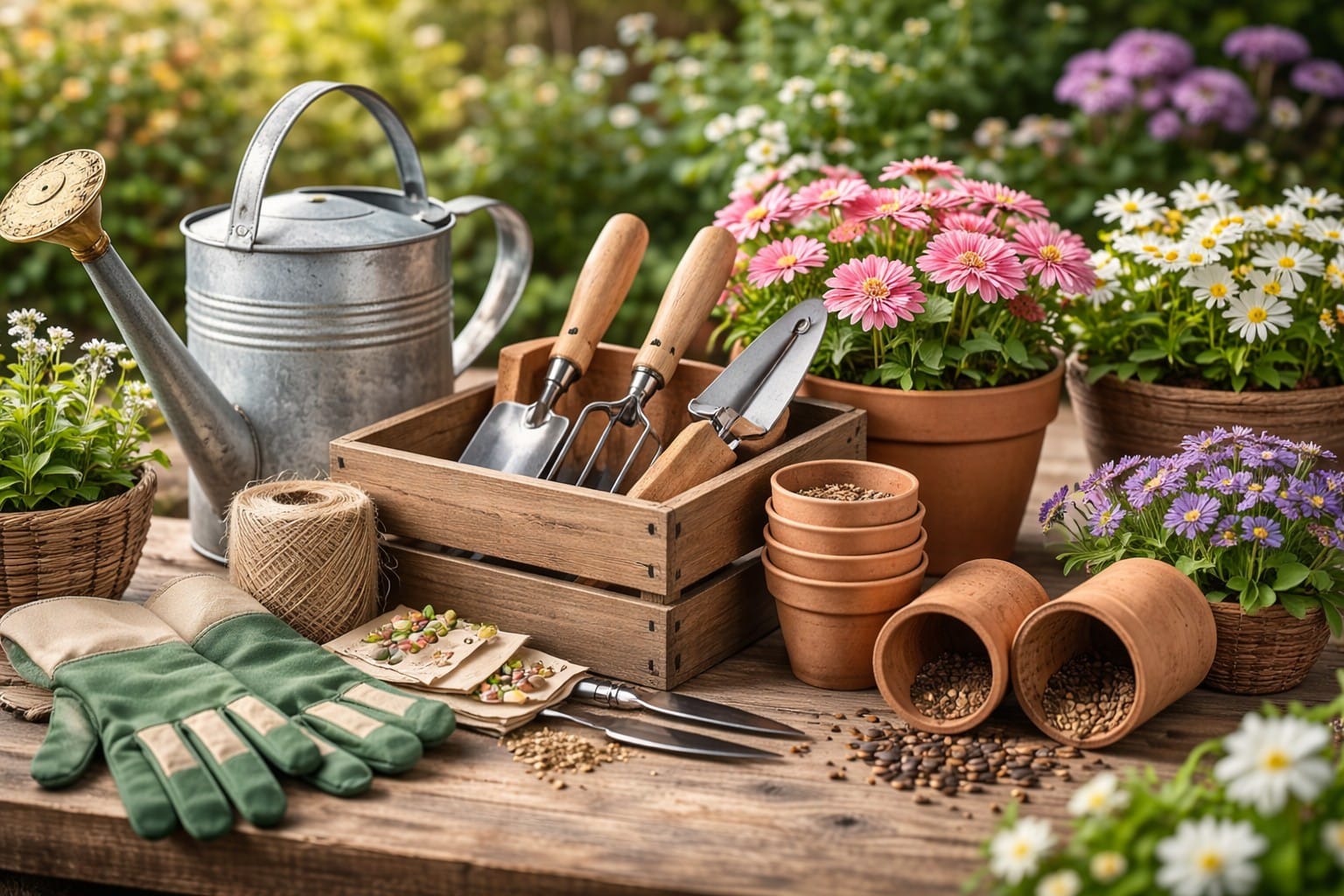
Whether you’re starting your first vegetable patch or maintaining a backyard oasis, the right gardening tools make all the difference. Good tools help you work faster, protect your body, and keep plants healthy. From digging and planting to pruning and watering, having the right equipment ensures your garden thrives with less stress and better results.
This complete guide covers all essential gardening tools, what they’re used for, beginner recommendations, advanced tools, maintenance tips, storage suggestions, safety advice, and answers to common questions.
Why Gardening Tools Matter
Gardening involves many tasks: digging, loosening soil, planting seeds, pruning branches, controlling weeds, watering, and more. Attempting these tasks without proper tools can lead to:
- Plant damage
- Physical strain or injury
- Poor soil preparation
- Uneven watering
- Slow progress
Good tools make tasks easier, safer, and more efficient, whether you have a small balcony garden or a large backyard.
What to Consider When Choosing Gardening Tools
Before you buy tools, consider these factors:
1. Your Garden Size and Type
Small container gardens need fewer tools than multiple raised beds or lawn areas.
2. Material and Durability
Look for tools made of stainless steel, hardened steel, aluminum, or hardwood handles for long life.
3. Comfort and Ergonomics
Tools with padded, ergonomic handles reduce fatigue and protect your hands.
4. Budget
Start with basic tools and upgrade over time.
5. Storage Space
Tools that nest or hang easily save space in sheds or garages.
Essential Hand Tools Every Gardener Needs
1. Hand Trowel
What it does:
Used for digging small holes, planting seedlings, transplanting, and scooping soil.
Why you need it:
It’s the most versatile hand tool and essential for almost all planting tasks.
Tips:
- Choose a sturdy steel blade
- Look for a comfortable grip
2. Garden Fork (Hand Fork)
What it does:
Breaks up compacted soil, removes weeds, and aerates soil around plants.
Why you need it:
Great for loosening soil without damaging roots.
3. Pruning Shears (Hand Pruners)
What it does:
Trims stems, deadheads flowers, and cuts small branches.
Why you need it:
Keeping plants trimmed promotes healthy growth.
Tip:
Choose bypass pruners for live plants and anvil pruners for dry wood.
4. Gardening Gloves
What it does:
Protects hands from blisters, thorns, soil, and pests.
Why you need it:
Comfort and safety are essential, especially for extended work.
Tip:
Choose gloves with breathable fabric and a snug fit.
5. Watering Can
What it does:
Delivers water to plants gently, especially seedlings and container plants.
Why you need it:
Provides control and avoids overwatering.
Tip:
Choose a size comfortable to carry when full.
Tools for Soil Preparation
6. Spade
What it does:
Digging, edging garden beds, and moving soil.
Why you need it:
It’s heavier and stronger than a trowel, perfect for deeper work.
7. Garden Hoe
What it does:
Weeds, breaks up soil crust, and shapes garden beds.
Why you need it:
Keeps soil loose and weeds under control.
Tip:
Choose a triangular hoe for precision weeding.
8. Garden Rake
What it does:
Levels soil, removes debris, and smooths seedbeds.
Why you need it:
Helps prepare soil evenly before planting.
9. Wheelbarrow or Garden Cart
What it does:
Transports soil, compost, mulch, and plants.
Why you need it:
Reduces physical strain and speeds up work.
Tip:
Look for pneumatic tires for uneven ground.
Tools for Pruning and Plant Care
10. Loppers
What it does:
Cuts thicker branches and overgrown shrubs.
Why you need it:
Provides longer reach and leverage.
11. Garden Scissors and Snips
What it does:
Harvests herbs, trims flowers, and cuts delicate stems.
Why you need it:
Perfect for precision cutting.
Tools for Lawn and Large Areas
12. Garden Spade or Shovel
What it does:
Moves soil, compost, gravel, and mulch.
Why you need it:
A larger version of a spade for big jobs.
13. Leaf Rake
What it does:
Collects leaves, grass clippings, and garden debris.
Why you need it:
Keeps lawns and beds tidy.
14. Hedge Trimmer
What it does:
Shapes and trims hedges.
Why you need it:
Efficient for large hedges and trimming tall plants.
Watering and Irrigation Tools
15. Garden Hose
What it does:
Provides water over large areas.
Why you need it:
Essential for lawns, beds, and large gardens.
Tip:
Choose a kink-resistant hose.
16. Sprinkler or Drip Irrigation
What it does:
Automates watering.
Why you need it:
Saves time and provides even moisture.
Specialty Garden Tools
17. Soil Tester
What it does:
Measures soil pH, moisture, and nutrients.
Why you need it:
Helps ensure optimal plant health.
18. Garden Knife (Hori Hori)
What it does:
Cuts roots, divides plants, and digs small holes.
Why you need it:
A versatile multi-tool for serious gardeners.
19. Bulb Planter
What it does:
Creates uniform holes for bulbs.
Why you need it:
Speeds up planting bulbs for spring flowers.
20. Garden Twine and Stakes
What it does:
Supports climbing plants and training vines.
Why you need it:
Helps plants grow upright and prevents damage.
Tool Maintenance
Proper care makes tools last longer and work better.
Cleaning
Rinse soil from blades after use. Dry them to prevent rust.
Sharpening
Sharpen pruning shears, spade edges, and hoes regularly.
Lubrication
Oil moving parts and metal surfaces.
Storage
Keep tools dry and organized. Wall hooks or racks help save space.
Safety Tips for Using Gardening Tools
Always wear appropriate gear:
Gloves
Closed-toe shoes
Eye protection (if cutting or trimming)
Be mindful of sharp edges. Store tools out of reach of children.
Common Mistakes and How to Avoid Them
Using the wrong tool for the job — match tools to tasks.
Ignoring tool maintenance — clean and sharpen often.
Buying cheap tools — invest in durable quality.
Not storing tools properly — prevents rust and damage.
Building Your Tool Kit Over Time
Start with basic essentials:
Hand trowel
Gloves
Watering can
Pruning shears
Spade
Add secondary tools as your garden grows:
Wheelbarrow
Hose or irrigation system
Soil tester
Loppers and hedge trimmers
Frequently Asked Questions
What tools do beginners really need?
Start with a trowel, gloves, pruners, watering can, and spade.
How do I choose quality tools?
Look for steel blades, ergonomic handles, and solid reviews.
Do I need electric tools?
For small gardens, manual tools are fine. Larger gardens benefit from electric or battery tools.
How should I store tools?
Keep them dry, organized, and off the ground to prevent rust.
Final Thoughts
Gardening tools are more than equipment — they are partners in your gardening success. The right tools reduce strain, increase efficiency, and make every gardening task feel easier and more enjoyable. Whether you’re planting flowers, maintaining vegetables, trimming hedges, or starting a new garden bed, having the right tools on hand helps you achieve better results with less effort.
Start with the essentials, maintain your tools well, and gradually expand your kit as your garden grows. The right tools will encourage you to spend more time outdoors, enjoy the process, and watch your garden flourish.