
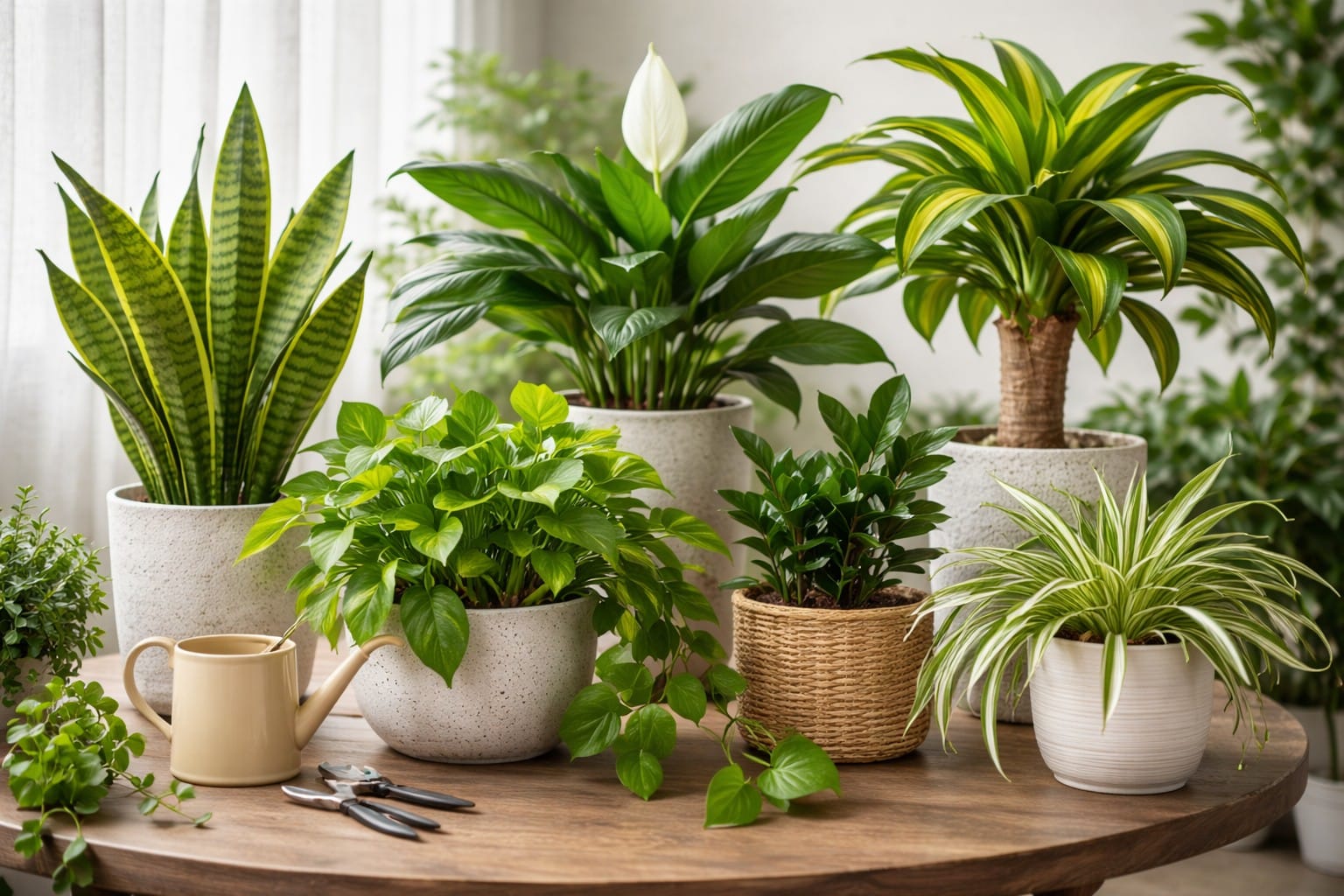
If you want greenery in your home without stress, the easiest houseplants to care for are the perfect choice. These plants survive missed waterings, adapt to different light conditions, and keep growing even when care is minimal. They are ideal for beginners, busy people, apartments, offices, and anyone who wants plants without constant attention.
This complete guide covers everything you need to know about easy-care houseplants, including what makes a plant easy, the best beginner-friendly plants, light and watering needs, common mistakes, placement tips, and expert advice to keep them healthy for years.
What Makes a Houseplant Easy to Care For
Not all houseplants demand perfect conditions. Easy houseplants share a few important traits that make them forgiving.
Easy-care houseplants usually:
- Tolerate low to medium light
- Do not need frequent watering
- Adapt well to indoor humidity
- Grow slowly and steadily
- Resist common pests
- Recover easily from minor neglect
These plants are tough by nature and don’t panic if conditions are not perfect every day.
Why Choose Easy Houseplants
Easy houseplants remove the pressure of plant care and help build confidence.
Benefits include:
- Great for beginners
- Less maintenance and stress
- Ideal for busy schedules
- Perfect for offices and apartments
- Long lifespan with basic care
- Improve indoor atmosphere
They prove that you don’t need a green thumb to enjoy indoor plants.
Snake Plant (Sansevieria)
The snake plant is often considered the easiest houseplant in the world.
Why it’s so easy:
- Thrives in low, medium, or bright light
- Needs watering only every 2–3 weeks
- Tolerates dry indoor air
- Extremely pest-resistant
Snake plants have upright sword-shaped leaves and work well in bedrooms, living rooms, and offices.
Care basics:
- Let soil dry completely between watering
- Avoid overwatering
- Use well-draining soil
ZZ Plant (Zamioculcas zamiifolia)
The ZZ plant is famous for surviving neglect.
Why it’s beginner-friendly:
- Thick roots store water
- Handles low light very well
- Rarely attracts pests
- Glossy leaves stay attractive year-round
This plant is ideal for dark corners and offices.
Care basics:
- Water every 2–3 weeks
- Avoid soggy soil
- Medium to low light is best
Pothos
Pothos is one of the fastest-growing and most forgiving houseplants.
Why people love it:
- Trails beautifully from shelves or baskets
- Adapts to many light levels
- Easy to propagate
- Recovers quickly if neglected
Varieties include golden pothos, marble queen, neon, and jade pothos.
Care basics:
- Water when top soil feels dry
- Bright indirect light for best growth
- Trim occasionally to keep full
Spider Plant
Spider plants are classic easy-care plants.
Why they’re simple:
- Tolerate many light conditions
- Show clear signs when thirsty
- Produce baby plants easily
- Grow well indoors
Their arching leaves and baby plantlets make them visually appealing.
Care basics:
- Water when soil is slightly dry
- Bright indirect light preferred
- Trim brown tips if needed
Peace Lily
Peace lilies are easy and expressive.
Why they’re beginner-friendly:
- Leaves droop when thirsty
- Thrive in low to medium light
- Attractive glossy leaves
- Elegant white flowers
They communicate clearly when they need water.
Care basics:
- Water when leaves droop slightly
- Avoid direct sun
- Keep soil lightly moist
Cast Iron Plant
As the name suggests, this plant is tough.
Why it’s easy:
- Tolerates very low light
- Handles temperature changes
- Rarely needs attention
- Extremely long-lasting
It’s ideal for hallways and low-light rooms.
Care basics:
- Water sparingly
- Avoid direct sun
- Slow growth is normal
Dracaena
Dracaena plants are reliable and adaptable.
Why they’re low maintenance:
- Tolerate low light
- Need infrequent watering
- Grow slowly
- Strong upright form
Popular types include Janet Craig, Massangeana, and Compacta.
Care basics:
- Allow soil to dry between watering
- Bright indirect light preferred
- Use filtered water if possible
Rubber Plant
Rubber plants are easy once established.
Why they’re beginner-friendly:
- Thick leaves resist damage
- Tolerate missed waterings
- Strong vertical growth
- Attractive glossy foliage
They add a bold look to indoor spaces.
Care basics:
- Water when top soil dries
- Bright indirect light
- Wipe leaves occasionally
Chinese Evergreen
Chinese evergreens are perfect indoor plants.
Why they’re easy:
- Tolerate low light
- Adapt to indoor humidity
- Slow, steady growth
- Decorative patterned leaves
They are great for apartments and offices.
Care basics:
- Water moderately
- Avoid cold drafts
- Low to medium light works well
Aloe Vera
Aloe vera is easy and useful.
Why it’s low maintenance:
- Stores water in thick leaves
- Needs very little watering
- Thrives in bright light
- Resistant to pests
It’s ideal for sunny windowsills.
Care basics:
- Let soil dry completely
- Use cactus or succulent soil
- Bright indirect or direct light
Best Light Conditions for Easy Houseplants
Most easy houseplants prefer indirect light, but tolerate low light.
Light tips:
- East-facing windows are ideal
- Avoid harsh afternoon sun
- Low light slows growth but won’t kill them
Artificial light also works for many easy plants.
Watering Tips for Beginners
Overwatering is the most common mistake.
Simple rules:
- Always check soil before watering
- Less water is better than too much
- Pots must have drainage holes
If unsure, wait a few more days before watering.
Best Soil for Easy Houseplants
Easy houseplants prefer light, well-draining soil.
Good soil mix includes:
- Standard potting soil
- Added perlite for drainage
Avoid heavy garden soil indoors.
Common Mistakes to Avoid
Even easy plants can struggle with poor care.
Avoid these mistakes:
- Overwatering
- Placing plants in direct sun
- Using pots without drainage
- Moving plants too often
- Over-fertilizing
Consistency matters more than perfection.
Best Places to Put Easy Houseplants
Easy houseplants work in many locations.
Great spots include:
- Living rooms
- Bedrooms
- Offices
- Bathrooms with light
- Shelves and corners
Match the plant to the light level of the space.
How Often to Fertilize
Easy houseplants do not need much feeding.
Fertilizing tips:
- Feed once a month in spring and summer
- Use diluted liquid fertilizer
- Skip feeding in winter
Too much fertilizer can do more harm than good.
Can Easy Houseplants Improve Indoor Spaces
Yes, they make homes feel calmer and more inviting.
Benefits include:
- Visual comfort
- Natural décor
- Better indoor atmosphere
- Reduced stress
They add life to spaces without demanding effort.
Frequently Asked Questions
Easy houseplants grow slowly but steadily. Most tolerate low light and missed watering. Overwatering is the biggest risk. Snake plants and ZZ plants are among the toughest. With basic care, easy houseplants can live for many years indoors.
Final Thoughts
The easiest houseplants to care for prove that anyone can grow plants successfully. You don’t need perfect lighting, daily watering, or advanced knowledge. With the right plant choices and simple habits, indoor plants become a joy instead of a chore.
Whether you choose a snake plant, pothos, ZZ plant, or spider plant, these low-maintenance houseplants will reward you with greenery, beauty, and confidence. Start simple, stay consistent, and enjoy the calm that easy houseplants bring into your home.