
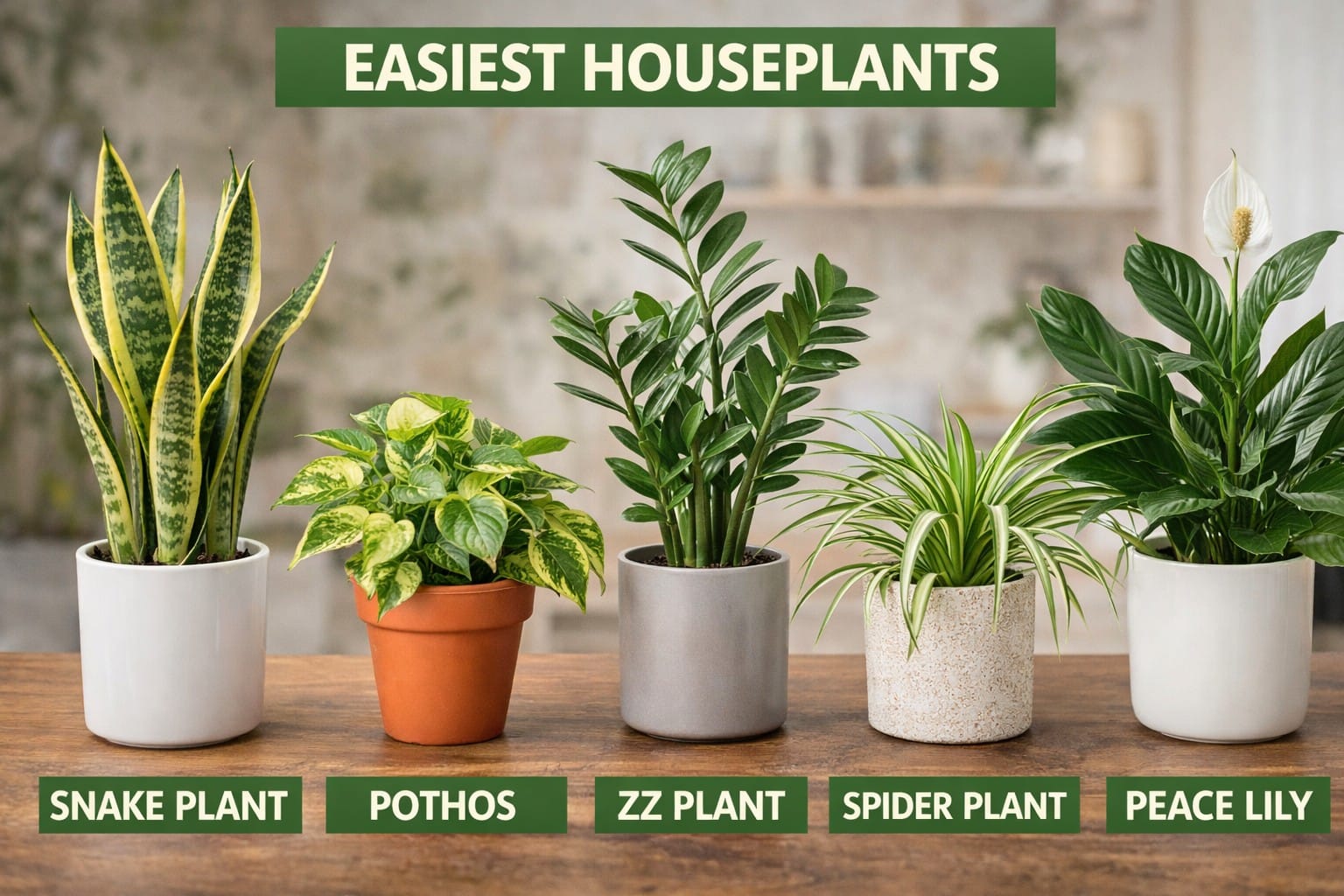
The easiest houseplants are perfect for anyone who wants greenery without stress. These plants are tough, forgiving, and able to survive missed waterings, low light, and basic care mistakes. Whether you are new to indoor gardening, have a busy schedule, or simply want plants that grow with minimal effort, easy houseplants are the best choice.
Easy houseplants are not boring or plain. Many of them are beautiful, fast-growing, and improve indoor air quality while adding life and warmth to your space. This complete guide covers everything you need to know about the easiest houseplants, including what makes a plant easy, the best low-effort plants, care tips, common mistakes, placement ideas, benefits, and expert advice to help you succeed even if you think you have a “black thumb.”
What Makes a Houseplant Easy to Care For
Not all plants require daily attention. The easiest houseplants share a few important qualities that make them beginner-friendly.
Easy houseplants usually:
- Tolerate low to medium light
- Do not need frequent watering
- Recover quickly from neglect
- Adapt well to indoor temperatures
- Resist common pests and diseases
- Grow steadily without special care
These plants evolved to survive tough conditions, which is why they perform so well indoors where light and humidity can be unpredictable.
Why Choose Easy Houseplants
Easy houseplants are ideal because they remove the pressure of perfection. You don’t need special tools, fertilizers, or strict schedules to keep them alive.
Benefits of choosing easy houseplants include:
- Great for beginners
- Perfect for busy lifestyles
- Low maintenance and low cost
- Suitable for apartments and offices
- Improve air quality and mood
- Long-lasting and reliable
They allow you to enjoy indoor plants without constant worry.
Snake Plant
The snake plant, also called mother-in-law’s tongue, is one of the toughest houseplants available.
Why it’s easy:
- Survives low light and bright light
- Needs watering only every 2–3 weeks
- Tolerates dry air
- Resistant to pests
Care basics:
- Light: Low to bright indirect
- Water: Only when soil is fully dry
- Soil: Well-draining
- Placement: Bedrooms, offices, corners
Snake plants also help filter indoor air and are excellent for beginners.
Pothos
Pothos is often called the ultimate beginner plant because it grows almost anywhere.
Why it’s easy:
- Tells you when it needs water
- Grows in soil or water
- Thrives in low light
- Very forgiving
Care basics:
- Light: Low to bright indirect
- Water: When top soil feels dry
- Growth: Trailing or climbing
- Placement: Shelves, hanging baskets
If pothos vines start looking dull, a little water brings them back quickly.
ZZ Plant
The ZZ plant is nearly indestructible and perfect for people who forget to water.
Why it’s easy:
- Stores water in thick roots
- Handles low light extremely well
- Rarely affected by pests
- Slow but steady growth
Care basics:
- Light: Low to medium
- Water: Every 2–4 weeks
- Soil: Well-draining
- Placement: Offices, hallways
Overwatering is the only real danger with ZZ plants.
Spider Plant
The spider plant is a classic, easy houseplant known for its arching leaves and baby offshoots.
Why it’s easy:
- Adapts to many light conditions
- Grows quickly
- Easy to propagate
- Tolerates occasional neglect
Care basics:
- Light: Bright indirect preferred
- Water: When soil is slightly dry
- Bonus: Produces baby plants
- Placement: Hanging baskets or shelves
Spider plants are great for homes with children because they are non-toxic.
Peace Lily
The peace lily is one of the easiest flowering houseplants.
Why it’s easy:
- Clearly shows when it needs water
- Grows well in low light
- Improves indoor air quality
Care basics:
- Light: Low to medium
- Water: When leaves droop
- Soil: Moist but not soggy
- Placement: Living rooms, offices
Peace lilies reward minimal care with elegant white blooms.
Aloe Vera
Aloe vera is an easy succulent with practical benefits.
Why it’s easy:
- Needs very little water
- Loves bright light
- Stores water in its leaves
Care basics:
- Light: Bright indirect or sunlight
- Water: Every 2–3 weeks
- Soil: Cactus or succulent mix
- Bonus: Gel used for skin care
Aloe is perfect for sunny windowsills.
Cast Iron Plant
The cast iron plant lives up to its name.
Why it’s easy:
- Tolerates low light
- Handles irregular watering
- Very long-lived
Care basics:
- Light: Low to medium
- Water: When soil dries
- Growth: Slow
- Placement: Darker rooms
It is one of the most forgiving houseplants available.
Philodendron
Philodendrons are close relatives of pothos and just as easy.
Why they’re easy:
- Fast growth
- Flexible light needs
- Easy to propagate
Care basics:
- Light: Medium to bright indirect
- Water: When top soil is dry
- Growth: Trailing or upright
They add a lush tropical look with little effort.
Chinese Evergreen
The Chinese evergreen is another excellent low-maintenance plant.
Why it’s easy:
- Tolerates low light
- Needs minimal watering
- Attractive patterned leaves
Care basics:
- Light: Low to medium
- Water: When soil partly dries
- Placement: Bedrooms, offices
It is both decorative and durable.
Common Mistakes With Easy Houseplants
Even easy plants can struggle if basic rules are ignored.
Most common mistakes include:
- Overwatering
- No drainage holes in pots
- Placing plants in complete darkness
- Using heavy, compact soil
- Moving plants too often
Overwatering is the number one killer of houseplants.
How Often to Water Easy Houseplants
A simple rule works best:
- Check soil with your finger
- Water only when top soil is dry
- Drain excess water completely
Most easy houseplants prefer slightly dry soil over wet soil.
Best Places to Keep Easy Houseplants
Easy houseplants fit almost anywhere.
Great placement ideas include:
- Living rooms
- Bedrooms
- Offices
- Kitchens
- Shelves and corners
- Near windows with filtered light
Avoid cold drafts and direct heat sources.
Benefits of Easy Houseplants
Easy houseplants offer more than decoration.
Key benefits include:
- Improved air quality
- Reduced stress and anxiety
- Better focus and mood
- Natural home décor
- Connection to nature
They make indoor spaces feel alive and welcoming.
Are Easy Houseplants Good for Beginners
Yes, easy houseplants are the best starting point for indoor gardening. They build confidence, teach basic plant care, and rarely fail if given minimal attention.
Once you succeed with easy plants, you can slowly move on to more demanding species.
Frequently Asked Questions
Easy houseplants usually survive years with basic care. Most prefer indirect light and infrequent watering. They do not need frequent fertilizing. Repotting every 1–2 years is enough. Many easy plants can be propagated easily through cuttings.
Final Thoughts
The easiest houseplants prove that anyone can grow plants successfully. You don’t need experience, expensive tools, or perfect conditions. With simple care, these plants grow steadily, stay attractive, and make your home feel calmer and more inviting.
If you want plants that forgive mistakes, survive busy schedules, and still look beautiful, easy houseplants are the perfect choice. Start with one or two, build confidence, and enjoy the quiet satisfaction of growing greenery that thrives with you, not against you.