
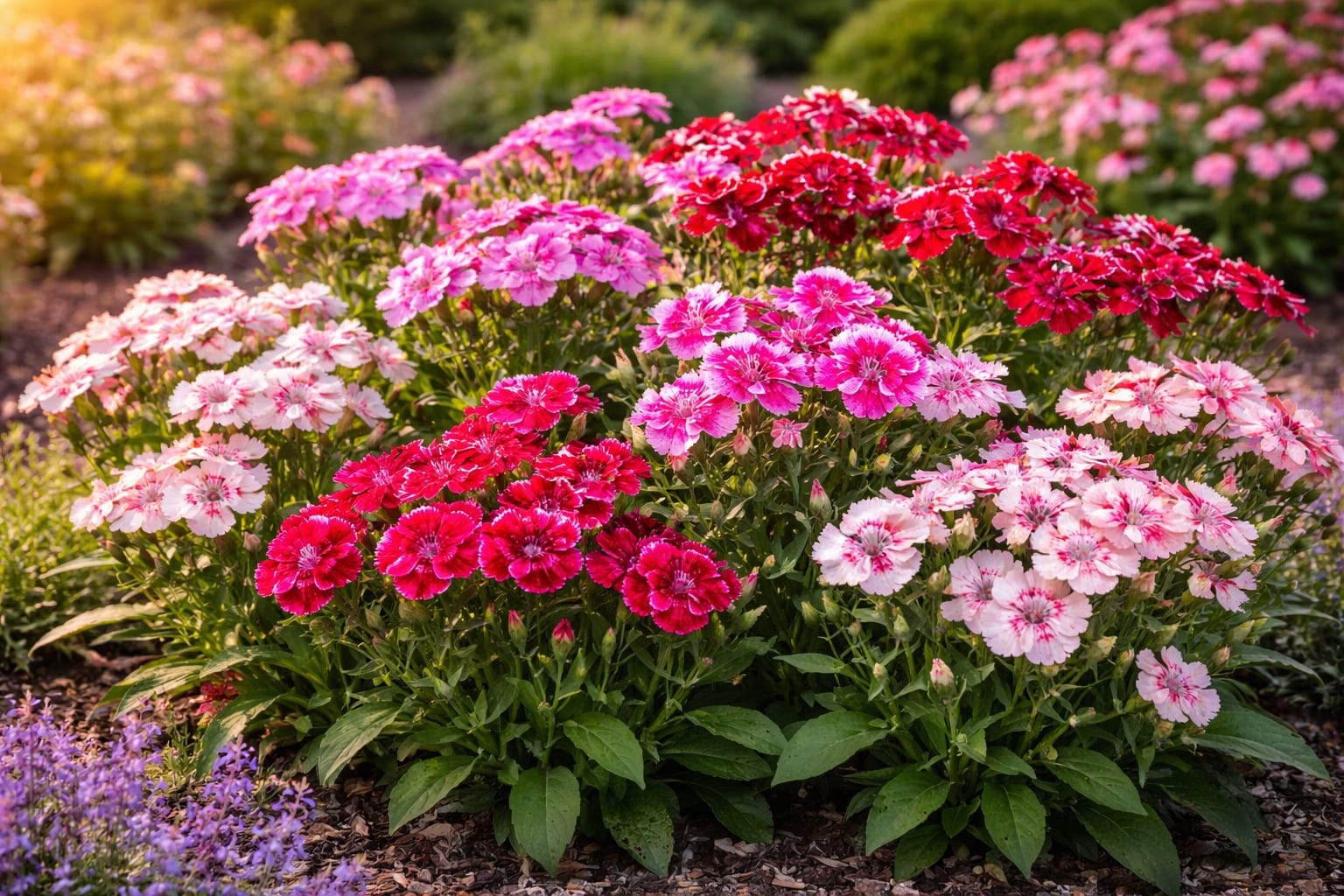
The dianthus flower plant is a classic garden favorite known for its fragrant blooms, delicate petals, and long flowering season. Often called pinks, carnations, or sweet williams depending on the type, dianthus plants are easy to grow, versatile, and perfect for borders, containers, rock gardens, and cottage-style landscapes. They offer bright color, a pleasant clove-like scent, and reliable performance year after year.
This complete, in-depth guide covers everything you need to know about dianthus flower plants, including types, growing conditions, planting, care, pruning, common problems, design ideas, and expert tips to help your plants thrive.
What Is a Dianthus Flower Plant
Dianthus is a large genus of flowering plants that includes annuals, biennials, and perennials. Most garden varieties are grown as perennials or short-lived perennials. The name “dianthus” comes from Greek words meaning “flower of the gods.”
Key characteristics of dianthus plants:
Narrow, grass-like blue-green foliage
Single or double flowers with fringed edges
Strong, sweet fragrance
Compact to spreading growth habit
Excellent cold tolerance
Dianthus plants are especially valued for their early and long-lasting blooms, often starting in spring and continuing into summer.
Meaning and Symbolism of Dianthus Flowers
Dianthus flowers carry rich symbolism and are often used in bouquets and celebrations.
Common meanings include:
Love and affection
Admiration and gratitude
Purity and good fortune
Strength and resilience
Different colors also hold meaning. Pink dianthus represents gratitude, red symbolizes deep love, and white stands for purity.
Popular Types of Dianthus
There are many types of dianthus, each suited for different garden uses.
Dianthus barbatus (Sweet William)
Upright growth
Dense clusters of colorful flowers
Often grown as a biennial
Excellent for cut flowers
Dianthus caryophyllus (Carnation)
Large, ruffled blooms
Strong fragrance
Often grown in gardens and greenhouses
Classic florist flower
Dianthus plumarius (Pinks)
Low-growing and spreading
Fringed petals
Very fragrant
Ideal for borders and rock gardens
Dianthus gratianopolitanus (Cheddar Pink)
Compact perennial
Bright pink or magenta flowers
Evergreen foliage
Excellent ground cover
Hybrid Dianthus
Longer bloom time
Wide color range
Improved disease resistance
Perfect for modern gardens
Why Grow Dianthus Flower Plants
Dianthus plants offer many advantages.
Key benefits:
Long blooming period
Strong fragrance
Low maintenance
Cold hardy
Attract pollinators
Deer and rabbit resistant
They are ideal for gardeners who want reliable color with minimal effort.
Sun Requirements
Dianthus plants bloom best in full sun.
Sunlight guidelines:
6–8 hours of direct sunlight daily
Morning sun is ideal
Partial shade tolerated in hot climates
Too much shade reduces flowering
More sun results in more flowers and stronger fragrance.
Soil Requirements
Soil quality plays a major role in dianthus health.
Ideal soil conditions:
Well-draining soil
Light, sandy, or loamy texture
Neutral to slightly alkaline pH
Avoid heavy, wet soil
Dianthus dislikes soggy roots, so good drainage is essential.
How to Plant Dianthus
Proper planting ensures strong root development and better blooms.
Planting steps:
Choose a sunny location
Loosen soil and mix in compost
Dig a hole slightly larger than the root ball
Plant at the same depth as the nursery pot
Water thoroughly after planting
Space plants well to improve airflow and reduce disease.
Watering Dianthus Plants
Dianthus plants prefer moderate watering.
Watering tips:
Water when the top inch of soil feels dry
Avoid overwatering
Water at the base of the plant
Reduce watering once plants are established
Overwatering is the most common cause of failure.
Fertilizing Dianthus
Dianthus plants do not need heavy feeding.
Best fertilizing practices:
Add compost in spring
Use balanced fertilizer lightly
Avoid high-nitrogen fertilizers
Feed once or twice during the growing season
Too much fertilizer encourages leaves instead of flowers.
Blooming Season and Flowering
Dianthus is known for its long bloom time.
Blooming details:
Starts in spring
Continues into early or mid-summer
Some varieties rebloom in fall
Deadheading extends flowering
With proper care, dianthus can bloom for several months.
Deadheading and Pruning
Deadheading is key to keeping dianthus blooming.
Deadheading tips:
Remove spent flowers regularly
Cut flower stems back to healthy leaves
Shear lightly after first bloom
Encourages reblooming and tidy growth
After flowering ends, trim plants to maintain shape.
Winter Care and Hardiness
Many dianthus varieties are cold hardy.
Winter care tips:
Most perennials survive winter easily
Mulch lightly in cold climates
Avoid heavy winter moisture
Evergreen foliage provides winter interest
Dianthus performs well in temperate climates.
Growing Dianthus in Containers
Dianthus is excellent for pots and containers.
Container tips:
Use well-draining pots
Choose compact varieties
Water more frequently than garden plants
Ensure good air circulation
Container-grown dianthus works well on patios and balconies.
Common Problems and Solutions
Yellow Leaves
Caused by overwatering or poor drainage
Improve soil and reduce watering
Poor Flowering
Caused by too much shade or excess nitrogen
Move to sunnier location and reduce fertilizer
Crown Rot
Caused by wet soil
Improve drainage and avoid mulch touching stems
Pests
Aphids and spider mites
Treat with neem oil or insecticidal soap
Fungal Diseases
Powdery mildew in humid conditions
Improve airflow and avoid overhead watering
Companion Plants for Dianthus
Dianthus pairs well with many garden plants.
Good companions include:
Lavender
Salvia
Coreopsis
Sedum
Catmint
Low-growing ornamental grasses
These plants share similar sun and soil needs.
Dianthus for Pollinators
Dianthus flowers attract beneficial insects.
Pollinator benefits:
Bees visit for nectar
Butterflies are attracted to bright colors
Supports garden biodiversity
Fragrant varieties are especially attractive to pollinators.
Dianthus in Garden Design
Dianthus fits many garden styles.
Design uses:
Border edging
Rock gardens
Cottage gardens
Container planting
Ground cover in sunny areas
Its compact size makes it perfect for small spaces.
Dianthus as Cut Flowers
Some dianthus varieties are excellent for bouquets.
Cut flower tips:
Harvest in the morning
Choose freshly opened blooms
Use clean scissors
Change water regularly
Carnations and sweet williams last especially long in vases.
Annual vs Perennial Dianthus
Annual dianthus:
Blooms first year
Short lifespan
Often used for quick color
Perennial dianthus:
Returns every year
Longer-lasting plants
Better garden value
Most gardeners prefer perennial types.
Frequently Asked Questions
Is dianthus easy to grow
Yes, it is low maintenance and beginner friendly
Does dianthus bloom all summer
It blooms longest with regular deadheading
Can dianthus grow in pots
Yes, it grows very well in containers
Is dianthus deer resistant
Yes, deer usually avoid it
Does dianthus spread
Some varieties slowly spread but are not invasive
Expert Tips for Healthy Dianthus
Plant in full sun
Use well-draining soil
Avoid overwatering
Deadhead regularly
Keep crowns dry
These simple steps ensure strong growth and abundant blooms.
Final Thoughts
The dianthus flower plant is a reliable, fragrant, and beautiful addition to any garden. With its charming blooms, long flowering season, and low maintenance needs, dianthus is perfect for borders, containers, and cottage gardens alike.
By giving it plenty of sun, excellent drainage, and occasional deadheading, you’ll enjoy vibrant color, sweet fragrance, and healthy plants that return year after year, making dianthus a timeless favorite for gardeners everywhere.