
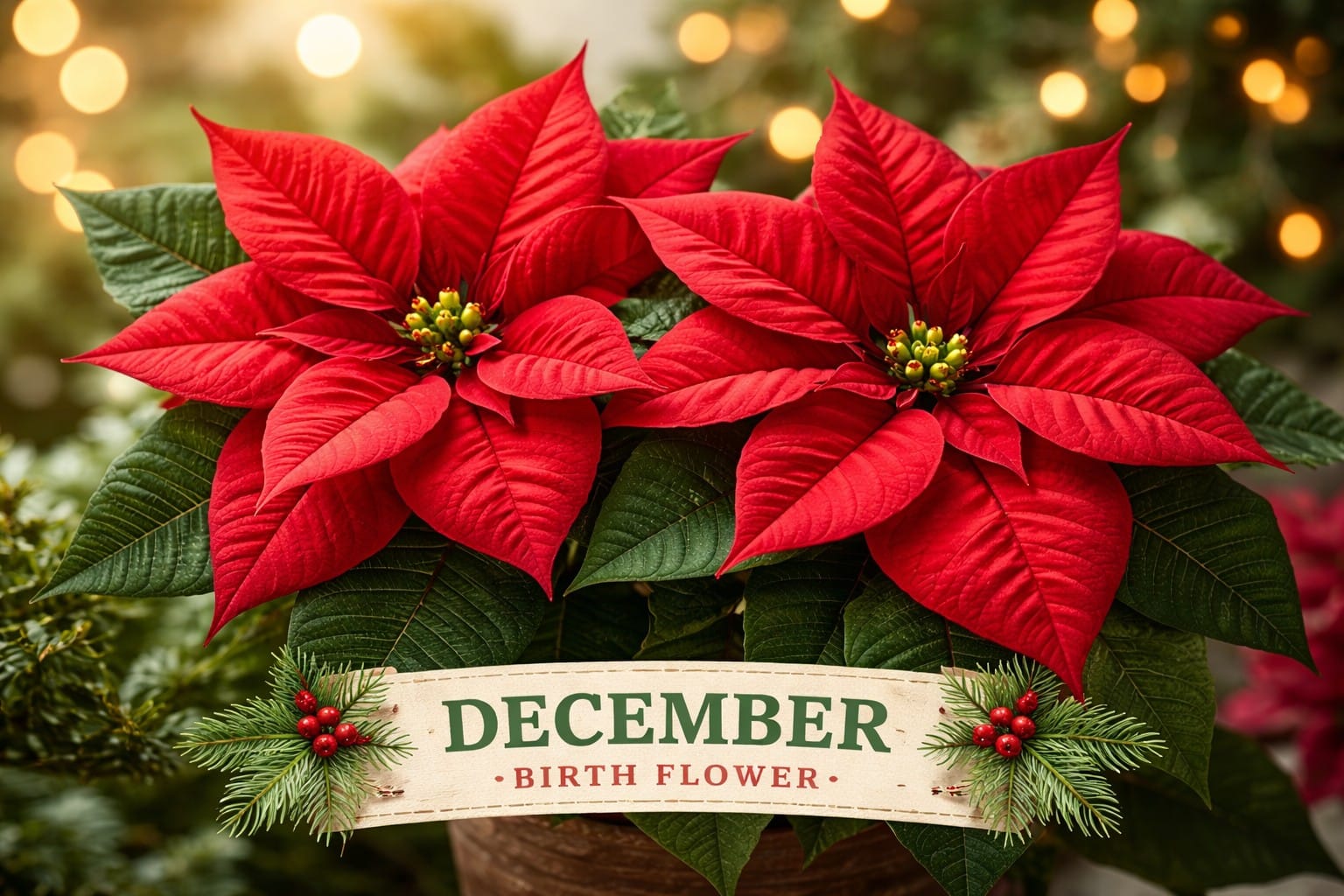
The December birth flower represents strength, hope, and renewal during the coldest and darkest time of the year. People born in December are traditionally associated with two birth flowers: holly and narcissus. Each flower carries deep symbolism, seasonal importance, and cultural meaning that reflects resilience, positivity, and new beginnings.
This complete guide explores everything about the December birth flower, including the meaning and symbolism of holly and narcissus, their history, cultural importance, colors, growing conditions, care tips, common uses, gifting ideas, and frequently asked questions. Whether you are celebrating a December birthday or simply curious about birth flowers, this guide covers it all in detail.
What Is the December Birth Flower
December is unique because it has two official birth flowers. These flowers were chosen to represent the spirit of winter and the promise of brighter days ahead.
The December birth flowers are:
- Holly
- Narcissus
Holly represents protection, strength, and festive joy, while narcissus symbolizes hope, rebirth, and self-reflection. Together, they capture both the quiet strength of winter and the anticipation of new beginnings.
Holly as a December Birth Flower
Holly is one of the most recognizable winter plants in the world. Its glossy green leaves and bright red berries stand out against cold winter landscapes, making it a powerful symbol of endurance.
Meaning and Symbolism of Holly
Holly has carried meaning for centuries across many cultures.
Common symbolic meanings include:
- Protection
- Strength
- Good fortune
- Peace
- Festive joy
- Resilience
Because holly stays green throughout winter, it represents everlasting life and hope even during difficult times.
History and Cultural Significance of Holly
Holly has been used in winter celebrations long before modern holidays.
Historical uses include:
- Ancient Romans used holly during Saturnalia
- Celts believed holly protected against evil spirits
- Christians associated holly with Christmas symbolism
The sharp leaves were believed to ward off harm, while the berries symbolized life and renewal.
Appearance of Holly
Holly plants are known for their bold contrast.
Key features include:
- Dark green, glossy leaves
- Sharp, spiny leaf edges
- Bright red berries (on female plants)
- Dense shrub or small tree form
Not all holly plants produce berries, as male and female plants are separate.
Colors and Their Meanings
Holly colors also carry symbolism.
- Green leaves represent life and growth
- Red berries symbolize vitality and warmth
- White flowers represent purity
This color combination makes holly a strong winter symbol.
Growing and Caring for Holly
Holly is hardy and long-lived when planted correctly.
Light requirements:
- Full sun to partial shade
Soil needs:
- Well-draining soil
- Slightly acidic soil preferred
Watering:
- Moderate watering
- More frequent during dry periods
Holly grows slowly but can live for decades with minimal care.
Holly in Home and Garden Use
Holly is widely used during winter months.
Common uses include:
- Holiday decorations
- Wreaths and garlands
- Garden hedges
- Symbolic gifts
Its durability and festive appearance make it especially popular in December.
Narcissus as a December Birth Flower
Narcissus is the second December birth flower and is closely associated with new beginnings and renewal.
Meaning and Symbolism of Narcissus
Narcissus carries a softer, more emotional symbolism compared to holly.
Common meanings include:
- Hope
- Renewal
- Rebirth
- Self-love
- Inner reflection
Because narcissus blooms in late winter or early spring, it symbolizes the promise of brighter days ahead.
History and Mythology of Narcissus
The flower’s name comes from Greek mythology.
In the myth:
- Narcissus was a youth who fell in love with his reflection
- The flower grew where he died
Despite this story, the flower’s modern meaning focuses more on renewal and optimism rather than vanity.
Appearance of Narcissus Flowers
Narcissus flowers are elegant and fragrant.
Key characteristics include:
- Trumpet-shaped or cup-shaped centers
- White, yellow, or cream petals
- Sweet fragrance
- Slender green stems
Daffodils are the most common type of narcissus.
Colors and Their Meanings
Different narcissus colors carry different symbolism.
- White symbolizes purity and hope
- Yellow represents joy and happiness
- Cream tones suggest warmth and calm
These colors reflect gentle optimism and emotional balance.
Growing and Caring for Narcissus
Narcissus plants grow from bulbs and are easy to maintain.
Planting requirements:
- Plant bulbs in fall
- Place bulbs with pointed end up
Light needs:
- Full sun to partial shade
Soil conditions:
- Well-draining soil
- Avoid soggy areas
Watering:
- Water after planting
- Reduce watering once leaves yellow
Narcissus bulbs multiply over time and return year after year.
Differences Between Holly and Narcissus
Although both are December birth flowers, they are very different plants.
Holly:
- Evergreen shrub or tree
- Symbolizes protection and strength
- Prominent in winter décor
Narcissus:
- Flowering bulb plant
- Symbolizes renewal and hope
- Blooms near the end of winter
Together, they represent both endurance and fresh beginnings.
December Birth Flower Personality Traits
Birth flowers are often linked to personality traits.
People associated with December birth flowers are often seen as:
- Strong and resilient
- Loyal and protective
- Hopeful and optimistic
- Thoughtful and reflective
- Warm-hearted despite challenges
These traits align closely with the symbolism of holly and narcissus.
December Birth Flower Gift Ideas
Birth flowers make meaningful gifts.
Popular gift ideas include:
- Holly-themed decorations
- Potted narcissus bulbs
- Floral jewelry designs
- Birth flower art prints
- Garden plants or bulbs
These gifts are personal, symbolic, and timeless.
Using December Birth Flowers in Decorations
December birth flowers are closely tied to seasonal décor.
Decoration ideas include:
- Holly wreaths and centerpieces
- Narcissus arrangements for late winter
- Holiday table décor
- Seasonal floral designs
They blend beautifully with winter themes.
Are December Birth Flowers Toxic
Safety is important to consider.
Holly:
- Berries are toxic if ingested
- Keep away from children and pets
Narcissus:
- Bulbs are toxic
- Leaves and flowers can irritate skin
Use caution when planting or displaying these flowers indoors.
December Birth Flowers in Modern Culture
December birth flowers continue to hold relevance today.
They appear in:
- Birth flower jewelry
- Tattoo designs
- Personalized gifts
- Floral calendars
- Home décor
Their symbolism remains meaningful across generations.
Caring for Narcissus Indoors
Narcissus can be grown indoors as forced bulbs.
Indoor care tips:
- Place in bright indirect light
- Keep soil slightly moist
- Avoid heat sources
Indoor narcissus brings life to winter interiors.
Common Mistakes to Avoid
To enjoy December birth flowers fully, avoid these mistakes.
- Overwatering bulbs
- Planting narcissus bulbs too shallow
- Assuming all holly produces berries
- Ignoring toxicity concerns
Proper care ensures long-lasting beauty.
Frequently Asked Questions
December has two birth flowers: holly and narcissus. Holly symbolizes protection and strength, while narcissus represents hope and renewal. Narcissus is easy to grow from bulbs. Holly is commonly used in winter decorations. Both flowers have deep historical and cultural meaning.
Final Thoughts
The December birth flower, represented by holly and narcissus, beautifully reflects the spirit of the season. Holly stands strong through winter, symbolizing protection, resilience, and warmth, while narcissus offers hope, renewal, and the promise of brighter days ahead. Together, they capture the balance between endurance and optimism.
Whether used as garden plants, decorations, or meaningful gifts, December birth flowers hold timeless value. Their symbolism, beauty, and history make them a powerful way to celebrate December birthdays and the quiet strength that defines the final month of the year.