
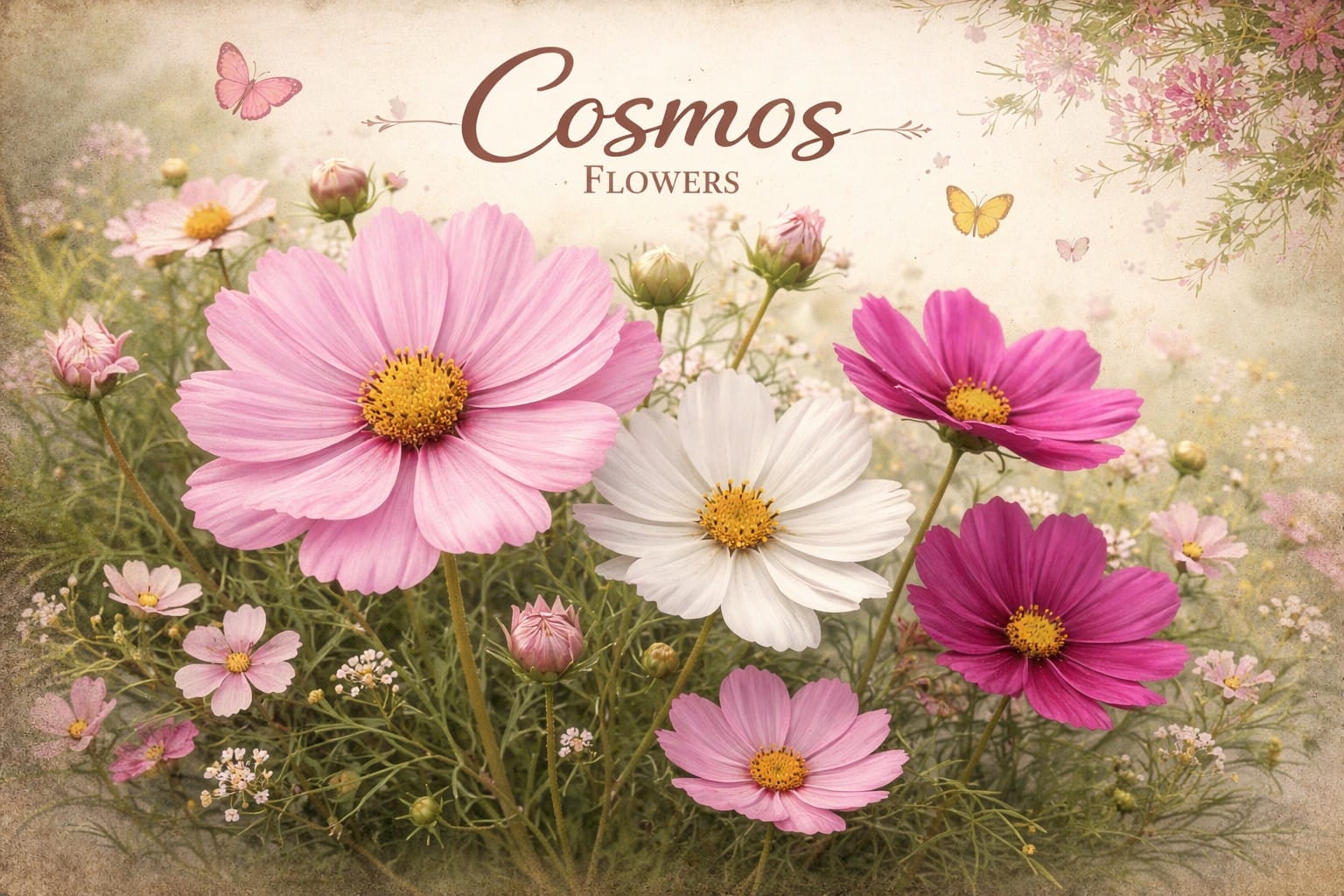
The cosmos flower is one of the most charming and easy-going flowers you can grow. With its delicate petals, soft colors, and airy stems, cosmos brings a natural, wild beauty to gardens and landscapes. Loved by beginners and experienced gardeners alike, cosmos flowers are known for their long blooming season, low maintenance needs, and rich symbolic meaning.
This complete guide covers everything about the cosmos flower, including its meaning, symbolism, types, colors, growing steps, care tips, common mistakes, uses, benefits for pollinators, and frequently asked questions. By the end, you’ll understand why cosmos flowers are a favorite around the world.
What Is a Cosmos Flower?
The cosmos flower is a flowering plant from the Asteraceae family, which also includes daisies and sunflowers. Cosmos plants are native to Mexico and Central America and thrive in warm, sunny environments. They are best known for their simple, daisy-like blooms and feathery green foliage.
Cosmos flowers grow on tall, slender stems and gently sway in the wind, giving gardens a relaxed and natural look. They bloom from early summer until the first frost, making them a long-lasting source of color.
Key features of cosmos flowers include:
- Light, airy appearance
- Daisy-shaped blooms
- Fine, fern-like leaves
- Long flowering season
- Excellent pollinator attraction
Meaning and Symbolism of Cosmos Flower
The name cosmos comes from the Greek word meaning order, harmony, and balance. This meaning is deeply connected to the flower’s symmetrical petals and calm beauty.
Cosmos flower symbolism includes:
- Peace and harmony
- Balance in life
- Love and innocence
- Calmness and simplicity
Cosmos flowers are often associated with people who value inner peace, emotional balance, and a simple, joyful approach to life.
Types of Cosmos Flowers
There are several popular types of cosmos flowers, each with unique features and growing habits.
Cosmos Bipinnatus
This is the most common and widely grown type of cosmos.
Characteristics include:
- Large, open blooms
- Feathery foliage
- Pink, white, purple, and red colors
- Tall growth, often 3 to 6 feet
Cosmos Sulphureus
This type is known for its bright, warm colors.
Key traits:
- Orange, yellow, and red blooms
- Slightly smaller flowers
- More heat-tolerant
- Bushier growth habit
Chocolate Cosmos
Chocolate cosmos is unique and rare.
Features include:
- Deep reddish-brown flowers
- Light chocolate-like fragrance
- Grown mainly as a perennial
- Popular in ornamental gardens
Cosmos Flower Color Meanings
Different cosmos flower colors carry different meanings and emotions.
- Pink cosmos – Love, kindness, and affection
- White cosmos – Purity, innocence, and peace
- Red cosmos – Passion and strength
- Purple cosmos – Creativity and elegance
- Orange cosmos – Energy, joy, and enthusiasm
- Yellow cosmos – Happiness and positivity
This wide color range makes cosmos flowers perfect for expressive gardens and meaningful floral arrangements.
How to Grow Cosmos Flowers Step by Step
Cosmos flowers are incredibly easy to grow, making them ideal for beginners.
Light Requirements
- Full sun is essential
- At least 6 to 8 hours of direct sunlight daily
- More sunlight equals more blooms
Soil Requirements
- Well-draining soil
- Average or poor soil works best
- Too much fertilizer leads to fewer flowers
Cosmos actually bloom better in soil that is not overly rich.
Planting Cosmos Seeds
- Sow seeds directly into the ground
- Plant after the last frost
- Cover seeds lightly with soil
- Space plants 12 to 18 inches apart
Cosmos seeds germinate quickly, usually within 7 to 10 days.
Watering Needs
- Water lightly during early growth
- Once established, cosmos are drought-tolerant
- Avoid overwatering
Temperature and Climate
- Thrive in warm weather
- Ideal for summer gardens
- Sensitive to frost
Caring for Cosmos Flowers
Cosmos flowers require very little care once established.
Pruning and Deadheading
- Remove spent flowers to encourage more blooms
- Cut back tall plants if they become leggy
- Pruning helps maintain shape
Fertilizing
- Usually not needed
- Too much fertilizer causes leafy growth instead of flowers
- If needed, use a very light, balanced fertilizer
Supporting Tall Plants
- Taller varieties may need staking
- Plant in groups for natural support
- Protect from strong winds
Common Mistakes When Growing Cosmos
Even easy plants like cosmos can struggle if basic needs are ignored.
Common mistakes include:
- Overwatering
- Using rich or heavily fertilized soil
- Planting in shade
- Crowding plants too closely
- Not deadheading regularly
Avoiding these mistakes will ensure healthy plants and abundant blooms.
Growing Cosmos in Pots and Containers
Cosmos flowers grow well in containers if given enough space.
- Use large pots with drainage holes
- Choose compact varieties
- Use well-draining potting mix
- Place in full sun
Container-grown cosmos are great for balconies, patios, and small gardens.
Benefits of Cosmos Flowers for Pollinators
Cosmos flowers are excellent for attracting beneficial insects.
They attract:
- Bees
- Butterflies
- Hoverflies
By planting cosmos, you help support pollinators and improve garden biodiversity.
Uses of Cosmos Flowers
Garden and Landscape Use
- Wildflower gardens
- Cottage gardens
- Borders and backdrops
- Natural meadow-style landscapes
Cut Flowers
- Long-lasting in vases
- Add a soft, romantic look
- Best cut in the morning
Symbolic and Decorative Use
- Used in celebrations and gifts
- Represents harmony and love
- Popular in eco-friendly floral designs
Interesting Facts About Cosmos Flowers
- Cosmos flowers can grow over 6 feet tall
- They thrive in poor soil conditions
- Cosmos are deer-resistant
- They bloom continuously with minimal care
- Cosmos seeds are easy to collect and save
FAQs About Cosmos Flowers
Q: Are cosmos flowers annual or perennial?
A: Most cosmos varieties are annuals, except chocolate cosmos, which is a tender perennial.
Q: Do cosmos flowers spread?
A: Yes, they can self-seed, but they are easy to control.
Q: Can cosmos grow indoors?
A: Cosmos are best grown outdoors due to their size and sunlight needs.
Q: How long do cosmos flowers bloom?
A: They bloom from early summer until frost.
Q: Are cosmos flowers pet-safe?
A: Yes, cosmos flowers are generally non-toxic to pets.
Final Thoughts
The cosmos flower is a perfect example of beauty in simplicity. With its graceful blooms, deep symbolic meaning, and effortless care, cosmos is ideal for gardeners of all skill levels. Whether planted in a backyard garden, a wildflower meadow, or a simple container, cosmos flowers bring harmony, color, and life wherever they grow. Their long blooming season, pollinator-friendly nature, and low maintenance needs make them a timeless favorite that truly lives up to their name.