
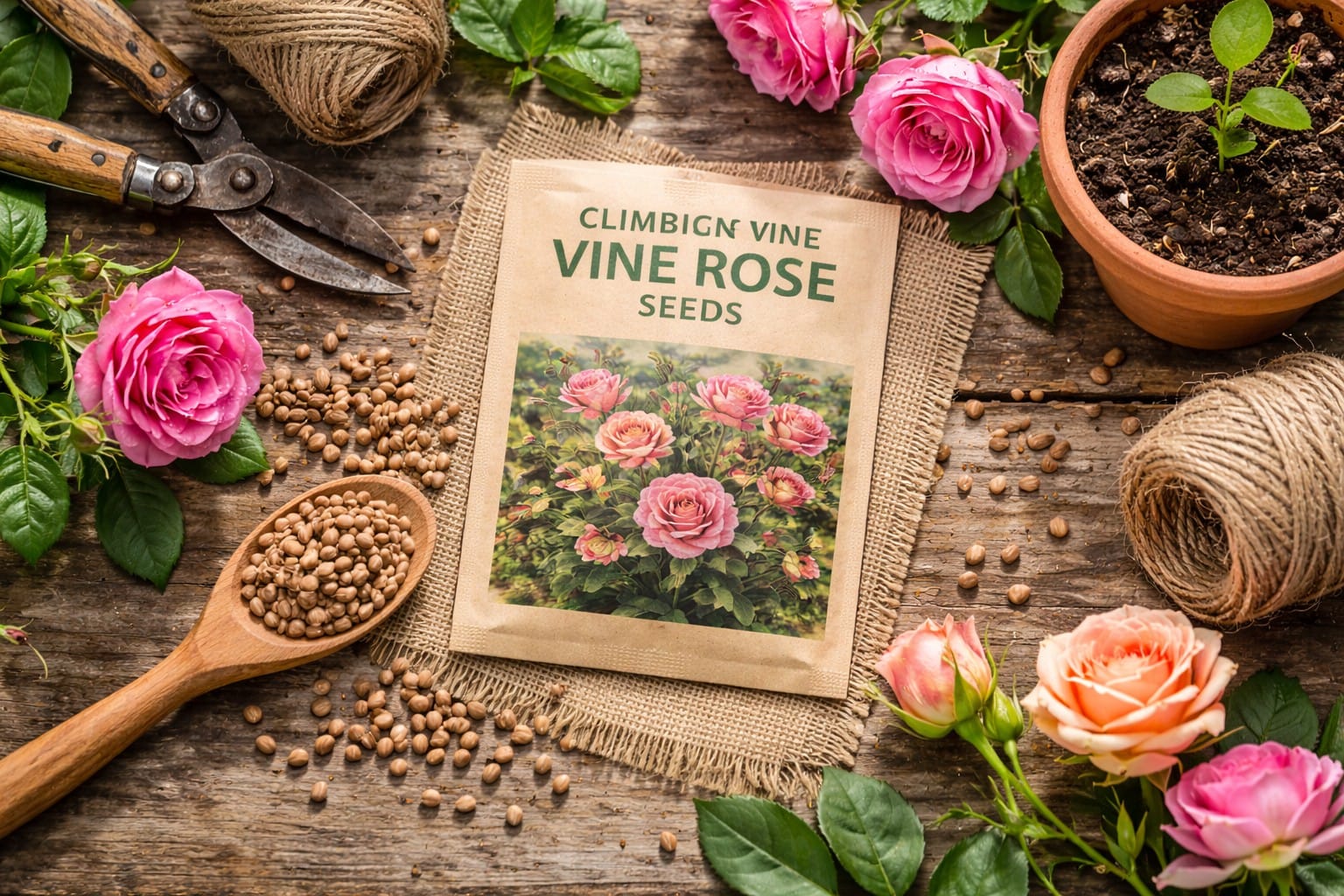
Climbing vine rose seeds are the starting point for growing stunning, fragrant rose vines that can transform trellises, fences, pergolas, and garden walls. Known for their lush blooms, vigorous growth, and romantic appeal, climbing roses are ideal for gardeners looking to add vertical beauty and color to their landscapes.
This guide provides a complete overview of climbing vine rose seeds, including types, planting, soil and sunlight requirements, watering, fertilizing, care, common problems, harvesting seeds, storage, and expert tips for healthy, blooming rose vines.
What Are Climbing Vine Rose Seeds
Climbing rose seeds are produced from mature rose hips, which are the fruit of the rose plant. These seeds can grow into climbing varieties that produce long, flexible stems ideal for trellises and vertical spaces.
Key characteristics of climbing roses:
- Long, arching canes suitable for support structures
- Large, fragrant blooms in various colors
- Blooms continuously or in flushes depending on the variety
- Hardy and adaptable once established
- Attract pollinators like bees and butterflies
Growing roses from seed is slower than buying established plants, but it is rewarding and allows you to cultivate unique varieties.
Meaning and Symbolism of Climbing Roses
Climbing roses carry symbolic meanings:
- Romance and love
- Passion and beauty
- Strength and resilience
- Elegance and grace
They are often used in weddings, romantic gardens, and special landscape designs.
Types of Climbing Vine Rose Seeds
There are several climbing rose types suitable for seed propagation.
Hybrid Tea Climbing Roses
- Large, classic blooms
- Strong fragrance
- Continuous blooming varieties available
Floribunda Climbing Roses
- Clusters of flowers
- Vigorous growth
- Ideal for mass planting on trellises
Rambler Roses
- Fast-growing and spreading
- Smaller blooms in large clusters
- Best for fences and arbors
Species or Wild Climbing Roses
- Hardy and disease-resistant
- Adapted to local climates
- Often used for naturalized landscapes
Choosing the right type depends on your climate, garden design, and bloom preferences.
When to Plant Climbing Rose Seeds
Rose seeds require cold stratification for germination.
- Harvest or purchase seeds in late fall or winter
- Stratify seeds in the refrigerator for 8–12 weeks
- Plant outdoors in spring after last frost or start indoors
Soil temperatures of 65–70°F (18–21°C) are ideal for germination.
Preparing Climbing Rose Seeds for Planting
Rose seeds have a hard outer coat and benefit from preparation:
- Remove seeds from rose hips and clean thoroughly
- Soak seeds in warm water for 12–24 hours
- Scarify seeds lightly with sandpaper or nail file
- Stratify seeds in a damp paper towel in the fridge for 8–12 weeks
This process improves germination rates and speeds up sprouting.
Soil Requirements
Climbing roses prefer fertile, well-draining soil.
- Loamy or sandy soil enriched with compost
- Slightly acidic to neutral pH (6.0–7.0)
- Avoid waterlogged soil
- Good drainage prevents root rot and fungal diseases
How to Plant Climbing Rose Seeds
Step-by-Step Planting
- Fill pots or trays with a quality seed-starting mix
- Sow stratified seeds ¼ inch deep
- Mist lightly to keep soil moist
- Place in bright, indirect light
- Keep soil temperature warm and consistent
Seeds may take 4–8 weeks to germinate and sometimes longer, depending on variety.
Transplanting Seedlings
- Move seedlings to larger pots once they have 2–3 true leaves
- Harden off seedlings before planting outdoors
- Plant in prepared garden soil with support structures
Sunlight Requirements
Climbing roses need full sunlight for best results:
- At least 6–8 hours of direct sunlight daily
- Morning sun with afternoon shade in hot climates
- More sun encourages stronger growth and abundant blooms
Watering Climbing Roses
Proper watering is essential:
- Water seedlings gently and consistently
- Established plants need deep watering 1–2 times per week
- Keep soil moist but not waterlogged
- Mulch helps retain moisture and suppress weeds
Fertilizing Climbing Roses
Climbing roses are heavy feeders.
- Use well-balanced rose fertilizer
- Feed monthly during the growing season
- Avoid excessive nitrogen, which promotes leaf growth over blooms
- Incorporate organic compost annually
Growth and Blooming Timeline
Typical growth timeline:
- Germination: 4–8 weeks
- Seedling stage: 2–3 months
- First bloom: 1–2 years after planting
- Mature climbing rose: 3–5 years for full bloom potential
Patience is required, but the results are highly rewarding.
Caring for Climbing Rose Plants
Basic care ensures strong, healthy vines:
- Provide sturdy trellises or supports
- Prune annually to remove dead or weak canes
- Deadhead spent flowers to encourage blooms
- Mulch around base to retain moisture and regulate soil temperature
- Monitor for pests and diseases regularly
Common Problems and Solutions
Poor Germination
- Caused by improper stratification or old seeds
- Scarify and stratify seeds properly
Pests
- Aphids, spider mites, and rose beetles
- Treat with neem oil, insecticidal soap, or horticultural oil
Diseases
- Powdery mildew, black spot, or rust
- Ensure good air circulation and avoid overhead watering
Leggy Growth
- Caused by insufficient light
- Provide full sun and train vines along supports
Harvesting Climbing Rose Seeds
- Collect rose hips once fully ripe and color changes to red, orange, or brown
- Remove seeds carefully and clean
- Dry seeds completely before storing
Storing Climbing Rose Seeds
- Store seeds in paper envelopes or airtight containers
- Label with variety and date
- Keep in a cool, dark, dry place
- Seeds remain viable for 2–5 years
Climbing Roses in Containers
- Use large, deep pots with drainage holes
- Provide trellis or obelisk for support
- Water consistently and use rich potting soil
- Protect tropical varieties from frost in winter
Landscape Uses
Climbing roses are highly versatile:
- Cover trellises, arbors, and fences
- Create vertical focal points in gardens
- Combine with perennials and shrubs for layered effect
- Ideal for romantic or cottage-style gardens
Frequently Asked Questions
Are climbing rose seeds easy to grow?
Yes, with proper stratification and care, but patience is required.
Do climbing roses bloom in the first year?
Typically, they take 1–2 years to flower well.
Can climbing roses grow in partial shade?
They prefer full sun but tolerate light shade.
Are climbing roses pest-resistant?
They are susceptible to common rose pests but manageable.
Do climbing roses need support?
Yes, all climbing roses require trellises or other structures.
Expert Growing Tips
- Stratify seeds for best germination
- Use full sun locations
- Prune annually to encourage healthy growth
- Provide sturdy supports for vines
- Patience is key for seed-grown roses
Final Thoughts
Climbing vine rose seeds offer gardeners the chance to grow beautiful, fragrant, vertical blooms from scratch. While slower than buying established plants, growing from seed allows for unique, resilient plants that can cover trellises, arbors, and fences with elegance.
With proper seed preparation, sunlight, soil, and care, climbing rose seeds grow into strong, healthy vines that provide color, fragrance, and vertical charm for years to come.