
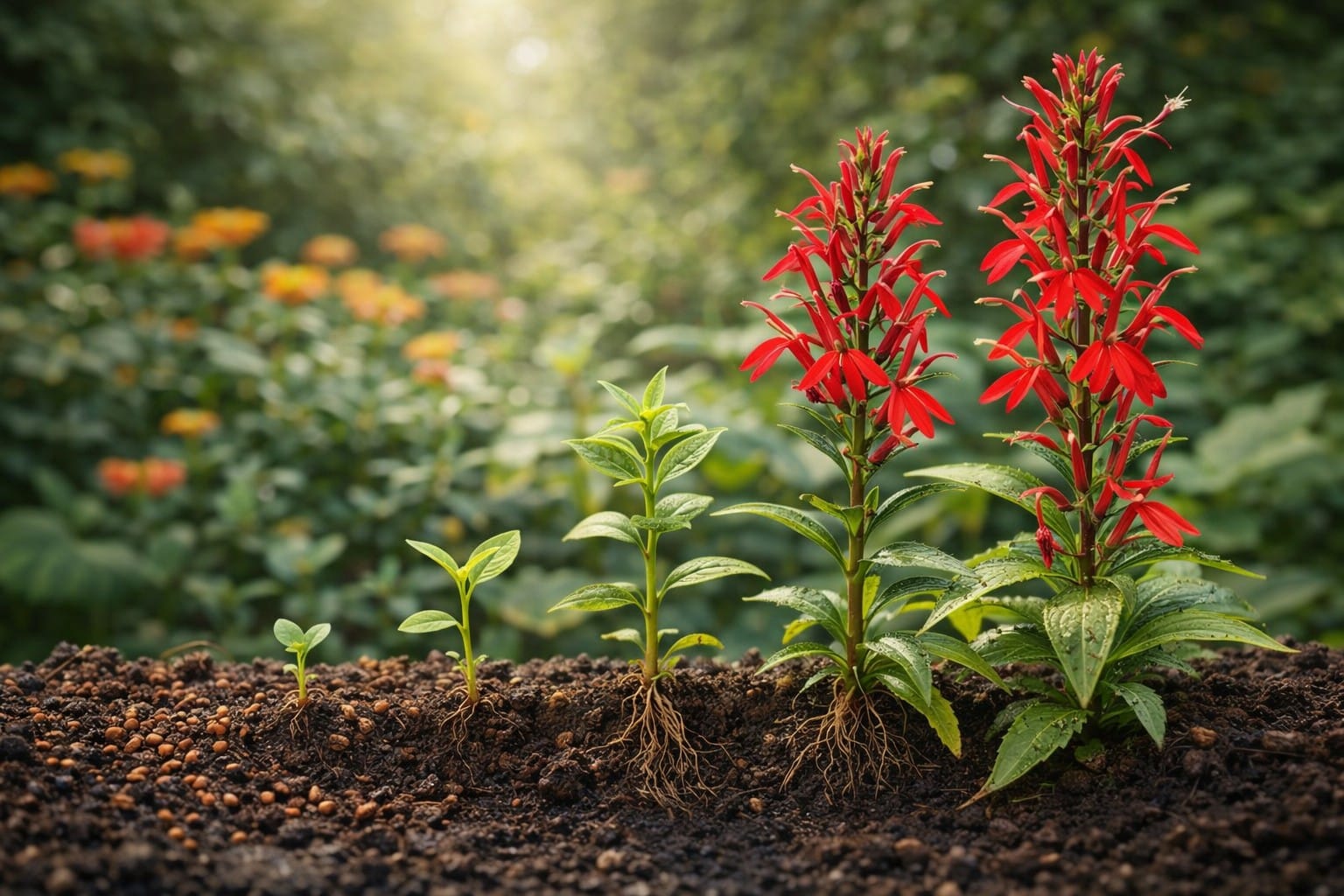
Cardinal flower seeds grow into striking perennial blooms known for their bright red, tubular flowers that attract hummingbirds and butterflies. Scientifically called Lobelia cardinalis, cardinal flowers are native to North America and thrive in moist, partially shaded environments, making them perfect for garden borders, water edges, and pollinator gardens.
This complete guide covers everything about growing cardinal flowers from seed, including seed types, planting, soil and sunlight requirements, watering, fertilizing, care, common problems, harvesting seeds, storage, and expert tips for successful growth.
What Are Cardinal Flower Seeds
Cardinal flower seeds are tiny, lightweight seeds produced by mature flowers in late summer or fall. Each seed can develop into a tall, vivid red flower spike that grows from 3–4 feet tall, with lush green foliage.
Key characteristics of cardinal flowers:
- Brilliant red, tubular flowers in spikes
- Attract hummingbirds, butterflies, and pollinators
- Perennial but may reseed naturally
- Grows best in moist, partially shaded areas
- Height ranges from 3–5 feet
These seeds are delicate but rewarding for gardeners seeking vivid, wildlife-friendly flowers.
Meaning and Symbolism of Cardinal Flowers
Cardinal flowers carry symbolic meanings:
- Passion and vitality
- Beauty and elegance
- Attraction and charisma
- Resilience and boldness
Their striking red blooms are often associated with strength and attention, making them a focal point in garden design.
Types of Cardinal Flower Seeds
While cardinal flowers are generally considered one species (Lobelia cardinalis), there are different cultivars for gardens:
Standard Cardinal Flower
- Classic bright red blooms
- Grows 3–5 feet tall
- Ideal for naturalized and pond gardens
Compact or Dwarf Varieties
- Smaller height (12–24 inches)
- Suited for containers or small spaces
- Retains bright red tubular flowers
Hybrid Varieties
- Slight color variations (orange-red, scarlet)
- Extended bloom season
- Sometimes more tolerant to diverse soil conditions
Choosing the right variety depends on garden space and desired color intensity.
When to Plant Cardinal Flower Seeds
Cardinal flower seeds benefit from cold stratification to improve germination.
- Sow seeds late winter or early spring indoors
- Alternatively, sow outdoors in fall for natural stratification
- Seeds germinate best at 60–70°F (15–21°C) after stratification
Timing ensures seedlings develop before the growing season.
Preparing Cardinal Flower Seeds for Planting
Because cardinal flower seeds are small and slow to germinate:
- Lightly stratify seeds in the refrigerator for 2–4 weeks
- Use damp paper towels or moist sand for cold treatment
- Keep seeds away from direct sunlight during stratification
- After stratification, sow seeds immediately in seed trays or pots
Stratification improves germination rates and speeds up sprouting.
Soil Requirements
Cardinal flowers thrive in moist, rich soil.
- Loamy or sandy soil with good moisture retention
- Slightly acidic to neutral pH (6.0–7.0)
- Soil enriched with compost or organic matter
- Avoid dry, sandy soil or heavy clay
Moist soil is essential to support tall, lush growth.
How to Plant Cardinal Flower Seeds
Step-by-Step Planting
- Fill seed trays with moist, fine-textured seed-starting mix
- Scatter seeds on the soil surface; do not cover as light aids germination
- Mist gently to keep soil moist
- Maintain a temperature of 60–70°F
- Germination may take 2–6 weeks
Transplanting Seedlings
- Transplant seedlings outdoors after all danger of frost has passed
- Space seedlings 12–18 inches apart
- Choose partially shaded areas with consistent moisture
Sunlight Requirements
- Cardinal flowers prefer partial shade, especially in hot climates
- Morning sun and afternoon shade work best
- Full sun may stress plants unless soil is consistently moist
Watering Cardinal Flowers
Cardinal flowers thrive in consistently moist soil:
- Water seedlings daily until established
- Mature plants prefer wet or damp conditions
- Avoid letting soil dry completely
- Mulching helps retain moisture and suppress weeds
Fertilizing Cardinal Flowers
- Use light, balanced fertilizer or compost
- Fertilize once at planting and optionally mid-season
- Excess fertilizer encourages foliage over flowers
Healthy soil usually provides enough nutrients for vibrant blooms.
Growth and Blooming Timeline
Typical growth timeline:
- Germination: 2–6 weeks
- Seedling stage: 4–6 weeks
- First blooms: summer (first year for early-started seeds, second year for outdoor sowing)
- Peak bloom: late summer to early fall
Deadheading encourages prolonged flowering.
Caring for Cardinal Flower Plants
Cardinal flowers are relatively low-maintenance:
- Keep soil consistently moist
- Remove spent flowers to encourage reblooming
- Thin seedlings to prevent overcrowding
- Stake taller varieties if needed
They are also tolerant of partial flooding near pond edges.
Common Problems and Solutions
Poor Germination
- Caused by skipping stratification or overwatering
- Cold stratify seeds and maintain proper moisture
Leggy or Weak Growth
- Caused by insufficient light or crowding
- Thin seedlings and provide partial sun
Pests
- Aphids, slugs, and snails may occasionally attack
- Use organic deterrents like neem oil or copper tape
Diseases
- Powdery mildew and leaf spots in damp conditions
- Improve airflow and avoid overhead watering
Harvesting Cardinal Flower Seeds
- Wait until flower spikes dry and turn brown
- Collect seed pods carefully
- Remove seeds from pods and dry for a few days
- Store seeds in a cool, dry, dark place
Seeds are tiny but highly viable when stored properly.
Storing Cardinal Flower Seeds
- Use paper envelopes or small jars
- Label with variety and harvest date
- Store in a cool, dry, dark place
- Seeds remain viable for 2–3 years
Cardinal Flowers in Containers
- Use deep containers with good drainage
- Keep soil consistently moist
- Provide partial sun or filtered light
- Ideal for patios, balconies, and water-edge containers
Landscape Uses
Cardinal flowers are versatile in garden design:
- Moist borders and pond edges
- Pollinator gardens for hummingbirds and butterflies
- Woodland or shaded garden areas
- Mass plantings for vibrant summer-red focal points
Frequently Asked Questions
Are cardinal flower seeds easy to grow?
Yes, with stratification and proper moisture, they germinate reliably.
Do cardinal flowers bloom the first year?
If started indoors early, some may bloom; otherwise, they bloom in the second year.
Do cardinal flowers prefer sun or shade?
Partial shade is ideal, especially in warmer regions.
Are cardinal flowers deer-resistant?
Mostly yes, deer tend to avoid the plant.
Do cardinal flowers attract pollinators?
Yes, hummingbirds, butterflies, and beneficial insects are drawn to the flowers.
Expert Growing Tips
- Stratify seeds for optimal germination
- Keep soil moist throughout growth
- Provide partial sun and avoid hot afternoon exposure
- Thin seedlings for strong, upright growth
- Stake taller plants to prevent flopping
Final Thoughts
Cardinal flower seeds offer gardeners the opportunity to grow striking red perennials that attract pollinators and brighten moist garden areas. With patience, proper stratification, and consistent care, these seeds grow into vibrant, tall blooms that add color, life, and elegance to any landscape.
From seed to flower spike, cardinal flowers reward effort with long-lasting beauty, hummingbird visits, and a bold splash of red in summer and early fall gardens.