
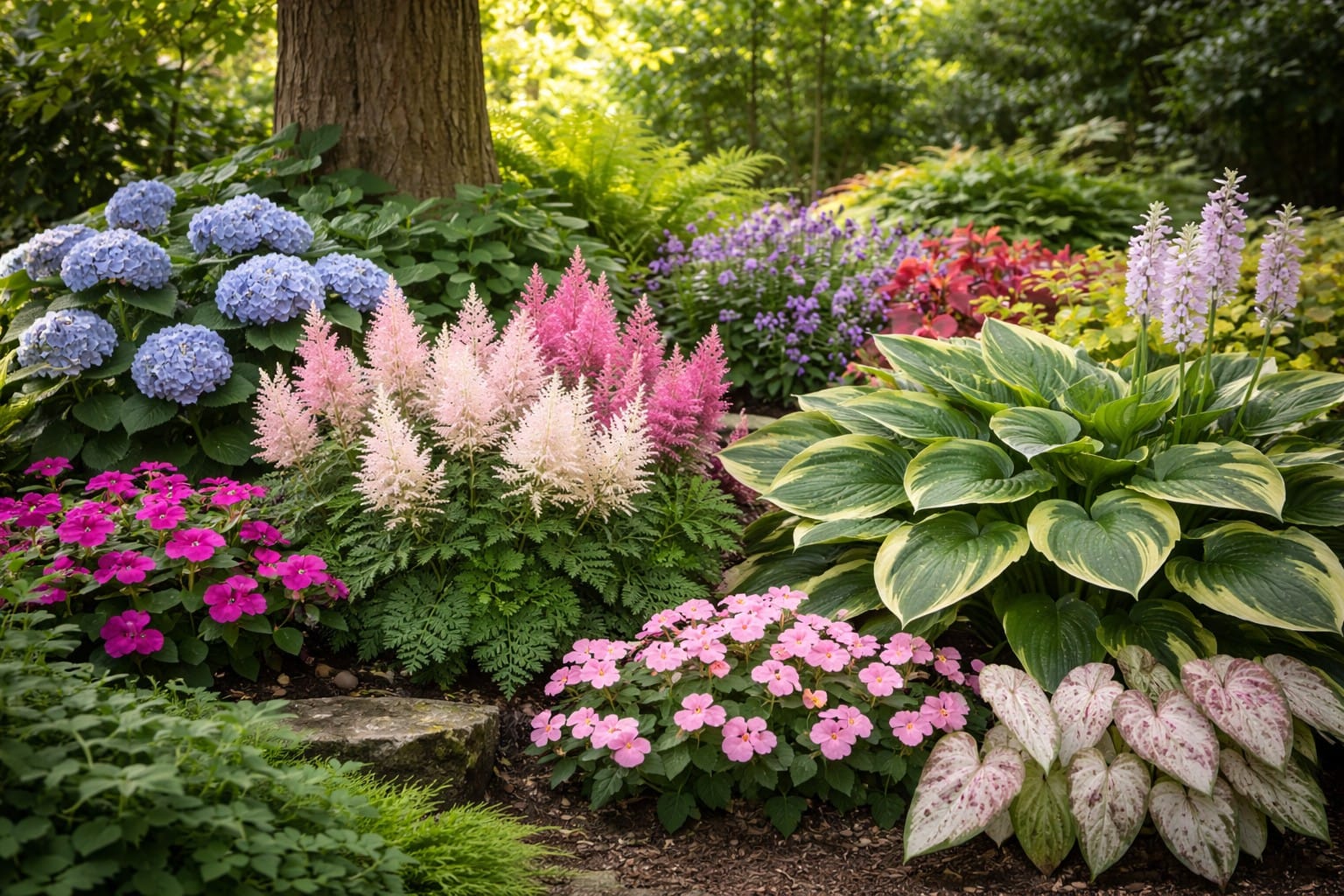
Not all flowers need full sun to thrive. Shade-tolerant flower plants are perfect for gardens, patios, or indoor areas where sunlight is limited. These plants can add color, texture, and fragrance to shady corners, under trees, or along north-facing walls, making them essential for creating lush, vibrant gardens even in low-light conditions.
This detailed guide covers the best shade-loving flower plants, how to grow and care for them, design tips, common problems, and expert advice to ensure your shady spots bloom beautifully.
What Are Shade-Loving Flower Plants
Shade-loving flowers are plants that thrive in low to moderate light. They can grow in areas receiving indirect sunlight, dappled shade, or full shade for most of the day. These flowers are adapted to the filtered light of forest floors or shaded garden beds.
Key characteristics:
Tolerate low sunlight
Maintain vibrant blooms in partial or full shade
Adaptable to different soil types
Often used as underplantings or border fillers
Understanding your garden’s light levels is key before choosing plants.
Benefits of Shade-Tolerant Flower Plants
Adding shade-loving flowers has many advantages:
Enhances underutilized areas of the garden
Reduces the need for constant sunlight monitoring
Supports biodiversity and pollinators in shaded areas
Adds color, texture, and interest to otherwise dark spots
Low-maintenance options for busy gardeners
Shade gardens can be just as visually stunning as sunny beds with the right plant selection.
Best Shade-Tolerant Flower Plants
These flowers are well-known for thriving in low-light conditions while providing beauty and long-lasting blooms.
Astilbe
Feathery plumes in pink, white, or red
Blooms early to mid-summer
Prefers moist, well-drained soil
Excellent for woodland gardens or shady borders
Bleeding Heart (Dicentra spectabilis)
Heart-shaped pink or white flowers
Blooms in spring
Thrives in partial to full shade
Ideal for romantic or woodland-themed gardens
Impatiens
Bright red, pink, purple, or white blooms
Blooms spring through fall
Requires consistent moisture
Perfect for container planting and shady flower beds
Hostas (Flowering Varieties)
Primarily grown for foliage, but flowering varieties bloom with lavender or white spikes
Prefers partial to full shade
Great as ground cover under trees
Blooms add vertical interest
Columbine (Aquilegia)
Unique spurred flowers in blue, purple, pink, red
Blooms late spring to early summer
Partial shade preferred
Attracts hummingbirds and butterflies
Torenia (Wishbone Flower)
Vibrant shades of purple, blue, pink, or yellow
Blooms summer to fall
Thrives in partial shade
Compact habit perfect for borders and containers
Foxglove (Digitalis)
Tall spikes of tubular flowers in pink, purple, white
Blooms spring to early summer
Partial to full shade tolerant
Excellent for cottage gardens
Toad Lily (Tricyrtis)
Exotic-looking purple-spotted blooms
Late summer to fall flowering
Partial to full shade
Adds late-season color
Hydrangea (Shade-Tolerant Varieties)
Large blooms in blue, pink, or white
Partial shade helps maintain flower quality
Prefer moist, well-drained soil
Excellent for garden borders and hedges
Begonias (Shade Varieties)
Brightly colored blooms all summer
Thrives in partial to full shade
Ideal for containers, hanging baskets, and garden beds
Low-maintenance and easy to grow
Sun Requirements for Shade Flowers
Understanding your garden’s light is crucial.
Shade levels:
Partial Shade: 3–6 hours of filtered or dappled sunlight
Full Shade: Less than 3 hours of direct sunlight daily
Light Shade: Bright indirect light, suitable for indoor or sheltered garden spots
Match plants to the appropriate shade category for best results.
Soil Requirements
Most shade-loving flowers prefer rich, well-draining soil.
Soil tips:
Add compost or organic matter to retain moisture
Ensure good drainage to prevent root rot
Slightly acidic to neutral pH suits most shade flowers
Mulch helps keep roots cool and moist
Healthy soil supports strong growth even with limited sunlight.
Planting Shade-Loving Flowers
Proper planting ensures survival and bloom in low-light areas.
Planting steps:
Choose a suitable location based on shade levels
Prepare soil with compost or organic matter
Dig holes slightly larger than the root ball
Plant at the same depth as in nursery pots
Water thoroughly after planting
Apply mulch to retain moisture
Give spacing to allow airflow and reduce fungal issues.
Watering Shade Plants
Shade plants often need regular moisture since soil can stay cooler and damp.
Watering tips:
Check soil moisture regularly
Water deeply when the top 1–2 inches of soil are dry
Avoid soggy soil to prevent root rot
Container plants may need more frequent watering
Even shade-tolerant flowers cannot survive long droughts.
Fertilizing Shade-Loving Flowers
Feed plants to maintain growth and blooms.
Fertilizer tips:
Use balanced, slow-release fertilizer in spring
Liquid fertilizer can be applied mid-season
Avoid over-fertilizing, which can promote foliage over blooms
Organic compost also provides nutrients
Feeding encourages vibrant flowers and healthy growth.
Deadheading and Pruning
Deadheading extends flowering in many shade-loving species.
Tips:
Remove spent blooms regularly
Trim leggy stems
Cut back after flowering to encourage reblooming
Prune only as needed to maintain shape
This keeps beds tidy and plants healthy.
Common Problems and Solutions
Poor Flowering
Cause: Too much shade or low nutrients
Solution: Move to brighter area or fertilize
Fungal Diseases
Cause: Excess moisture and poor airflow
Solution: Mulch, space plants, avoid overhead watering
Pest Issues
Cause: Aphids, slugs, or snails
Solution: Handpick or use safe insecticides
Yellowing Leaves
Cause: Overwatering or poor soil
Solution: Adjust watering, improve drainage
Companion Planting in Shade
Shade gardens benefit from layering and color contrast.
Companion ideas:
Combine Astilbe and Hostas for foliage and bloom contrast
Pair Impatiens with Torenia for vibrant color
Use ferns for texture behind flowering plants
Mix early bloomers like Bleeding Heart with late bloomers like Toad Lily
This ensures year-round interest.
Container Gardening in Shade
Shade-tolerant flowers thrive in pots and hanging baskets.
Container tips:
Choose wide, deep containers for root growth
Use well-draining potting mix
Provide consistent moisture
Combine flowering plants with ornamental foliage for contrast
Ideal for patios, balconies, or indoor gardens.
Frequently Asked Questions
Do shade flowers bloom as well as sun flowers
Yes, many bloom beautifully with proper care
Can I grow shade flowers indoors
Yes, choose partial shade or low-light tolerant varieties
How often should I water shade plants
Once or twice a week depending on soil moisture
Are shade flowers low maintenance
Most are easy to grow, especially perennials
Do shade flowers attract pollinators
Yes, many attract bees, butterflies, and hummingbirds
Expert Tips for Thriving Shade Gardens
Select the right plant for the shade level
Improve soil with compost
Water consistently but avoid waterlogging
Deadhead flowers to encourage more blooms
Combine foliage and flowering plants for year-round interest
Final Thoughts
Shade-loving flower plants are essential for transforming low-light areas into vibrant, colorful spaces. With the right plant selection, soil, watering, and maintenance, you can create a lush, low-maintenance garden under trees, along walls, or in indoor and patio spaces.
From Astilbe and Bleeding Heart to Impatiens and Torenia, shade-tolerant flowers bring color, texture, and life to places where traditional sun-loving flowers cannot survive. Proper care ensures healthy growth and continuous blooms, turning shady corners into captivating garden highlights.