
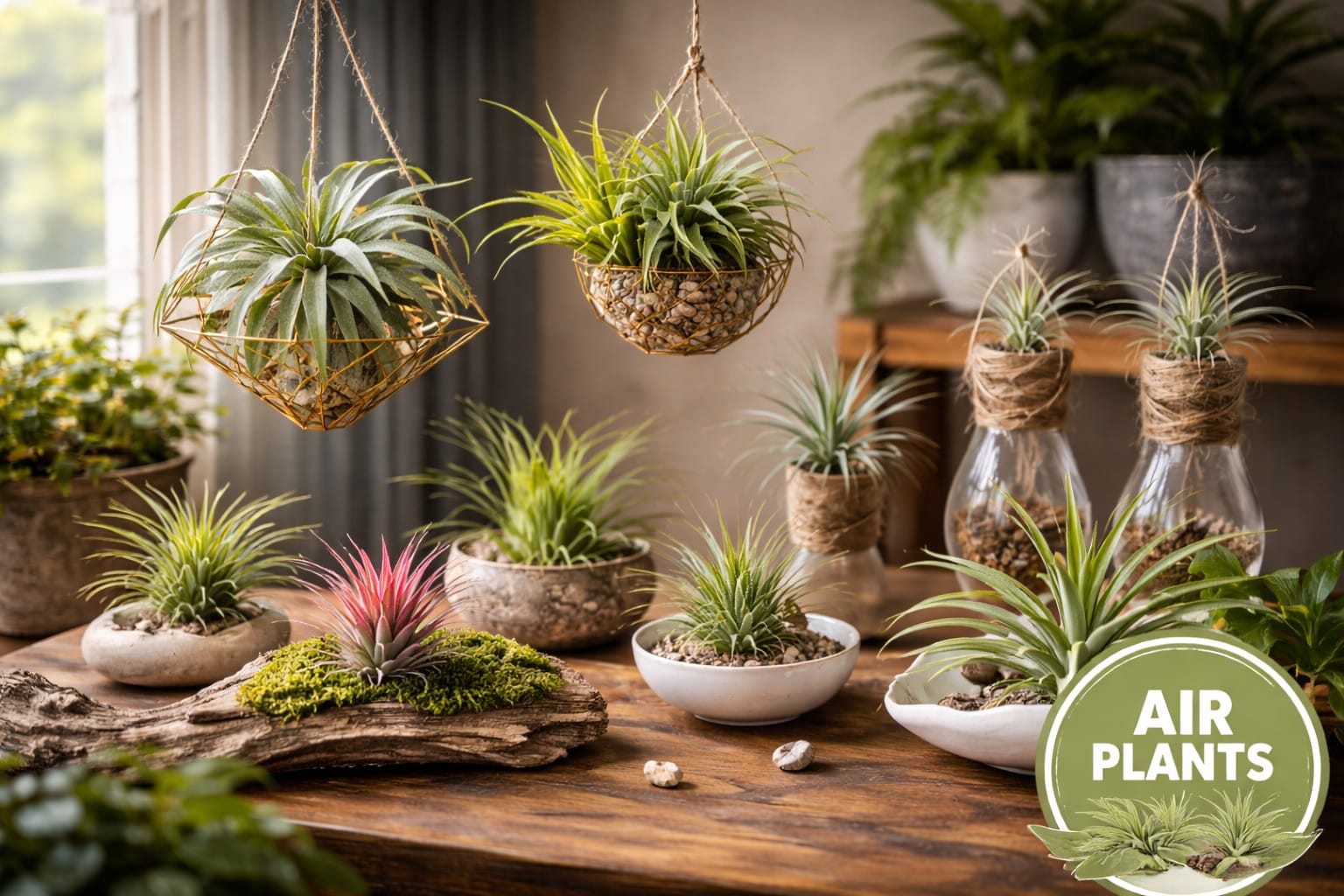
Air plants, scientifically known as Tillandsia, are some of the most unique and fascinating plants you can grow. Unlike traditional houseplants, air plants do not need soil to survive. Instead, they absorb water and nutrients directly through their leaves, allowing them to grow on rocks, wood, shells, glass, and even hanging in the air. This unusual growth habit makes air plants perfect for modern homes, small spaces, creative décor, and low-maintenance plant lovers.
Air plants are not just decorative; they are living examples of nature’s adaptability. They thrive where many plants cannot, turning almost any surface into a place for growth. In this complete guide, you’ll learn everything about air plants—what they are, how they grow, how to care for them properly, common mistakes, propagation, display ideas, benefits, and expert tips to keep them healthy for years.
What Are Air Plants?
Air plants belong to the genus Tillandsia, which is part of the Bromeliad family. There are over 650 species of air plants, and they are native to forests, mountains, and deserts across Central America, South America, the southern United States, and the Caribbean.
What makes air plants special is that they are epiphytes. This means they naturally grow attached to trees, rocks, or other surfaces instead of rooting in soil. They use tiny hair-like structures on their leaves called trichomes to absorb moisture, nutrients, and even dust from the air.
Key characteristics of air plants include:
- No soil required for growth
- Leaves covered in trichomes for water absorption
- Slow but steady growth
- Ability to grow mounted, hanging, or resting on objects
- Flowers that bloom once in their lifetime but last weeks
Air plants grow slowly, but with proper care, they can live many years, producing multiple pups over time.
Why Air Plants Are So Popular
Air plants have become extremely popular for both beginners and experienced plant lovers because they are:
- Easy to care for
- Compact and space-saving
- Versatile for decoration
- Safe for apartments and offices
- Ideal for creative displays
They are perfect for people who love plants but don’t want the mess of soil or the stress of frequent repotting.
Types of Air Plants
Air plants can be grouped into two main types based on their leaf texture and environment.
Mesic Air Plants
Mesic air plants come from more humid environments. They usually have greener, softer leaves and fewer trichomes. These plants prefer more frequent watering and slightly lower light.
Popular mesic varieties include:
- Tillandsia ionantha
- Tillandsia stricta
- Tillandsia cyanea
- Tillandsia brachycaulos
Xeric Air Plants
Xeric air plants come from dry, desert-like regions. They have silver or gray leaves covered in thick trichomes, which help them retain moisture. These plants tolerate brighter light and less frequent watering.
Popular xeric varieties include:
- Tillandsia xerographica
- Tillandsia tectorum
- Tillandsia caput-medusae
- Tillandsia bulbosa
Understanding whether your air plant is mesic or xeric helps you give it the right care routine.
Ideal Growing Conditions for Air Plants
Light Requirements
Air plants prefer bright, indirect light. They grow best near windows where sunlight is filtered through curtains or reflected off walls.
- East or north-facing windows work well
- Avoid harsh direct sun, especially afternoon sun
- Too little light causes slow growth and dull color
- Too much sun causes leaf burn and dehydration
If natural light is limited, air plants do well under LED grow lights placed 6–12 inches away.
Watering Air Plants Correctly
Watering is the most important part of air plant care. While they don’t need soil, they do need regular moisture.
The best watering methods are:
- Soaking: Submerge plants in room-temperature water for 20–30 minutes once a week
- Misting: Light misting 2–3 times per week between soakings
After watering, always:
- Shake off excess water
- Place plants upside down or sideways to dry
- Ensure they dry completely within 4 hours
Standing water trapped in the base can cause rot, which is the most common cause of death in air plants.
Use rainwater, distilled water, or filtered water whenever possible. Tap water with high minerals can damage trichomes over time.
Temperature and Humidity
Air plants prefer temperatures between 50°F and 90°F (10°C–32°C).
- Avoid frost and freezing temperatures
- Keep away from heaters, fireplaces, and AC vents
- Moderate humidity (40–70%) is ideal
Bathrooms and kitchens often provide excellent humidity, as long as light is sufficient.
Air Circulation
Good airflow is essential. Air plants must dry quickly after watering.
- Avoid sealed terrariums without ventilation
- Open containers, wire holders, and mounts work best
- Fans in the room help prevent moisture buildup
Fertilizing Air Plants
Air plants do not need much fertilizer, but occasional feeding improves growth and flowering.
- Use bromeliad or air plant fertilizer
- Dilute to 1/4 strength
- Apply once a month during watering
Over-fertilizing can harm plants, so less is always better.
How Air Plants Grow and Bloom
Air plants bloom once in their lifetime, producing vibrant flowers in shades of pink, purple, red, blue, or yellow.
After blooming:
- The parent plant slowly stops growing
- New baby plants called pups form at the base
- The parent continues feeding pups until it fades
This process can take months, so patience is key.
Propagation of Air Plants
Propagation happens naturally through pups.
- Wait until pups are at least 1/3 to 1/2 the size of the parent
- Gently twist or cut the pup away
- Continue caring for pups like mature plants
Some people leave pups attached to create a full clump, which looks more natural and decorative.
Creative Ways to Display Air Plants
Air plants are perfect for creative décor. Popular display ideas include:
- Mounted on driftwood or cork bark
- Hanging glass globes or terrariums
- Resting on stones, shells, or crystals
- Wall frames or vertical gardens
- Table centerpieces and shelves
- Office desks and window ledges
Always choose displays that allow airflow and easy removal for watering.
Common Problems and How to Fix Them
- Brown leaf tips usually mean underwatering or dry air
- Mushy base indicates rot from excess moisture
- Curled leaves can mean dehydration
- Pale color suggests low light
- No pups or flowers often means the plant is too young
Correcting care conditions usually restores plant health.
Benefits of Air Plants
- Extremely low maintenance
- No soil, no mess
- Improve indoor air quality
- Perfect for small spaces
- Highly decorative and modern
- Educational and fascinating
- Long-lived with proper care
Are Air Plants Good for Beginners?
Yes. Air plants are excellent for beginners because:
- They don’t need repotting
- They don’t need soil
- Care routines are simple
- Mistakes are easy to correct
Once you understand watering and light, air plants are very forgiving.
Frequently Asked Questions About Air Plants
Air plants can live for several years with proper care. They only bloom once, but pups continue the plant’s life cycle. Air plants can grow indoors year-round with enough light and airflow. They do not need soil at any stage of their life. Pets usually ignore them, but it’s best to keep them out of reach of curious animals.
Final Thoughts
Air plants are a perfect blend of beauty, science, and simplicity. Their ability to live without soil, thrive in creative displays, and require minimal care makes them ideal for modern homes, apartments, and offices. With proper light, regular watering, good airflow, and a little patience, air plants will reward you with healthy growth, stunning flowers, and new baby plants over time.
Whether you’re decorating a small shelf or creating an artistic plant display, air plants prove that you don’t need soil or much space to grow something truly special.