
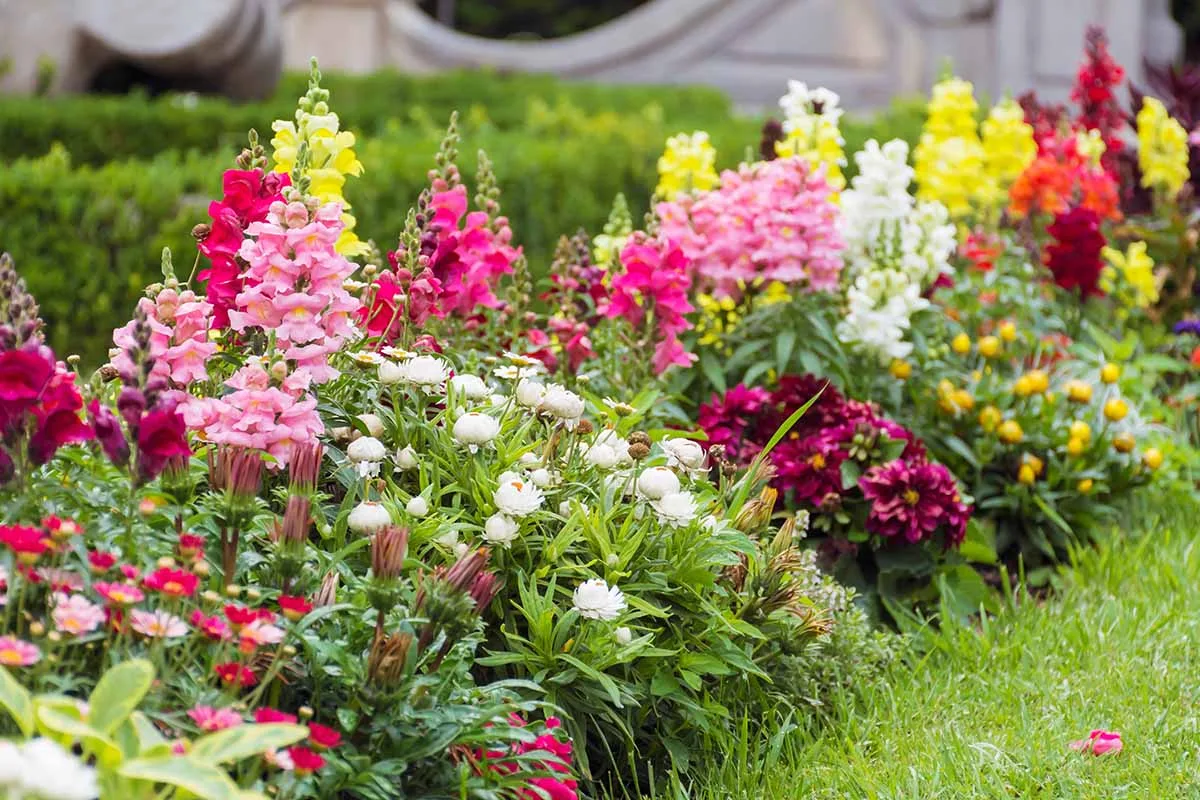
You have probably seen them without knowing their name. Tall, colourful spikes of blooms lining garden borders in spring, looking almost too dramatic to be real. Squeeze one gently and the petals snap open like a tiny mouth. That right there is the dragon flower.
Most people know it as the snapdragon. But dragon flower is exactly what it is. The petals form the shape of a dragon’s face, and when you pinch the sides, the mouth opens and closes. Kids love it. Gardeners love it even more.
This guide covers everything you need to know, whether you want to grow dragon flowers for the first time or you just want to understand what makes them so special.
What Is the Dragon Flower?
The dragon flower (Antirrhinum majus) is a flowering plant native to the Mediterranean region, including parts of Spain, Portugal, Morocco, and southern France. It belongs to the plantain family and has been grown in gardens around the world for centuries.
The name comes from Greek. “Anti” means like, and “rhin” means snout. So the name literally translates to a snout-like flower, which makes perfect sense once you see one up close. The bloom really does look like a dragon’s face, complete with a mouth that opens when squeezed.
Dragon flowers grow as bushy, upright plants, usually between 30 centimetres and 1 metre tall depending on the variety. The flowers appear in dense clusters up the stem and come in almost every colour you can think of, white, yellow, pink, orange, red, purple, and even two and three-tone combinations.
What Does the Dragon Flower Mean?
Dragon flowers carry a lot of meaning and it is mostly positive.
Historically they were associated with protection. In older European traditions, people placed snapdragons in homes and gardens to ward off evil spirits and bad luck. That connection to protection has stuck around, and today the dragon flower is still widely seen as a symbol of guardianship and security.
In the Victorian language of flowers, they represented strength and grace. Part of this comes from the way dragon flowers grow. They have no trouble pushing up through rocky, difficult soil in full sun, which gave them a reputation for resilience and determination.
They are also connected to abundance and appreciation for simple pleasures. If someone gives you dragon flowers, it is a reminder to notice and be proud of the small good things happening around you.
What Makes Dragon Flowers Unique
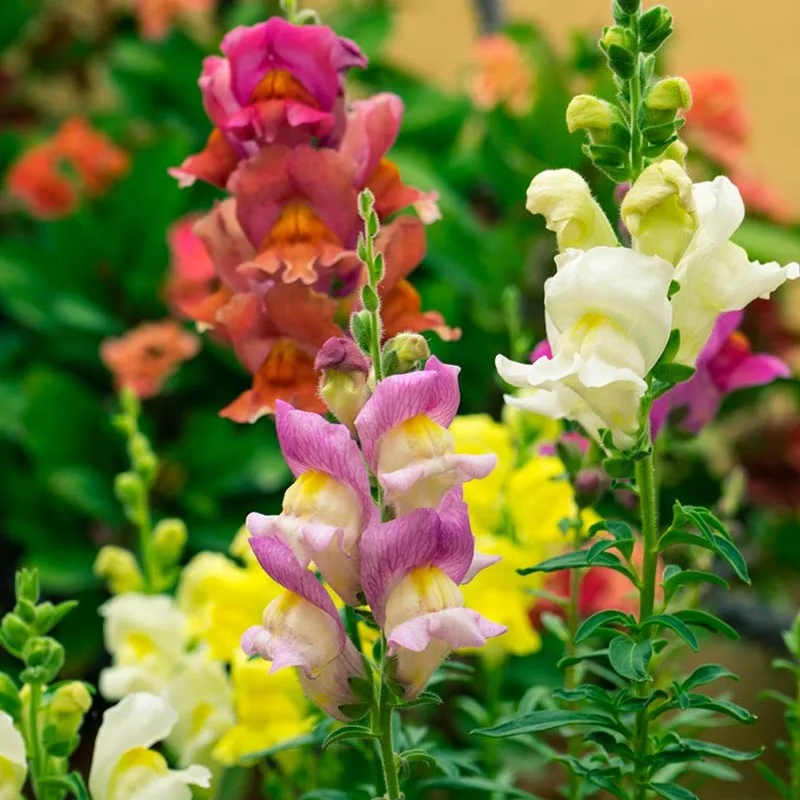
Here is the thing that no other flower really does. Squeeze the sides of a dragon flower bloom gently and the petals pop open like a little mouth. Let go and it snaps shut. Every child who has ever seen a snapdragon has done this. It never stops being fun.
This happens because of the two-lipped structure of the flower. The upper and lower petals are held closed by tension, which is why bumblebees are one of the few insects strong enough to force their way in to access the nectar. Lighter insects simply cannot get inside. So in your garden, dragon flowers basically feed bumblebees exclusively, which is great for pollination.
After flowering, the seed pods that form are also a talking point. Dried out, they look remarkably like tiny skulls. Which has given the plant a bit of a gothic following, despite being one of the most cheerful flowers in any garden.
How to Grow Dragon Flowers
Dragon flowers are genuinely beginner-friendly. They do not need special equipment or unusual conditions. They just need a few basics done right.
When to Plant
Dragon flowers are cool-weather plants. This is important. They bloom their best in spring and autumn, and they slow down or stop flowering altogether in the heat of summer. Plant them out in early spring, as soon as the worst of the frost risk has passed. They can handle a light frost, especially young plants, so do not wait too long.
If you are starting from seed, begin indoors about 8 to 10 weeks before your last expected frost date. Seeds are tiny, so mix them with a little dry sand before sowing to spread them more evenly.
In warmer climates (zone 7 and above), you can also plant in autumn for a longer display that runs through winter and into spring.
Light
Dragon flowers need full sun. At least 6 hours of direct sunlight a day is ideal. Less than that and you get plenty of green growth but far fewer flowers. A south-facing bed or border is perfect.
In very hot climates where summer temperatures regularly top 35°C (95°F), a bit of afternoon shade can help extend the blooming period. But for most gardens, the more sun the better.
Soil
Dragon flowers are not fussy about soil as long as it drains well. They do not like sitting in waterlogged ground. A fertile, well-drained soil with a slightly neutral to alkaline pH works best, somewhere between 6.2 and 7.0.
Work in some compost before planting to improve both drainage and nutrition. If your soil is heavy clay, mix in some grit or coarse sand to help water move through.
Watering
Water regularly when plants are young and during dry spells. Once established they are reasonably drought tolerant, but consistent moisture during flowering produces the best blooms.
The key rule is to water at the base of the plant, not over the top. Wet leaves sitting overnight is one of the main causes of rust disease in dragon flowers. Water in the morning if you can, and keep the foliage as dry as possible.
Feeding
Feed every two weeks during the growing season with a balanced liquid fertiliser. Once plants are in full flower, switch to a fertiliser slightly lower in nitrogen. Too much nitrogen pushes leafy growth at the expense of blooms, and you want blooms.
How to Get More Flowers
Dragon flowers naturally stop producing blooms once their seeds mature. The trick to keeping them flowering for longer is called deadheading, which just means removing spent flowers before they go to seed.
Once a flower spike has finished, cut it back to just above a set of leaves. The plant responds by producing new flower spikes from the sides. Do this regularly through the season and you can extend the display by weeks, sometimes months.
Common Problems
Rust disease is the most common issue. It shows up as orange or brown powdery spots on the leaves. Prevent it by watering at the base, spacing plants well so air circulates freely, and avoiding overhead watering. If it appears, remove affected leaves immediately and treat with a suitable fungicide.
Aphids sometimes cluster on new growth, especially in spring. A strong blast of water from a hose knocks most of them off. Repeat for a few days and the problem usually clears without needing anything stronger.
Plants not flowering usually means one of two things: not enough sun, or the plants have got too hot. Make sure they are in full sun and consider whether the summer heat is causing them to take a break. They often bounce back and flower again when cooler autumn temperatures arrive.
Leggy, floppy stems happen when plants reach for light they are not getting enough of. Move to a sunnier spot and pinch back the tips of young plants early on to encourage a bushier, more compact shape.
Dragon Flower Varieties Worth Growing
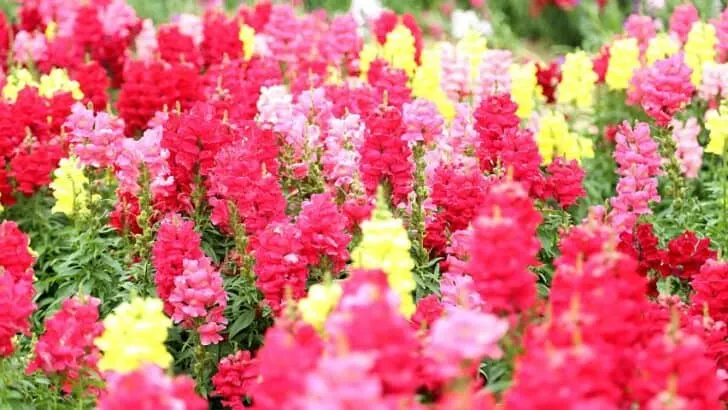
Dragon flowers come in a huge range of sizes and colours. A few worth knowing about:
Dwarf varieties grow about 20 to 30 centimetres tall and are great for pots and containers. They are compact, bushy, and covered in flowers.
Medium varieties reach about 45 to 60 centimetres and work well in beds and borders alongside other plants.
Tall varieties can reach a metre or more and are excellent as cut flowers. They last well in a vase, up to two weeks with fresh water, and add real height and drama to arrangements.
For colour, deep velvet reds and purples look incredible planted together. Pastel mixes of pink, peach, and white give a softer, romantic feel. And if you want something that really stops people in their tracks, look for bi-colour varieties with contrasting throats.
Frequently Asked Questions
Are dragon flowers the same as snapdragons? Yes. Dragon flower and snapdragon both refer to Antirrhinum majus. Dragon flower is simply the more literal translation of what the bloom looks like.
Do dragon flowers come back every year? They are technically short-lived perennials, but in most climates they are grown as annuals because they do not reliably survive cold winters. In mild climates (zones 7 to 10), they can overwinter and return the following year.
Are dragon flowers safe around pets? Dragon flowers are not listed as toxic to cats or dogs by the ASPCA. That said, it is always a good idea to stop pets from chewing on garden plants just to be safe.
Can I grow dragon flowers in pots? Absolutely. Choose a pot at least 20 to 30 centimetres deep with good drainage, use a quality potting mix, and keep them in a sunny spot. Dwarf varieties work especially well in containers.
When do dragon flowers bloom? Mainly spring and early summer, with a second flush in autumn when temperatures cool. In hot summers they often take a break from flowering.
Final Thoughts
Dragon flowers are one of those plants that earn their place in any garden without much fuss. They are colourful, long-flowering, great for pollinators, and genuinely fun to have around. Whether you are filling a sunny border, growing cut flowers, or just want something your kids will love, they are hard to beat.
Get them in the ground early in spring, give them full sun, keep deadheading the spent blooms, and they will reward you all season long.