
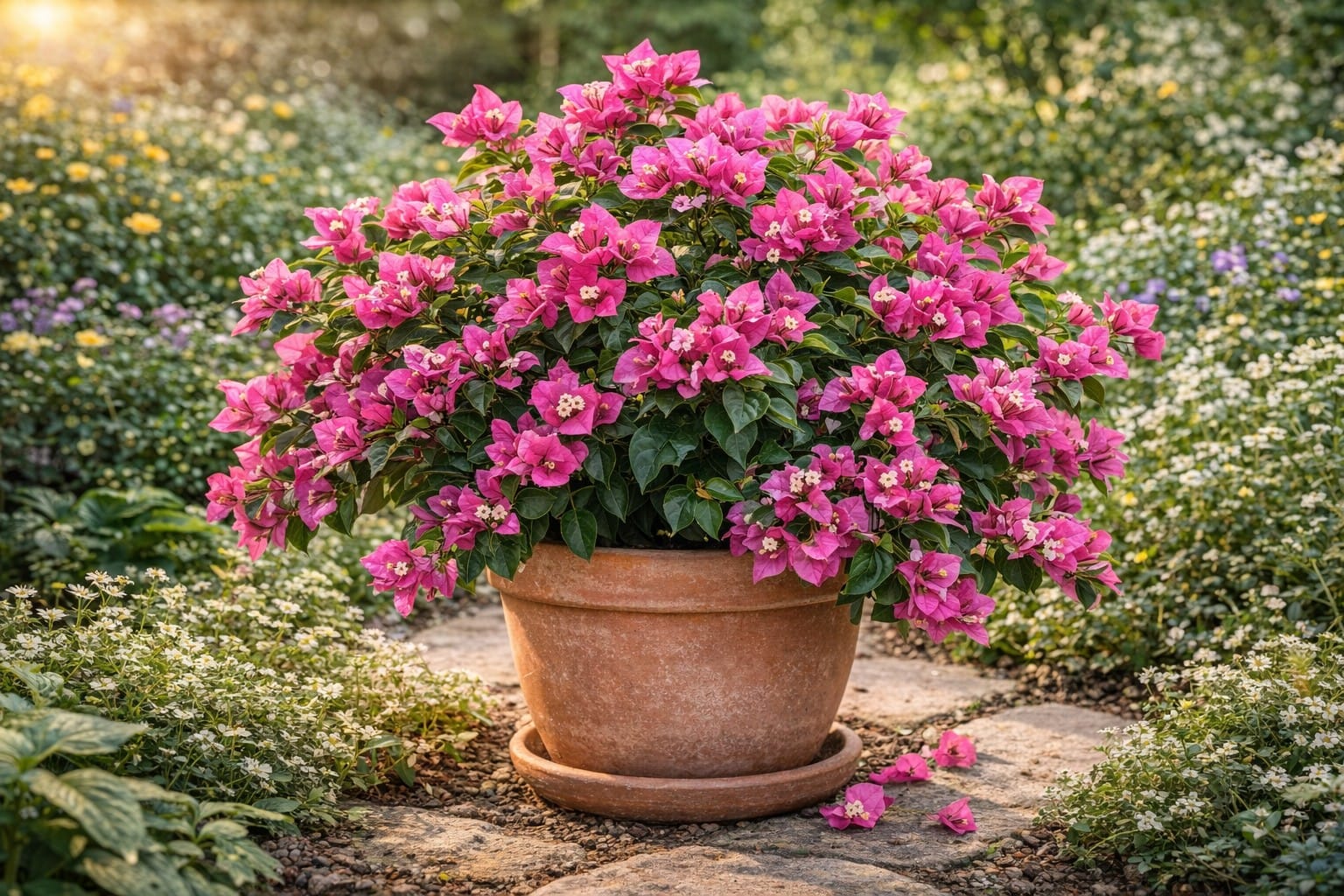
The paper flower plant, commonly known as Bougainvillea, is one of the most spectacular flowering plants for warm climates. Famous for its paper-thin, brightly colored bracts, this plant can transform gardens, balconies, walls, and fences into a cascade of vibrant color. Despite its delicate appearance, the paper flower plant is hardy, drought-tolerant, and long-blooming, making it a favorite among home gardeners and landscape designers.
This in-depth article covers everything you need to know about the paper flower plant, including its origin, varieties, growing requirements, planting methods, care routine, flowering cycle, common problems, and landscaping uses.
What Is a Paper Flower Plant?
The paper flower plant (Bougainvillea spp.) is a woody, flowering vine or shrub native to South America, especially Brazil, Peru, and Argentina. It gets its common name from its thin, papery bracts, which surround the small, white, tube-shaped true flowers at the center.
While many people think the colorful parts are petals, they are actually modified leaves called bracts, which protect the tiny flowers and help attract pollinators.
Botanical Overview
- Scientific name: Bougainvillea
- Family: Nyctaginaceae
- Plant type: Perennial vine, shrub, or small tree
- Growth habit: Climbing, spreading, or bushy
- Lifespan: Long-lived perennial
- Native region: South America
Why Grow Paper Flower Plants?
Paper flower plants are popular for many reasons:
- Extremely colorful blooms that last for months
- Low water requirements once established
- Fast growth, ideal for covering walls and trellises
- Excellent heat tolerance
- Minimal maintenance compared to other flowering plants
- Suitable for containers, hanging baskets, and ground planting
These plants thrive in tropical and subtropical climates and are perfect for gardeners who want maximum visual impact with minimal effort.
Popular Types of Paper Flower Plants
There are over 300 varieties of Bougainvillea, but most belong to three main species.
1. Bougainvillea glabra
- Smooth leaves
- Vigorous climber
- Ideal for trellises and walls
- Common colors: purple, pink, white
2. Bougainvillea spectabilis
- Larger leaves and bracts
- More robust growth
- Slightly less cold-tolerant
- Colors: magenta, red, orange
3. Bougainvillea peruviana
- Softer growth habit
- Smaller bracts
- Often hybridized with other species
Popular Color Varieties
- Pink: Classic and most common
- Purple: Deep, rich, and dramatic
- Red: Bold and eye-catching
- Orange: Warm and tropical
- White: Elegant and subtle
- Yellow: Bright and cheerful
- Bi-color and variegated: Multi-toned bracts
Growing Conditions for Paper Flower Plants
Sunlight Requirements
Paper flower plants love full sun.
- Minimum 6–8 hours of direct sunlight daily
- Less sun results in lush leaves but fewer flowers
- Best planted in open, sunny locations
Soil Requirements
- Well-draining soil is essential
- Sandy or loamy soil works best
- Avoid heavy clay soil
- Slightly acidic to neutral pH (5.5–7.0)
Good drainage is the key to healthy roots and abundant flowering.
Temperature and Climate
- Ideal temperature: 18–35°C (65–95°F)
- Sensitive to frost
- Grown outdoors year-round in warm climates
- In cooler regions, grown in containers and moved indoors during winter
How to Plant a Paper Flower Plant
Planting in the Ground
- Choose a sunny location
- Dig a hole twice the size of the root ball
- Mix compost with garden soil
- Place the plant gently—avoid disturbing roots
- Backfill soil and press lightly
- Water lightly after planting
Planting in Pots or Containers
- Choose a pot with drainage holes
- Use well-draining potting mix
- Avoid oversized pots (slightly root-bound plants flower better)
- Place near balconies, patios, or entrances
Container-grown paper flower plants are easier to control and ideal for small spaces.
Watering Requirements
Paper flower plants prefer deep but infrequent watering.
- Water young plants regularly until established
- Mature plants are drought-tolerant
- Allow soil to dry slightly between watering
- Overwatering leads to root rot and poor flowering
A little stress actually encourages more blooms.
Fertilizing Paper Flower Plants
- Use a balanced or low-nitrogen fertilizer
- Avoid excess nitrogen—it promotes leaves instead of flowers
- Apply fertilizer every 4–6 weeks during the growing season
- Slow-release fertilizers work well
For more flowers, choose fertilizers higher in phosphorus.
Pruning and Training
Pruning helps control size and encourages flowering.
When to Prune
- Light pruning after flowering
- Major pruning in late winter or early spring
How to Prune
- Remove dead or weak branches
- Shape the plant for desired growth
- Use gloves—thorns are sharp
Bougainvillea can be trained as:
- Climbing vine
- Bushy shrub
- Ground cover
- Bonsai
- Small ornamental tree
Flowering Season and Bloom Cycle
Paper flower plants are long-blooming.
- Main bloom season: Late spring to fall
- In warm climates, flowering can occur year-round
- Flowers appear in cycles, with short rest periods
Stress from sunlight and limited watering often triggers flowering.
Common Problems and Solutions
1. Lots of Leaves but No Flowers
Cause: Too much water or nitrogen
Solution: Reduce watering, use low-nitrogen fertilizer
2. Yellow Leaves
Cause: Overwatering or poor drainage
Solution: Improve drainage and reduce watering
3. Leaf Drop
Cause: Sudden temperature change or water stress
Solution: Maintain consistent care
4. Pests
Common pests include:
- Aphids
- Mealybugs
- Spider mites
Treatment: Neem oil, insecticidal soap, or manual removal
Growing Paper Flower Plants from Cuttings
Bougainvillea is commonly propagated through cuttings.
Steps
- Take semi-hardwood cuttings (6–8 inches)
- Remove lower leaves
- Dip in rooting hormone
- Plant in well-draining medium
- Keep warm and lightly moist
- Roots develop in 4–8 weeks
Propagation allows you to grow identical plants from a healthy parent.
Landscaping Uses of Paper Flower Plants
Paper flower plants are incredibly versatile.
- Covering walls, fences, and pergolas
- Decorative hedges
- Balcony and terrace plants
- Bonsai displays
- Ground cover for slopes
- Entrance and gate decoration
Their vibrant colors instantly enhance any outdoor space.
Indoor Growing: Is It Possible?
Paper flower plants can be grown indoors only if sufficient sunlight is provided.
- Place near a bright south-facing window
- Provide 6+ hours of sunlight
- Reduce watering indoors
- Flowering indoors is less intense than outdoors
Cultural and Symbolic Meaning
In many cultures, paper flower plants symbolize:
- Welcome and hospitality
- Passion and beauty
- Endurance and strength
They are often planted near entrances and temples in tropical regions.
Final Thoughts
The paper flower plant (Bougainvillea) is a stunning, resilient, and rewarding plant that thrives in sunny, warm environments. With its brilliant paper-like blooms, minimal water needs, and long flowering season, it is ideal for both beginner and experienced gardeners.
Whether grown as a climbing vine, potted shrub, or colorful hedge, the paper flower plant delivers unmatched visual appeal with relatively little maintenance. By providing full sun, well-draining soil, controlled watering, and light pruning, you can enjoy months of spectacular color year after year.