
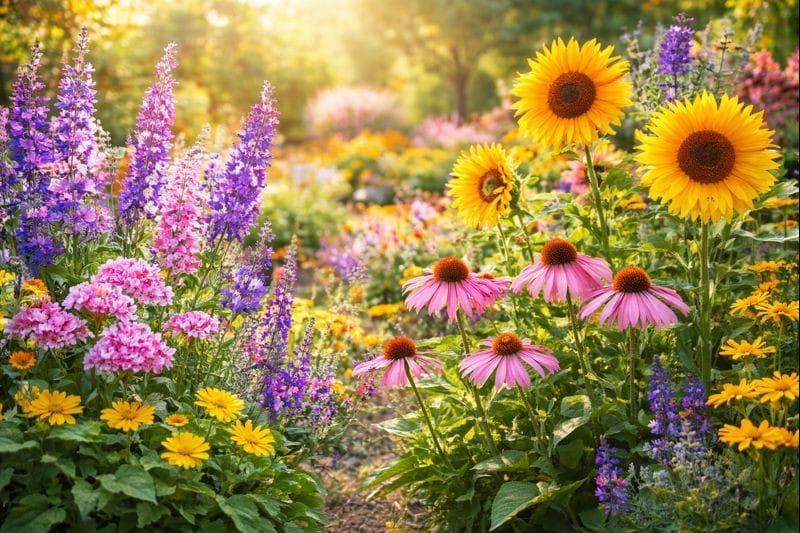
Summer is the perfect season to fill your garden with vibrant, colorful flowers that thrive in heat and long sunlight hours. Summer flowering plants not only add beauty and fragrance but also attract pollinators like bees, butterflies, and hummingbirds, enhancing your garden’s ecosystem. Choosing the right plants and providing proper care ensures your garden remains lively from early summer to late fall.
This guide covers popular summer-flowering plants, planting tips, care requirements, seasonal advice, and common problems, giving you everything you need for a thriving summer garden.
Why Plant Summer Flowers?
Summer flowers have several benefits:
- Vibrant Colors: Bright blooms create an eye-catching garden during the sunny months.
- Pollinator Attraction: Flowers provide nectar for bees, butterflies, and hummingbirds.
- Continuous Blooms: Many summer plants bloom for months, ensuring a constant display.
- Heat Tolerance: Selected plants can withstand high temperatures and strong sunlight.
- Versatile Use: Great for garden beds, borders, containers, patios, and hanging baskets.
Planting summer flowers creates dynamic, lively spaces while supporting local biodiversity.
Popular Summer Flower Plants
Here’s a detailed list of summer flowers, including their care, bloom color, and flowering season.
1. Marigold (Tagetes)
- Colors: Yellow, orange, gold
- Bloom season: Early summer to frost
- Care: Full sun, well-draining soil, moderate watering
- Benefits: Easy to grow; repels some garden pests; long-lasting blooms
2. Zinnia
- Colors: Red, pink, orange, yellow, purple, white
- Bloom season: Summer to frost
- Care: Full sun, well-draining soil, moderate watering
- Benefits: Drought-tolerant; attracts butterflies; excellent for borders and containers
3. Sunflower (Helianthus annuus)
- Colors: Yellow, orange, red
- Bloom season: Summer
- Care: Full sun, deep soil, regular watering
- Benefits: Tall, bold flowers; attract birds and pollinators; produce edible seeds
4. Petunia
- Colors: Pink, purple, white, red, violet
- Bloom season: Late spring through summer
- Care: Full sun, fertile soil, regular watering
- Benefits: Cascading varieties are perfect for hanging baskets; long bloom period
5. Lantana
- Colors: Orange, red, yellow, pink, purple
- Bloom season: Summer to fall
- Care: Full sun, drought-tolerant, well-draining soil
- Benefits: Heat-resistant; attracts butterflies and hummingbirds
6. Cosmos
- Colors: Pink, white, red, purple
- Bloom season: Summer to early fall
- Care: Full sun, moderately fertile soil, occasional watering
- Benefits: Long-lasting blooms; easy to grow from seeds; attracts pollinators
7. Salvia
- Colors: Purple, red, blue, pink
- Bloom season: Late spring through fall
- Care: Full sun, well-draining soil, low to moderate watering
- Benefits: Tubular flowers attract hummingbirds and butterflies; low maintenance
8. Coneflower (Echinacea)
- Colors: Pink, purple, white, yellow
- Bloom season: Summer to fall
- Care: Full sun, well-draining soil, drought-tolerant
- Benefits: Long-lasting blooms; attracts bees and butterflies; medicinal uses
9. Lavender (Lavandula)
- Colors: Purple, violet
- Bloom season: Summer
- Care: Full sun, sandy soil, moderate water
- Benefits: Fragrant; attracts pollinators; drought-tolerant
10. Bougainvillea
- Colors: Pink, purple, red, orange, white
- Bloom season: Late spring through summer
- Care: Full sun, well-draining soil, minimal watering once established
- Benefits: Climbing plant; produces continuous colorful bracts; excellent for trellises and walls
11. Portulaca (Moss Rose)
- Colors: Red, pink, yellow, orange, white
- Bloom season: Summer
- Care: Full sun, sandy soil, drought-tolerant
- Benefits: Low maintenance; spreads quickly; thrives in hot, dry areas
12. Hibiscus
- Colors: Red, pink, yellow, orange, white
- Bloom season: Summer to early fall
- Care: Full sun, well-draining soil, regular watering
- Benefits: Tropical appearance; attracts butterflies and hummingbirds
13. Geranium
- Colors: Red, pink, white, purple
- Bloom season: Summer
- Care: Full sun to partial shade, well-draining soil, moderate watering
- Benefits: Popular in containers; long-lasting blooms; versatile garden use
14. Dahlia
- Colors: Red, pink, yellow, purple, white, orange
- Bloom season: Summer to fall
- Care: Full sun, fertile soil, regular watering
- Benefits: Bold, large blooms; cut flowers; attracts pollinators
15. Nasturtium
- Colors: Orange, red, yellow
- Bloom season: Summer
- Care: Full sun, well-draining soil, low to moderate water
- Benefits: Edible flowers and leaves; attracts beneficial insects
Growing Conditions for Summer Flower Plants
Sunlight:
- Most summer plants require 6–8 hours of full sunlight daily
- Partial shade reduces flowering but works for some species like geraniums
Soil:
- Well-draining, fertile soil enriched with compost or organic matter
- Neutral to slightly acidic pH is ideal
Watering:
- Regular watering for young plants
- Established plants like zinnia, lantana, and portulaca tolerate short dry periods
- Avoid overwatering to prevent root rot
Fertilizer:
- Balanced fertilizer encourages growth and flowering
- Slow-release or liquid fertilizer monthly works well for continuous blooms
Planting Summer Flower Plants
Step-by-step guide:
- Choose location: Full sun is preferred; partial shade for shade-tolerant plants
- Prepare soil: Loosen soil, remove weeds, add compost
- Plant spacing: 12–36 inches depending on plant size
- Planting depth: Plant seedlings at the same depth as nursery pots
- Watering: Water thoroughly after planting
- Mulching: Retains moisture, suppresses weeds, and regulates soil temperature
Seasonal Care Tips
Spring:
- Prepare soil and plant summer flowers
- Fertilize lightly
- Start watering young plants consistently
Summer:
- Deadhead spent flowers to encourage more blooms
- Monitor for pests like aphids, spider mites, and caterpillars
- Water deeply during dry spells
Fall:
- Harvest seeds for next season
- Mulch perennials for winter protection
- Cut back faded plants to prepare for cooler months
Winter:
- Most annuals die back; perennials remain dormant
- Container plants can be moved indoors or protected from frost
Common Problems and Solutions
1. Poor Flowering:
- Cause: Too little sunlight, over-fertilization, drought
- Solution: Adjust light, water properly, and use balanced fertilizer
2. Pests:
- Aphids, spider mites, caterpillars, and slugs
- Solution: Manual removal, insecticidal soap, or neem oil
3. Disease:
- Powdery mildew, root rot, leaf spots
- Solution: Improve airflow, avoid overhead watering, maintain proper spacing
4. Wilting or Sunburn:
- Cause: Heat stress, irregular watering, or too much sun for sensitive plants
- Solution: Provide shade during peak sun, mulch, and water consistently
Container Gardening with Summer Flowers
Many summer plants thrive in pots or containers:
- Petunia
- Geranium
- Zinnia
- Portulaca
- Lantana
Container gardening allows mobility to optimize sunlight, protects sensitive plants from extreme heat, and creates decorative displays on patios, balconies, and terraces.
Attracting Pollinators with Summer Flowers
- Plant clusters of the same species for a stronger visual signal
- Use a mix of flower shapes and colors to attract butterflies, bees, and hummingbirds
- Avoid pesticides to protect pollinators
- Provide shallow water sources or damp sand
- Include host plants like milkweed for caterpillars
- Add rocks or flat surfaces for perching
A pollinator-friendly garden encourages biodiversity and natural pest control, making it healthier and more sustainable.
Expert Tips for Thriving Summer Flower Gardens
- Choose heat-tolerant varieties suitable for your climate
- Plant in groups for better visual impact
- Fertilize moderately for continuous blooms
- Remove spent flowers regularly to encourage new growth
- Monitor soil moisture to avoid drought stress or waterlogging
- Rotate container plants to ensure even sunlight exposure
Final Thoughts
Summer flower plants are essential for bright, lively gardens. By selecting heat-tolerant, long-blooming, and pollinator-friendly plants, you can enjoy months of vivid color, fragrance, and ecological benefits.
From garden beds to containers, annuals and perennials provide continuous blooms, attract pollinators, and enhance biodiversity. With proper sunlight, watering, fertilization, and seasonal care, your summer garden will flourish, creating a beautiful, sustainable, and pollinator-friendly paradise from early summer to late fall. 🌺☀️🦋