
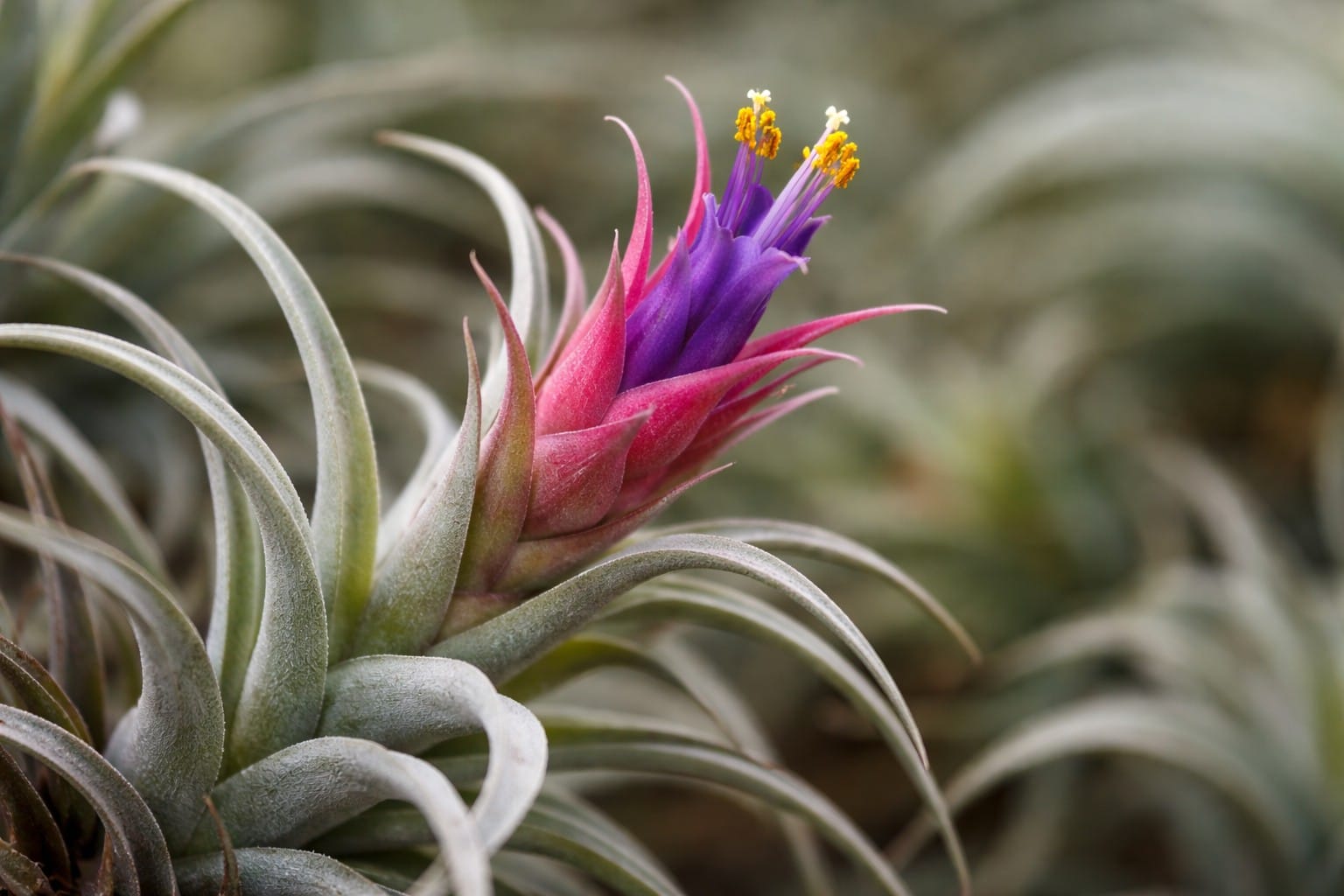
Air plants (Tillandsia spp.) are among the most unique and fascinating houseplants because they don’t require soil, absorbing nutrients and moisture through their leaves. While their foliage is striking and sculptural, the flowers are the true showstoppers, often brightly colored, long-lasting, and unusual in shape. Understanding when and why air plants flower, how to care for them, and how to propagate after flowering is key to maximizing their beauty. This comprehensive guide covers everything about air plant flowers, from types and bloom timing to care tips and propagation.
What Makes Air Plant Flowers Unique?
Air plant flowers are ephemeral but visually dramatic, appearing from the center of the plant. Key characteristics:
- Often appear on mature plants, usually 1–3 years old depending on species
- Flowers come in colors like red, pink, purple, yellow, and orange
- Shapes range from tubular spikes to elaborate clusters
- Flowering triggers plant reproduction, usually producing offsets or “pups”
- Most air plants bloom once in their lifetime, but offsets continue the line
Unlike typical flowering plants, air plant flowers signal maturity and the reproductive stage, making flowering a special event for collectors.
Popular Air Plants and Their Flowers
Different air plant species have distinct flowers, both in color and bloom structure.
1. Tillandsia ionantha
- Compact, hardy species
- Foliage turns bright red before flowering
- Small violet tubular flowers emerge from red bracts
2. Tillandsia xerographica
- Large, curly-leafed plant
- Flower spikes can rise above the leaves
- Flowers are usually purple with long-lasting bracts
- Blooms can last several weeks under ideal conditions
3. Tillandsia cyanea (Pink Quill)
- Produces a distinctive flat pink bract
- Small purple flowers emerge along the bract
- Can bloom for weeks indoors
- Often grown as a decorative indoor plant
4. Tillandsia caput-medusae
- Leaves resemble medusa’s snakes
- Red and purple tubular flowers emerge on tall spikes
- Prefers warm, bright locations
- Flowers attract hummingbirds in outdoor settings
5. Tillandsia aeranthos
- Small green plant with pink/red bracts
- Lavender flowers appear above the foliage
- Hardy in moderate climates
Other species like T. bulbosa, T. streptophylla, T. tricolor, and T. ionantha varieties also produce bright, unique flowers that are the highlight of their life cycle.
When Do Air Plants Flower?
Flowering depends on species, maturity, and care. Typical blooming age:
- 1–3 years for most small species
- 3–5 years for larger species like T. xerographica
Flowering season:
- Can bloom any time of year in optimal indoor conditions
- Some species have seasonal preferences (spring or summer)
Flower duration:
- Individual flowers last days to weeks, while bracts may persist for weeks
Repeat blooms:
- Most species bloom once, but offsets (“pups”) will flower after maturity
Environmental factors like light, humidity, temperature, and nutrition greatly influence flowering timing and quality.
How to Encourage Air Plants to Flower
Air plants require optimal care to produce blooms.
1. Light:
- Bright, indirect light is ideal
- Outdoor plants thrive in filtered sunlight
- Too little light delays or prevents flowering
2. Watering:
- Mist 2–3 times per week or soak for 20–30 minutes once a week
- Ensure water drains completely; avoid standing water
3. Fertilizing:
- Use bromeliad or air plant fertilizer monthly
- Bloom-boosting fertilizers with phosphorus encourage flowers
4. Air Circulation:
- Good airflow prevents rot and supports flowering
- Place plants near fans or open windows indoors
5. Temperature & Humidity:
- Ideal range: 50–90°F (10–32°C)
- Humidity 50–70% encourages healthier growth and flowering
Air Plant Flowering Process
Flowering happens in stages:
- Pre-bloom coloration: Foliage may change color (often red or pink) to attract pollinators
- Flower spike emergence: A spike rises from the center of the rosette
- Flowering: Tubular, vibrant flowers open; may last days to weeks
- Post-flower: The main plant gradually declines but produces offsets (pups)
Even after the main plant dies post-flowering, the offsets ensure the species continues.
Caring for Air Plants During Flowering
- Place in bright, filtered light
- Maintain humidity and airflow
- Mist or soak carefully, avoiding flowers themselves
- Avoid excessive handling
- After blooms fade, allow the plant to produce pups
Propagation After Flowering
Most air plants produce offsets after flowering, which can be separated once they are 1/3 to 1/2 the size of the parent.
Propagation tips:
- Let pups grow attached for a few months before removal
- Use gentle twisting or cutting with sterilized tools
- Plant pups in well-ventilated display areas
- Water and fertilize pups as mature plants
This ensures a continuous cycle of blooming plants.
Common Problems with Air Plant Flowers
1. No flowers:
- Plant is too young
- Insufficient light
- Low humidity or nutrients
2. Flowers fade quickly:
- Too much water or poor air circulation
- Low light
3. Rot:
- Over-soaking or water trapped in leaves
4. Pests:
- Mealybugs or scale insects occasionally affect air plants
- Wipe leaves or treat with insecticidal soap
Indoor vs Outdoor Flowering
- Indoor: Flowers may appear less frequently but last longer; provide bright filtered light
- Outdoor: Blooms are more vibrant; plants may attract hummingbirds and pollinators
Expert Tips for Maximum Flowering
- Keep mature plants happy with light, water, and fertilizer
- Use bloom-boosting fertilizer with phosphorus
- Rotate plants occasionally for even light
- Avoid stress; healthy air plants flower more reliably
- Be patient; flowering is a sign of maturity
Final Thoughts
Air plant flowers are rare, exotic, and mesmerizing, often appearing once in the plant’s lifetime. Their vivid colors, unique shapes, and ephemeral beauty make them the centerpiece of any collection. With proper light, water, air circulation, and nutrition, air plants not only bloom spectacularly but also produce offsets that continue the life cycle.
Whether grown indoors on shelves, in terrariums, or outdoors in mild climates, air plants reward patient gardeners with vivid, long-lasting blooms, fascinating growth habits, and years of enjoyment from pups and offsets. 🌿💜🌸