
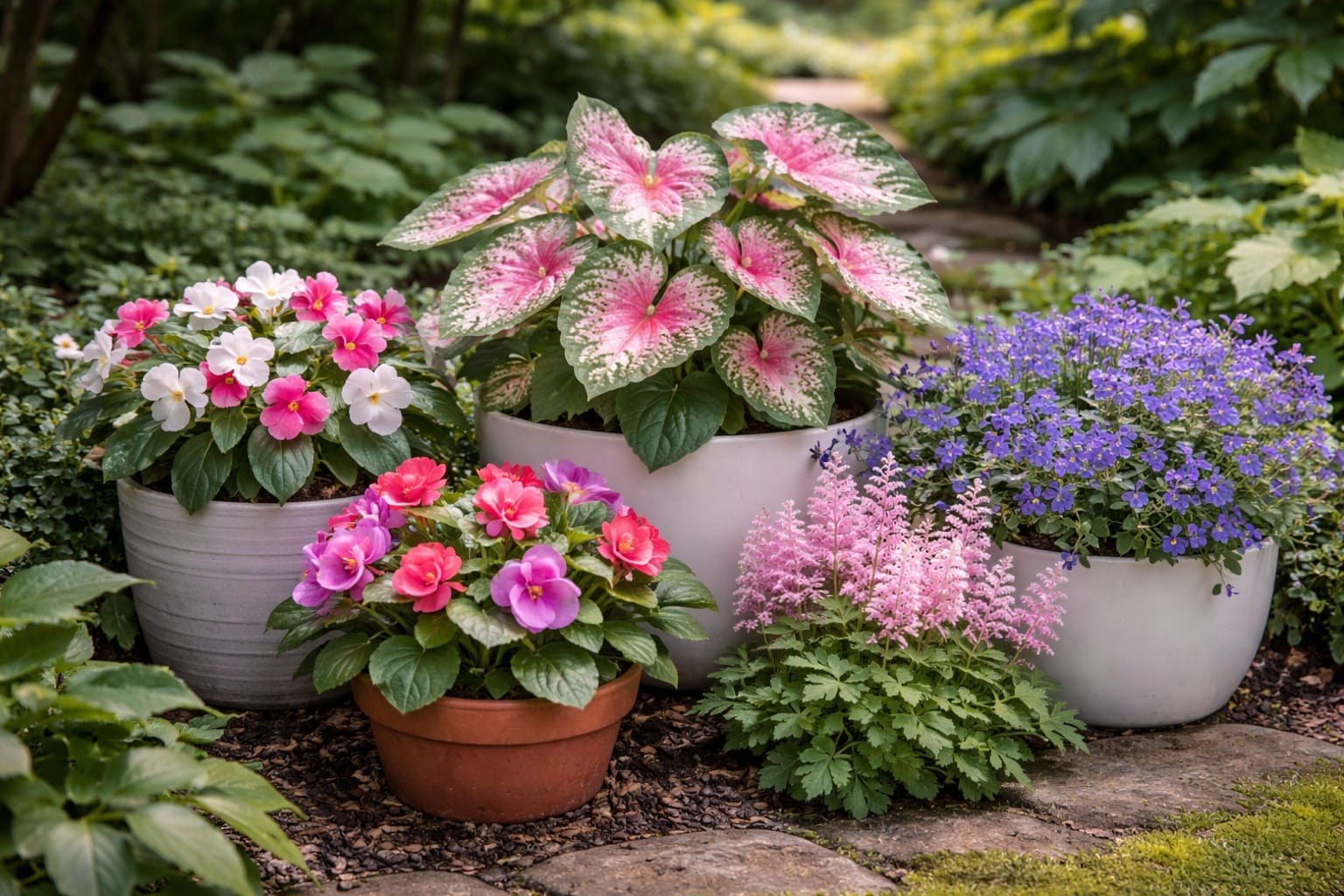
Shady flower plants are perfect for areas where direct sunlight is limited, such as under trees, along walls, balconies, patios, and north-facing gardens. Many flowering plants actually prefer partial to full shade and will bloom beautifully without harsh sun. With the right plant selection and care, shady areas can be just as colorful and vibrant as sunny spots.
This complete guide covers everything you need to know about shady flower plants, including the best varieties, light levels, planting tips, care, common problems, and expert advice for long-lasting blooms.
Understanding Shade Levels
Before choosing plants, it’s important to know the type of shade in your garden.
Types of shade:
Partial shade – 3–4 hours of sunlight daily
Dappled shade – filtered light through trees
Full shade – less than 2 hours of direct sunlight
Most shade-loving flowering plants grow best in partial or dappled shade rather than deep darkness.
Best Shady Flower Plants
These flowering plants thrive in low-light conditions.
Impatiens
One of the best flowers for shade
Blooms continuously
Available in red, pink, white, and purple
Perfect for beds and containers
Begonia
Excellent for shade and indoor use
Colorful flowers and attractive leaves
Ideal for hanging baskets
Peace Lily
Popular indoor shade flower
Produces elegant white blooms
Thrives in low to medium light
Torenia (Wishbone Flower)
Compact plant with trumpet-shaped flowers
Thrives in partial shade
Great for containers and borders
Fuchsia
Hanging, bell-shaped flowers
Prefers cool, shaded locations
Perfect for baskets and patios
Astilbe
Feathery flower plumes
Thrives in moist, shaded gardens
Excellent for borders and woodland gardens
Hydrangea
Large blooms in pink, blue, or white
Prefers morning sun and afternoon shade
Long flowering season
Hellebore
Early-blooming perennial
Grows well in deep shade
Blooms in late winter to spring
Foxglove
Tall flowering spikes
Prefers partial shade
Adds height to shaded gardens
Shady Flower Plants for Indoors
Many indoor spaces receive limited light.
Best indoor shade-tolerant flowering plants:
Peace lily
Anthurium
Begonia
Phalaenopsis orchid
African violet
These plants thrive in bright indirect light or filtered shade.
Soil Requirements for Shade Flowers
Shaded areas often have different soil conditions.
Soil tips:
Rich, organic soil
Good drainage
Moist but not waterlogged
Mulch helps retain moisture
Adding compost improves soil fertility and structure.
Planting Shady Flower Plants
Proper planting ensures success.
Planting steps:
Loosen soil well
Mix in compost
Plant at correct depth
Water thoroughly
Mulch to conserve moisture
Spacing is important to prevent fungal problems in low-airflow areas.
Watering Shady Flower Plants
Shade plants need consistent moisture.
Watering tips:
Water deeply but less frequently
Avoid soggy soil
Check moisture before watering
Early morning watering is best
Shade reduces evaporation, so overwatering is common.
Fertilizing Shade-Loving Flowers
Shade plants still need nutrients.
Fertilizing tips:
Use balanced fertilizer
Feed lightly every 3–4 weeks
Organic compost works well
Avoid overfeeding
Excess fertilizer can cause leafy growth with fewer flowers.
Light Requirements and Flowering
While shade plants tolerate low light, they still need some brightness.
Best conditions:
Bright indirect light
Filtered sunlight
Avoid deep, constant darkness
More light usually means better blooming, even for shade-loving plants.
Growing Shady Flowers in Containers
Containers offer flexibility.
Container tips:
Use pots with drainage holes
Choose shade-tolerant varieties
Water regularly
Move pots to adjust light exposure
Container gardening works well for patios and balconies.
Common Problems with Shady Flower Plants
Lack of Flowers
Caused by too much shade or excess nitrogen
Yellow Leaves
Caused by poor drainage or nutrient imbalance
Fungal Diseases
Common in damp, shaded areas
Improve air circulation
Pests
Slugs, snails, aphids
Use organic controls
Early care prevents most issues.
Shade Flowers for Year-Round Interest
Some plants provide extended seasonal beauty.
Spring bloomers:
Hellebore
Primrose
Summer bloomers:
Impatiens
Begonia
Astilbe
Evergreen or foliage interest:
Hosta (flowers plus decorative leaves)
Layering plants creates continuous color.
Expert Tips for Thriving Shade Gardens
Choose plants suited to your shade level
Improve soil with organic matter
Water carefully
Avoid overcrowding
Provide occasional morning sun if possible
These practices greatly improve bloom quality.
Final Thoughts
Shady flower plants prove that beautiful blooms don’t require full sun. With the right plant choices and proper care, shaded gardens, patios, and indoor spaces can be filled with vibrant color, texture, and life throughout the year. From easy annuals like impatiens to elegant perennials like hellebore and astilbe, shade-loving flowers offer endless possibilities.
By understanding light levels, soil needs, and watering habits, you can transform even the darkest corners into lush, flowering spaces full of charm and beauty. 🌸🌿