
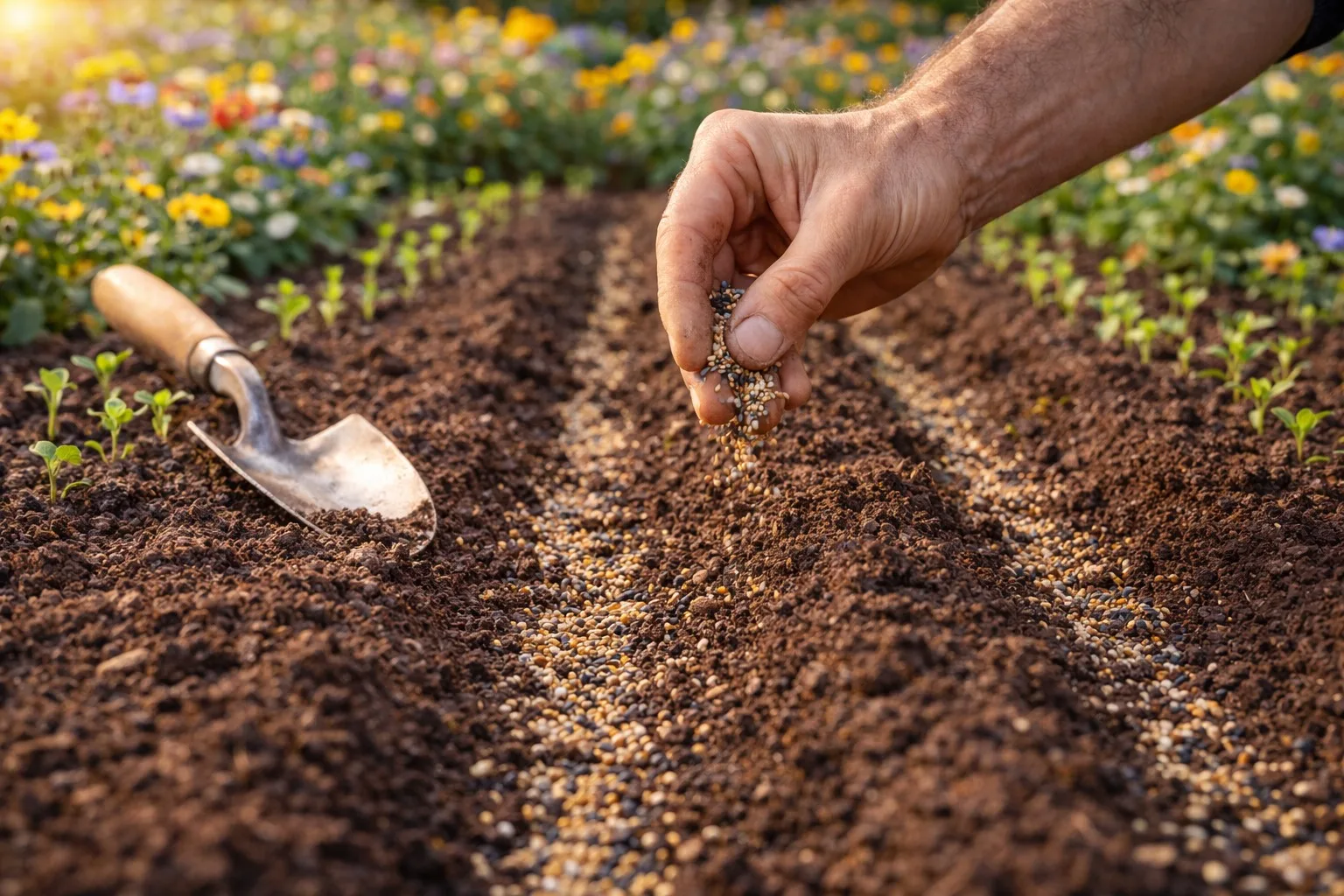
Sowing flower seeds is one of the most rewarding parts of gardening. It’s the start of life, color, and fragrance in your garden. Whether you are planting in beds, containers, or pots, sowing seeds correctly ensures healthy seedlings, strong growth, and vibrant blooms.
This comprehensive guide covers everything you need to know about sowing flower seeds, including preparation, seed types, soil requirements, sowing techniques, watering, sunlight, thinning, transplanting, common mistakes, and expert tips.
Understanding Flower Seeds
Flower seeds are tiny embryos that contain all the potential for a new plant. When exposed to the right combination of moisture, warmth, oxygen, and sometimes light, seeds germinate and start growing roots, stems, and leaves.
There are three main types of flowers you may sow:
Annuals – complete their life cycle in one season and bloom quickly
Biennials – grow leaves in the first year and flower in the second
Perennials – live and bloom year after year once established
Knowing the type helps you plan sowing and garden timing.
Choosing the Right Flower Seeds
Selecting the right seeds is the first step to success. Consider:
Climate and growing zone
Sunlight availability
Soil type
Garden space or container size
Bloom season and color preference
Popular beginner-friendly seeds include Zinnia, Marigold, Cosmos, Sunflower, Nasturtium, and Petunia. Fast-germinating seeds are ideal for first-time gardeners.
When to Sow Flower Seeds
Timing is critical for germination:
Spring sowing – after last frost, when soil has warmed; works for most annuals and perennials.
Fall sowing – for cold-hardy flowers; seeds naturally stratify over winter and sprout in spring.
Indoor sowing – allows early planting; seedlings are transplanted outside after last frost.
Always check seed packets for recommended sowing time.
Preparing Soil for Sowing
Good soil preparation improves germination and growth.
Soil should be:
Loose and crumbly
Well-draining
Rich in organic matter
Free of weeds and debris
Steps:
Remove weeds, stones, and old roots
Loosen soil 6–8 inches deep
Add compost or organic matter
Level the soil surface gently
Avoid heavy clay or overly rich soil; wildflowers and many garden flowers prefer moderately fertile soil.
How Deep to Sow Flower Seeds
Planting depth is one of the most common mistakes.
General rules:
Plant seeds about 2–3 times their size deep
Tiny seeds – surface sow or lightly press into soil
Medium seeds – 1/4 inch deep
Large seeds – 1/2 to 1 inch deep
Seeds too deep may not emerge; seeds too shallow can dry out.
Step-by-Step Guide to Sowing Flower Seeds
- Prepare the soil – loosen, level, and remove debris
- Read seed packet instructions – depth, spacing, and special conditions
- Sow seeds – scatter evenly, sprinkle lightly if tiny, or plant individually
- Cover seeds lightly – with soil or compost as needed
- Press soil gently – ensures good seed-to-soil contact
- Water gently – keep soil moist but not soggy
For tiny seeds, mixing them with sand can help distribute them evenly.
Watering After Sowing
Watering is critical for germination:
Keep soil consistently moist until seedlings emerge
Use a gentle spray or mist to avoid washing away seeds
Reduce watering once seedlings are established but water deeply
Overwatering can rot seeds; underwatering prevents germination.
Sunlight Requirements
Most flower seeds need sunlight to grow:
Full sun – 6–8 hours direct sunlight
Partial sun – 3–6 hours
Shade – indirect light or filtered sun
Check seed packet recommendations to match sunlight to the flower type. Lack of sunlight produces weak, leggy seedlings.
Thinning Seedlings
Thinning improves growth and reduces competition:
Once seedlings have 2–3 true leaves, remove weaker seedlings
Maintain proper spacing for airflow and healthy growth
Cut seedlings at soil level rather than pulling to avoid root disturbance
Proper thinning ensures strong, vibrant plants.
Transplanting Seedlings
Some flowers benefit from starting indoors and transplanting outside:
Water seedlings before moving
Transplant on a cloudy day or evening
Plant at the same depth as seedlings were growing
Water thoroughly after planting
Harden off seedlings gradually by exposing them to outdoor conditions
This helps prevent transplant shock.
Common Mistakes When Sowing Seeds
Planting too deep
Overwatering or underwatering
Ignoring sunlight needs
Overcrowding seeds
Skipping soil preparation
Avoiding these mistakes greatly improves success rates.
Sowing Seeds in Containers
Containers are perfect for small spaces or patios:
Use pots with drainage holes
Use quality potting mix
Do not overcrowd seeds
Place in the right sunlight
Water regularly as containers dry faster than garden soil
Dwarf and compact flower varieties work best for containers.
Saving Seeds for Next Season
Many flowers allow seed saving:
Allow flowers to dry completely on the plant
Collect seeds from mature flowers
Dry seeds indoors
Store in cool, dry containers with labels
This reduces future costs and allows you to grow favorite flowers again.
Expert Tips for Successful Sowing
Use fresh seeds for better germination
Prepare soil properly and remove weeds
Keep soil moist during germination
Match flowers to their sunlight and soil needs
Thin seedlings carefully
Be patient — some seeds take longer to sprout
Small adjustments during sowing can lead to big results.
Final Thoughts
Learning how to sow flower seeds is the first step to creating a beautiful garden. With proper timing, soil preparation, planting depth, and care, anyone can grow flowers successfully from seed. Whether in garden beds, pots, or borders, sowing seeds provides more variety, lower cost, and a greater sense of satisfaction than purchasing mature plants.
With patience and attention to detail, sowing flower seeds becomes an enjoyable gardening routine that rewards you with healthy plants and vibrant blooms season after season.