
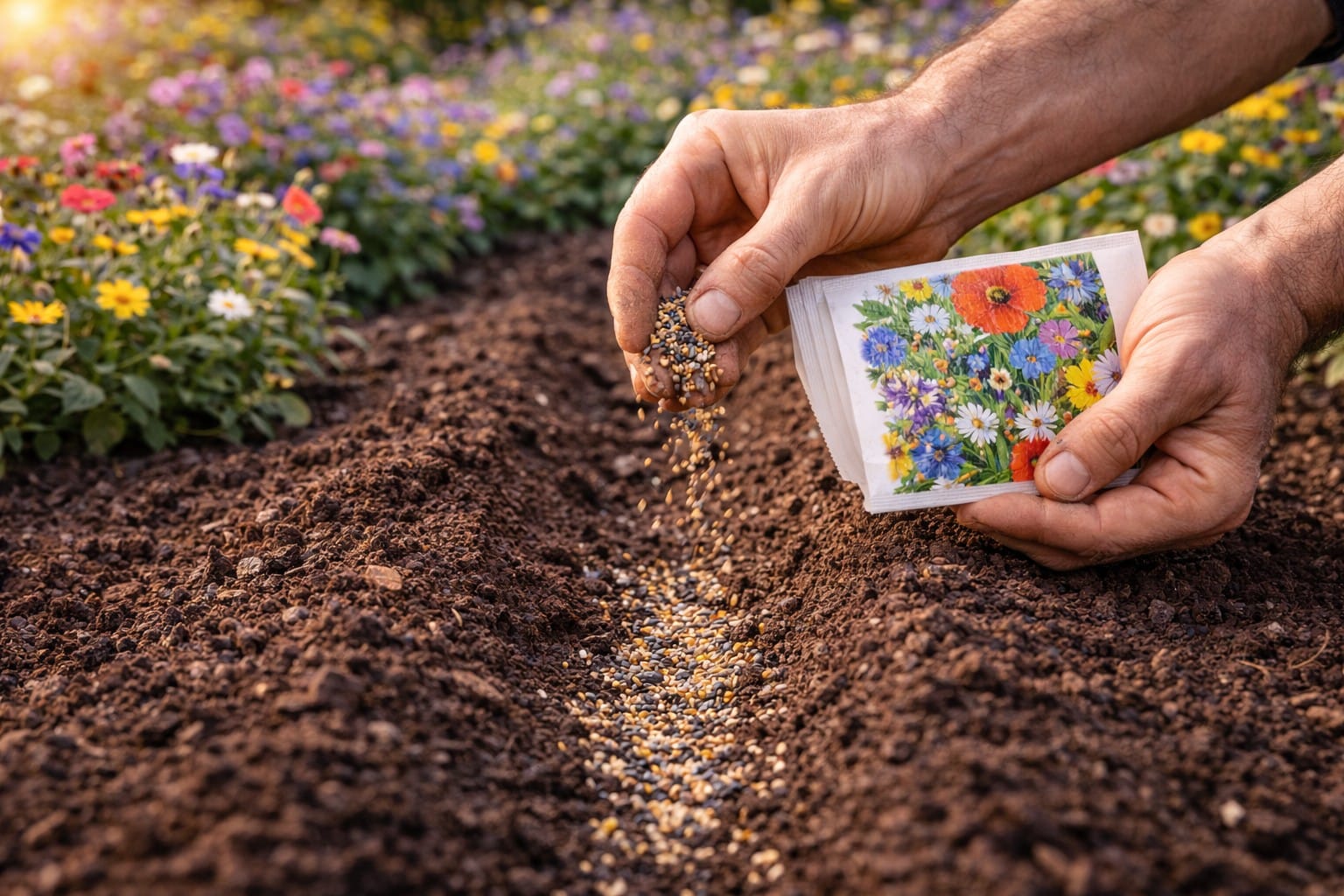
Planting flower seeds is one of the most satisfying ways to grow a garden. From tiny seeds comes color, fragrance, and life that can completely change a space. Whether you are planting flowers in the ground, raised beds, or pots, the basics remain the same: good timing, proper soil, correct planting depth, and consistent care. When done right, planting flower seeds is affordable, rewarding, and suitable for gardeners of all skill levels.
This complete guide explains everything you need to know about planting flower seeds, including seed types, soil preparation, step-by-step planting, watering, sunlight needs, common mistakes, and expert tips to ensure healthy growth and beautiful blooms.
Understanding Flower Seeds
Flower seeds are living embryos that contain everything a plant needs to start growing. When seeds receive the right combination of moisture, warmth, oxygen, and light (for some types), they germinate and begin to grow roots, stems, and leaves.
There are three main types of flowering plants grown from seed:
Annuals complete their life cycle in one season and bloom quickly
Biennials grow leaves the first year and flowers the second year
Perennials return year after year once established
Knowing which type you are planting helps you understand bloom time and long-term care.
Choosing the Right Flower Seeds
Selecting the right seeds is the first step toward success.
Consider these factors before planting:
Climate and growing zone
Sunlight availability
Soil type
Garden space or container size
Desired bloom season and colors
Popular easy-to-grow flower seeds include:
Zinnia
Marigold
Cosmos
Sunflower
Nasturtium
Petunia
Beginners should start with fast-germinating annuals for quick results.
When to Plant Flower Seeds
Timing is critical for healthy germination.
Spring planting is most common and works well for warm-season flowers. Seeds should be planted after the danger of frost has passed and soil has warmed.
Fall planting works for cold-hardy flowers and perennials. Seeds stay dormant over winter and sprout naturally in spring.
Indoor seed starting allows you to plant earlier and transplant seedlings later. This is useful for flowers with long growing seasons.
Always check seed packets for recommended planting times.
Preparing the Soil for Flower Seeds
Good soil preparation increases germination success.
Ideal soil should be:
Loose and crumbly
Well-draining
Rich in organic matter
Free of weeds and debris
Steps to prepare soil:
Remove weeds and stones
Loosen soil 6–8 inches deep
Mix in compost or organic matter
Level the surface gently
Avoid heavy clay soil unless improved with compost or sand.
How Deep to Plant Flower Seeds
Planting depth is one of the most common mistakes gardeners make.
General rule:
Plant seeds at a depth about 2–3 times their size
Examples:
Tiny seeds stay on the surface or lightly pressed into soil
Medium seeds go about 1/4 inch deep
Large seeds may need 1/2 to 1 inch depth
Seeds planted too deep may not emerge, while seeds planted too shallow can dry out.
How to Plant Flower Seeds Step by Step
Follow this simple process for best results.
Steps:
Prepare the soil
Read seed packet instructions
Plant seeds at correct depth
Space seeds properly
Gently cover with soil if needed
Water lightly but thoroughly
Press soil gently to ensure good seed-to-soil contact.
Watering Flower Seeds Correctly
Watering is critical during germination.
Watering tips:
Keep soil evenly moist, not soggy
Use a gentle spray or mist
Avoid washing seeds away
Water daily during germination if needed
Once seedlings grow, reduce watering frequency but water deeply.
Overwatering causes rot, while underwatering stops germination.
Sunlight Requirements for Flower Seeds
Sunlight needs vary depending on flower type.
Full sun flowers need 6–8 hours of direct sunlight
Partial sun flowers need 3–6 hours
Shade flowers prefer indirect or filtered light
Check seed packets to match flowers with the right location.
Lack of sunlight leads to weak, leggy plants.
Planting Flower Seeds in Pots and Containers
Container planting is perfect for small spaces.
Container tips:
Choose pots with drainage holes
Use quality potting mix, not garden soil
Avoid overcrowding seeds
Place containers in proper sunlight
Water containers more often, as they dry out faster than ground soil.
Germination Time and What to Expect
Germination times vary.
Fast germinators:
Zinnia (5–7 days)
Marigold (5–8 days)
Slow germinators:
Lavender (14–30 days)
Delphinium (14–21 days)
Be patient and keep conditions consistent.
Thinning Seedlings
Thinning improves plant health.
When seedlings have 2–3 true leaves:
Remove weaker seedlings
Keep strongest plants spaced properly
Avoid pulling aggressively—cut extras at soil level
Overcrowded plants compete for light, water, and nutrients.
Fertilizing Young Flower Plants
Most seeds don’t need fertilizer until seedlings establish.
Fertilizing tips:
Wait until plants have true leaves
Use diluted liquid fertilizer
Avoid high nitrogen early on
Feed lightly every 2–3 weeks
Too much fertilizer burns young roots.
Common Problems When Planting Flower Seeds
Poor Germination
Caused by old seeds, poor soil, or incorrect depth
Seedlings Falling Over
Caused by overwatering or poor airflow
Yellow Leaves
Caused by nutrient deficiency or water stress
Mold or Fungus
Caused by excess moisture and poor ventilation
Fix problems early to avoid plant loss.
Growing Flowers Indoors From Seed
Indoor seed starting gives you a head start.
Indoor tips:
Use seed trays or small pots
Provide bright light or grow lights
Keep temperature warm
Harden off seedlings before transplanting
Hardening off means gradually exposing seedlings to outdoor conditions.
Transplanting Seedlings Outdoors
Transplant only after seedlings are strong.
Steps:
Choose cloudy day or evening
Water seedlings before transplanting
Dig holes slightly larger than root ball
Plant at same depth
Water thoroughly
Avoid transplanting during extreme heat.
Saving Flower Seeds for Next Season
Many flowers allow seed saving.
Steps:
Allow flowers to dry on plant
Collect mature seed heads
Dry seeds completely
Store in cool, dry containers
Label seeds with name and date for future use.
Beginner Mistakes to Avoid
Planting too deep
Overwatering
Ignoring sunlight needs
Planting too many seeds together
Skipping soil preparation
Avoiding these mistakes greatly improves success.
Best Flowers to Start From Seed
Easy beginner flowers include:
Zinnia
Cosmos
Sunflower
Marigold
Bachelor’s Button
Calendula
These flowers grow quickly and forgive small mistakes.
Expert Tips for Better Flower Seed Success
Use fresh seeds
Prepare soil well
Water gently and consistently
Match flowers to sunlight conditions
Thin seedlings properly
Be patient and observe plants
Small adjustments make a big difference.
Final Thoughts
Planting flower seeds is a simple yet powerful way to create a beautiful garden. With proper timing, soil preparation, correct planting depth, and consistent care, anyone can grow healthy flowers from seed. Whether you are filling garden beds, pots, or borders, starting flowers from seed gives you more variety, lower cost, and deeper satisfaction than buying mature plants.
With practice and patience, planting flower seeds becomes an enjoyable routine that rewards you with color, life, and beauty season after season.