
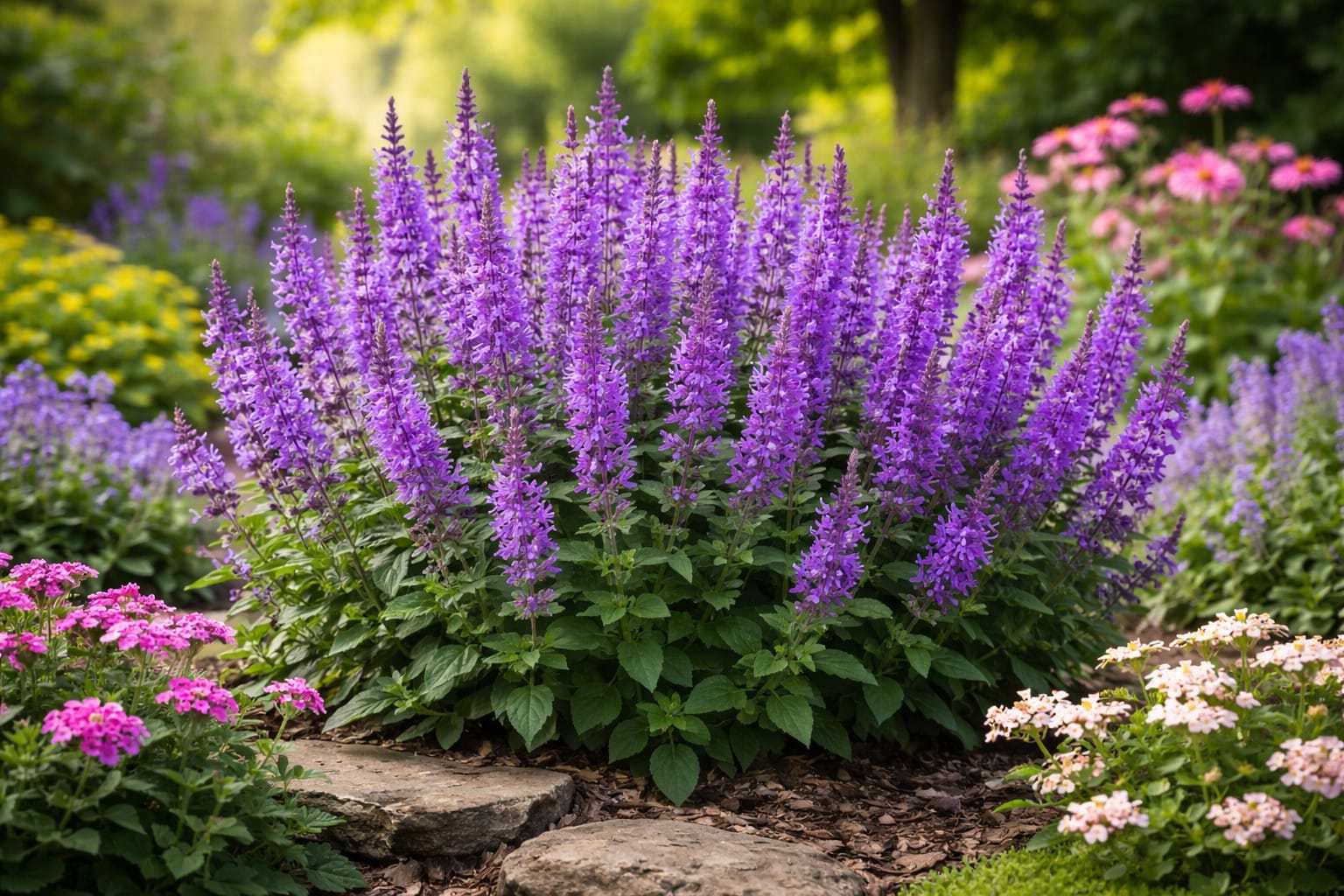
Purple flower plants are a favorite for gardeners seeking vibrant color, elegance, and a sense of calm in their landscapes. From deep violet to soft lavender, purple blooms can brighten shady corners, complement other garden colors, and attract pollinators. These flowers are versatile, growing in gardens, containers, borders, and even indoors.
This complete guide covers the best purple flowering plants, planting and care tips, soil and light requirements, pruning, common problems, and expert advice to help you create a stunning purple-themed garden.
Why Choose Purple Flower Plants
Purple flowers are more than just beautiful. They offer multiple benefits:
Adds visual depth and contrast to the garden
Symbolizes elegance, peace, and creativity
Attracts pollinators like bees and butterflies
Combines well with white, yellow, pink, or silver foliage
Suitable for borders, containers, or mass planting
Purple blooms work well as focal points or accents, enhancing any garden design.
Best Purple Flower Plants
Here are some of the most popular and reliable purple flowering plants:
Lavender (Lavandula)
Fragrant purple flower spikes
Blooms late spring through summer
Drought tolerant and low-maintenance
Excellent for borders, containers, and herb gardens
Salvia (Salvia spp.)
Tall purple flower spikes
Blooms from late spring to fall
Attracts pollinators
Heat and drought tolerant
Coneflower (Echinacea purpurea)
Large purple daisy-like blooms
Blooms early summer to fall
Attracts butterflies and bees
Very hardy and low maintenance
Iris (Iris germanica)
Large, dramatic blooms
Late spring flowering
Variety of purple shades
Requires well-draining soil
Allium
Globe-shaped purple flowers
Late spring bloom
Adds architectural interest
Deer and rabbit resistant
Catmint (Nepeta)
Lavender-purple blooms
Blooms late spring to fall
Compact, low-maintenance
Attracts bees and butterflies
Clematis
Climbing vine with purple blooms
Blooms late spring to early summer
Ideal for trellises or fences
Requires support and well-draining soil
Aster
Star-shaped purple flowers
Blooms late summer to fall
Excellent for extending seasonal color
Attracts pollinators
Sun Requirements
Most purple flower plants prefer full sun but some tolerate partial shade:
Full sun: 6–8 hours direct sunlight
Partial shade: 3–6 hours filtered sunlight
Too little sunlight can reduce flowering
Matching plants to their light preference ensures vibrant blooms.
Soil Requirements
Healthy soil supports strong growth and abundant flowers:
Well-draining soil is essential
Loamy or sandy texture preferred
Slightly acidic to neutral pH
Add compost or organic matter for nutrients
Avoid waterlogged soil, which causes root rot and poor flowering.
Planting Purple Flower Plants
Proper planting ensures healthy growth:
Choose a sunny or appropriately shaded location
Prepare soil with compost
Dig a hole twice the size of the root ball
Plant at the same depth as nursery pots
Water thoroughly after planting
Apply mulch to retain moisture
Provide adequate spacing for airflow and disease prevention.
Watering
Watering is crucial for healthy blooms:
Water deeply when topsoil is dry
Avoid shallow daily watering
Reduce watering once plants are established
Container plants may need more frequent watering
Overwatering or underwatering can affect flower quality.
Fertilizing
Balanced nutrients encourage strong growth and blooms:
Use a slow-release or liquid fertilizer during growing season
Avoid excess nitrogen, which promotes foliage over flowers
Compost can supplement nutrients
Feed every 4–6 weeks or as per product instructions
Proper fertilization ensures vibrant, long-lasting blooms.
Deadheading and Pruning
Deadheading encourages continuous flowering:
Remove spent blooms regularly
Trim leggy stems
Prune after flowering to maintain shape
Encourages reblooming in perennials
Pruning also keeps plants tidy and healthy.
Common Problems and Solutions
Poor Flowering
Cause: Insufficient sunlight or over-fertilization
Solution: Move to brighter spot and use balanced fertilizer
Pests
Aphids, spider mites, or slugs
Treat with neem oil, insecticidal soap, or manual removal
Fungal Diseases
Powdery mildew or leaf spot in humid conditions
Ensure good air circulation, avoid overhead watering
Yellow Leaves
Overwatering or poor soil
Adjust watering and improve drainage
Companion Planting
Purple flowers pair beautifully with other colors and textures:
White flowers for contrast
Yellow flowers for a striking combination
Silver or gray foliage to enhance purple
Mix tall and short plants for layered effect
Repetition of purple throughout the garden creates visual flow.
Growing in Containers
Purple flowers can thrive in pots or hanging baskets:
Use well-draining potting mix
Ensure adequate sunlight or partial shade as required
Water more frequently than garden beds
Combine with green foliage plants for contrast
Ideal for patios, balconies, or small garden spaces.
Frequently Asked Questions
Do purple flower plants bloom all summer
Many perennials and annuals bloom throughout the season with proper care
Can they grow in partial shade
Yes, but flowering may be reduced in too much shade
Are purple flowers attractive to pollinators
Yes, especially bees and butterflies
How often should they be watered
Once or twice a week depending on soil and weather
Do they need fertilizing
Yes, balanced feeding improves growth and blooms
Expert Tips for Vibrant Purple Blooms
Select plants suited to your light conditions
Improve soil with compost or organic matter
Water consistently but avoid waterlogging
Deadhead flowers regularly
Use supports for climbing varieties
Small adjustments can dramatically improve flower quality.
Final Thoughts
Purple flower plants add elegance, vibrancy, and charm to any garden. With the right care, soil, sunlight, and maintenance, you can enjoy lush, fragrant, and long-lasting blooms throughout the growing season.
From lavender, salvia, and coneflowers to irises and catmint, purple flowers provide color, texture, and pollinator-friendly benefits, making them a timeless addition to gardens, borders, containers, and patios alike.