
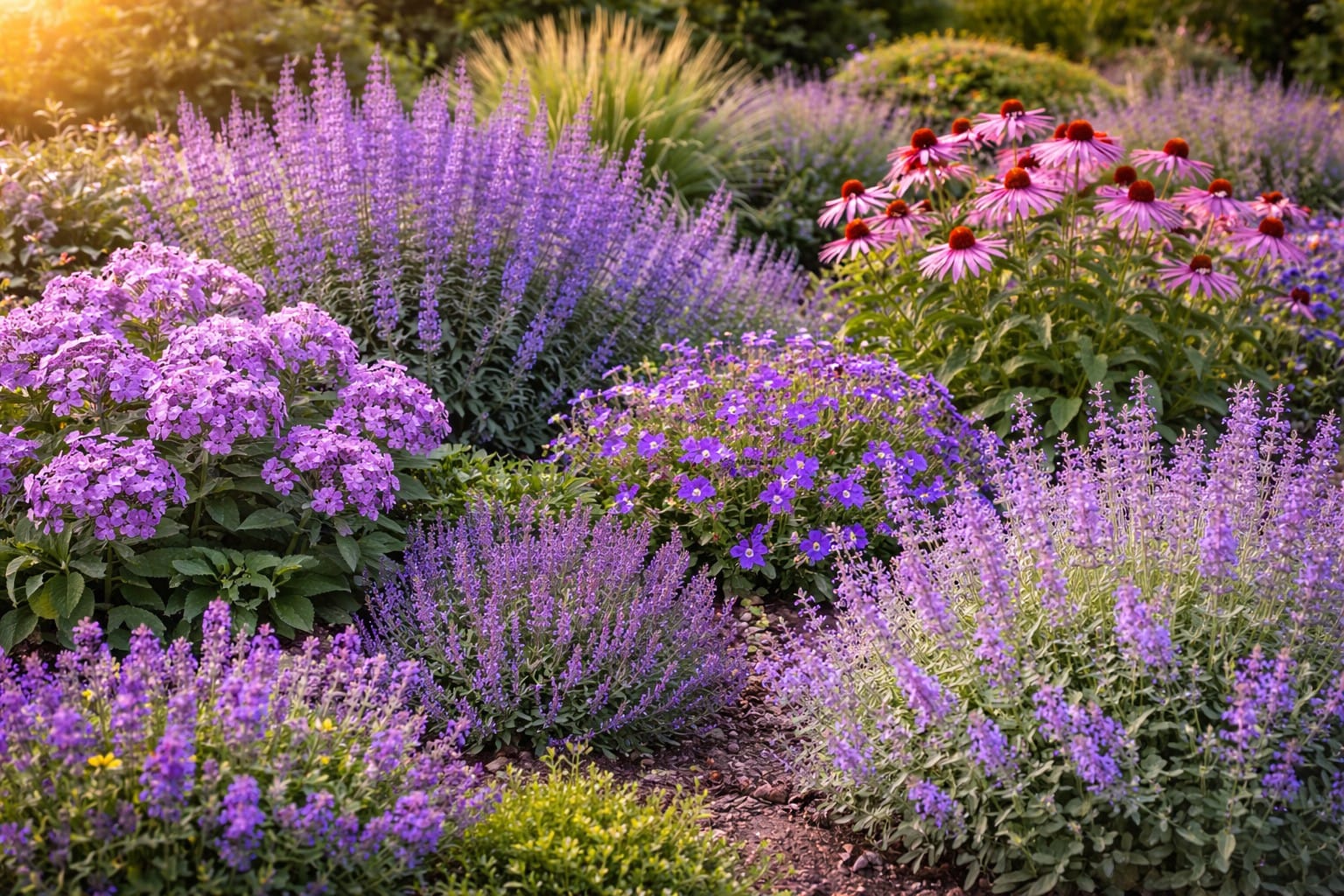
Purple perennial flowers bring depth, elegance, and calm beauty to gardens year after year. From soft lavender shades to deep royal purple tones, these plants return each season and often bloom for weeks or even months. Purple perennials work beautifully in borders, cottage gardens, pollinator spaces, and low-maintenance landscapes, making them a favorite for both beginners and experienced gardeners.
This complete guide covers the best purple flowering perennial plants, how to grow them, care tips, mistakes to avoid, design ideas, and expert advice to keep your garden blooming beautifully.
Why Choose Purple Perennial Flowers
Purple flowers are more than just pretty. They offer practical and visual benefits.
Key benefits include:
Come back every year
Long bloom periods
Attract bees, butterflies, and pollinators
Work well with many color schemes
Create a calming and elegant garden look
Purple shades pair well with white, yellow, pink, and silver foliage, making them easy to design with.
Best Purple Perennial Flowers
These perennials are reliable, hardy, and known for their beautiful purple blooms.
Lavender
One of the most popular purple perennials
Fragrant purple flower spikes
Blooms late spring through summer
Drought tolerant once established
Lavender prefers full sun and well-drained soil. It’s perfect for borders, pathways, and herb gardens.
Coneflower (Echinacea)
Purple daisy-like flowers
Blooms early summer through fall
Extremely hardy and drought tolerant
Excellent for pollinators
Coneflowers are low maintenance and ideal for sunny gardens.
Salvia
Tall spikes of purple, blue-purple, or violet flowers
Blooms late spring through summer
Very attractive to bees and hummingbirds
Heat and drought tolerant
Cutting back spent flowers encourages reblooming.
Russian Sage
Soft lavender-purple flowers
Blooms mid-summer through fall
Silvery foliage adds contrast
Extremely drought tolerant
Great for hot, dry climates and large garden spaces.
Phlox (Garden Phlox)
Clusters of purple flowers
Blooms mid to late summer
Sweet fragrance
Excellent for cottage gardens
Choose mildew-resistant varieties for best results.
Catmint (Nepeta)
Lavender-purple flowers
Blooms from late spring to fall
Low maintenance and fast growing
Loved by pollinators
Cutting back mid-season keeps it compact and blooming.
Veronica (Speedwell)
Slender spikes of purple flowers
Blooms for many weeks
Compact growth habit
Great for borders
Veronica adds vertical interest without taking much space.
Iris
Large dramatic purple blooms
Blooms late spring to early summer
Wide range of purple shades
Very hardy
Irises prefer sunny locations and good drainage.
Allium
Purple globe-shaped flowers
Blooms late spring
Strong architectural look
Deer and rabbit resistant
Alliums look stunning mixed with other perennials.
Aster
Purple star-shaped flowers
Blooms late summer to fall
Excellent for extending seasonal color
Attracts pollinators late in the year
Perfect for filling the late-season bloom gap.
Sun Requirements for Purple Perennials
Most purple perennial flowers thrive in full sun.
Sun guidelines:
6–8 hours of direct sunlight
Morning sun is ideal
Some tolerate partial shade
More sun equals stronger color and more blooms
Too much shade reduces flowering and causes weak growth.
Soil Requirements
Healthy soil is essential for long-lasting blooms.
Ideal soil conditions:
Well-draining soil
Moderate fertility
Organic matter added
Neutral to slightly alkaline pH for many species
Avoid heavy clay unless amended with compost or sand.
Planting Purple Perennial Flowers
Proper planting ensures strong roots and long life.
Planting tips:
Plant in spring or early fall
Dig holes twice as wide as the root ball
Plant at soil level
Water thoroughly after planting
Mulch lightly to retain moisture
Correct spacing improves airflow and reduces disease.
Watering Purple Perennials
Watering needs depend on the plant but general rules apply.
Watering guidelines:
Water deeply once or twice a week
Allow soil to dry slightly between watering
Avoid shallow daily watering
Reduce watering once plants are established
Overwatering is a common cause of root problems.
Fertilizing for Healthy Blooms
Purple perennials do not need heavy feeding.
Best practices:
Add compost in spring
Use balanced fertilizer sparingly
Avoid high-nitrogen fertilizers
Too much fertilizer reduces flowers
Healthy soil does most of the work.
Deadheading and Pruning
Deadheading helps many purple perennials bloom longer.
Deadheading tips:
Remove faded flowers regularly
Cut back to healthy leaves
Shear plants lightly mid-season if needed
Encourages reblooming and neat growth
Some plants like lavender and catmint benefit from a mid-summer trim.
Common Mistakes to Avoid
These mistakes can reduce flowering and plant health.
Planting in too much shade
Overwatering
Overfertilizing
Ignoring deadheading
Poor soil drainage
Fixing these issues dramatically improves bloom quality.
Designing with Purple Perennial Flowers
Purple works well in many garden styles.
Design ideas:
Combine purple with white for elegance
Mix with yellow for high contrast
Use silver foliage for softness
Layer tall and short plants
Repeat purple throughout the garden for flow
Purple flowers also work well in monochrome gardens.
Purple Perennials for Pollinators
Many purple flowers are pollinator magnets.
Best pollinator plants include:
Lavender
Salvia
Coneflower
Catmint
Aster
Planting these supports bees, butterflies, and beneficial insects.
Purple Perennials for Hot Climates
Some purple perennials thrive in heat and drought.
Best choices:
Lavender
Russian sage
Salvia
Coneflower
Catmint
These plants need full sun and excellent drainage.
Purple Perennials for Partial Shade
Not all purple flowers need full sun.
Good partial-shade options:
Astilbe
Viola
Bleeding heart
Some phlox varieties
They prefer morning sun and afternoon shade.
Growing Purple Perennials in Containers
Many purple perennials grow well in pots.
Container tips:
Use well-draining pots
Choose compact varieties
Water more frequently than ground plants
Protect roots from extreme heat
Lavender, salvia, and catmint work especially well in containers.
Perennials vs Annual Purple Flowers
Perennials:
Return every year
Lower long-term cost
Less planting work
Annuals:
Instant color
Bloom nonstop
Need replanting each year
Many gardens combine both for maximum color.
Frequently Asked Questions
Do purple perennial flowers come back every year
Yes, when grown in suitable climates and cared for properly
Do purple perennials bloom all summer
Some bloom continuously, others rebloom with deadheading
Are purple flowers good for bees
Yes, many purple flowers strongly attract pollinators
Can purple perennials grow in shade
Some can, but most prefer full sun
Expert Tips for Long-Lasting Purple Blooms
Choose long-blooming varieties
Plant in full sun whenever possible
Deadhead regularly
Avoid overwatering
Improve soil with compost
Small care steps lead to much better results.
Final Thoughts
Purple perennial flowers are a smart, beautiful choice for any garden. They provide long-lasting color, pollinator support, and reliable performance year after year with minimal effort. From fragrant lavender to bold coneflowers and graceful salvias, purple perennials offer endless options for every garden style.
With the right plant selection, proper sunlight, and simple maintenance, purple perennial flowers will reward you with vibrant blooms, healthy growth, and timeless beauty season after season.