
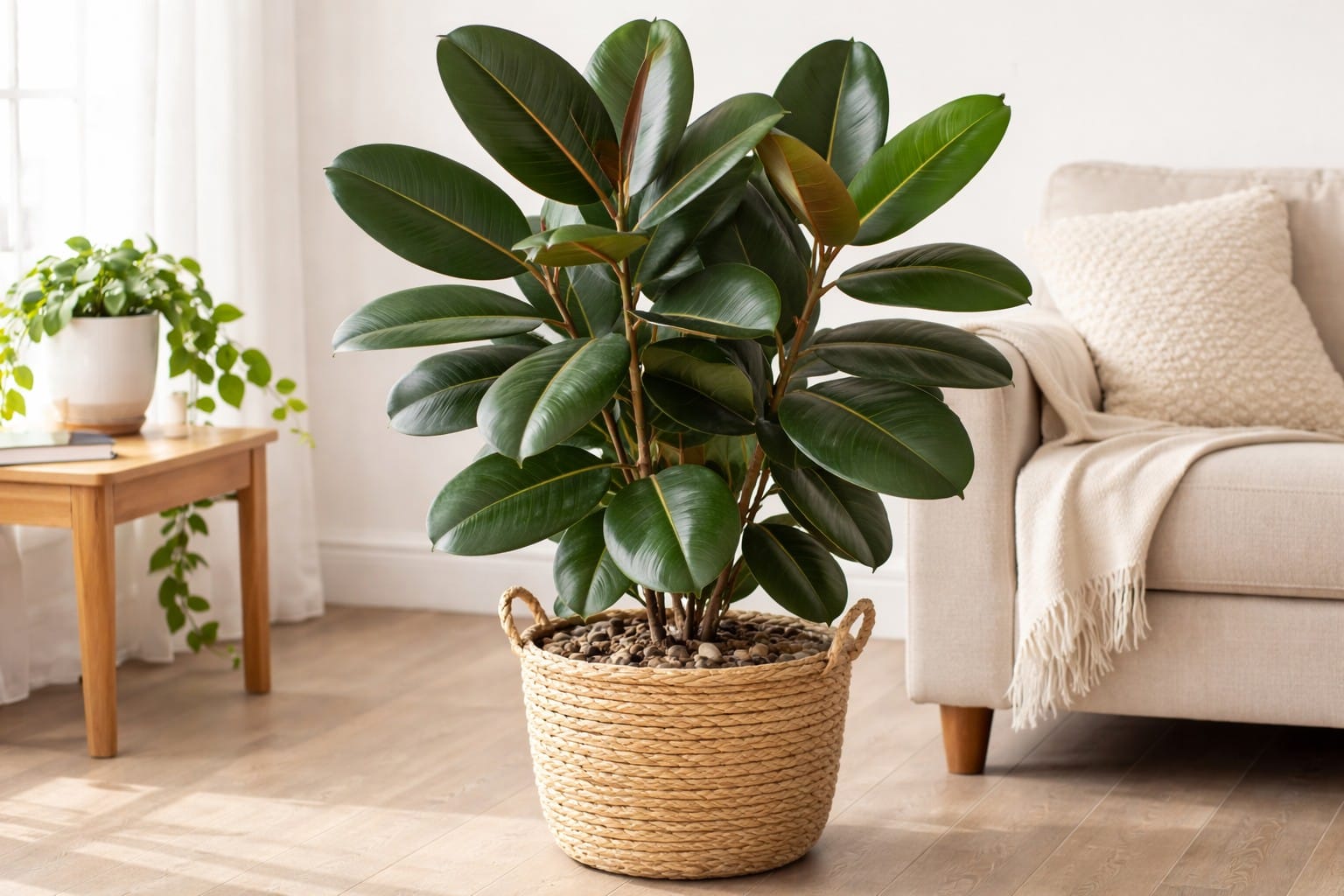
The rubber plant, scientifically known as Ficus elastica, is a popular houseplant valued for its large glossy leaves, upright growth, and low-maintenance nature. Native to Southeast Asia, the rubber plant is ideal for indoor spaces, offices, and apartments because it adapts well to indoor conditions and adds a bold, tropical touch to any room.
This complete guide covers everything you need to know about rubber plants, including varieties, light and water needs, soil, care, propagation, pruning, common problems, air-purifying benefits, and expert tips for healthy growth.
What Is a Rubber Plant
Rubber plants are evergreen trees or shrubs in the Ficus genus. When grown indoors, they are usually kept as medium to tall houseplants, often reaching several feet in height with proper care.
Key characteristics of rubber plants:
Thick, glossy green leaves (sometimes variegated)
Upright growth pattern
Moderate growth rate
Tolerates low to medium light
Air-purifying qualities
Rubber plants are long-lived and can thrive for decades indoors.
Meaning and Symbolism of Rubber Plants
Rubber plants symbolize:
Strength and resilience
Prosperity and abundance
Health and protection
Calm and positive energy
In feng shui, rubber plants are believed to bring positive energy and good fortune to the home or office.
Popular Varieties of Rubber Plants
Several varieties of rubber plants are suitable for indoor growing.
Ficus elastica ‘Robusta’
Large, solid green leaves
Easy to care for
Most common variety
Ficus elastica ‘Burgundy’
Deep red or burgundy leaves
Adds dramatic color
Tolerates moderate indoor light
Ficus elastica ‘Tineke’
Variegated cream and green leaves
Elegant and striking
Requires brighter light
Ficus elastica ‘Decora’
Glossy dark green leaves
Upright growth
Compact size for indoors
Ficus elastica ‘Ruby’
Pink and green variegated leaves
Bright and colorful
Needs bright indirect light
Where Rubber Plants Grow Best
Rubber plants thrive in bright, indirect light and warm, stable environments.
Best locations:
Near east- or south-facing windows
Living rooms, offices, and bedrooms
Indoor corners with moderate light
Avoid direct afternoon sun
They can tolerate lower light but will grow more slowly and may lose variegation.
Light Requirements
Rubber plants prefer bright, filtered sunlight.
Light guidelines:
Bright indirect light is ideal
Avoid direct sunlight to prevent leaf burn
Can tolerate medium indoor light
Low light slows growth and may cause leaf drop
Rotate plant regularly to ensure even leaf growth.
Soil Requirements
Well-draining soil is essential.
Soil tips:
Use standard potting mix with perlite or sand
Slightly acidic to neutral pH (6.0–7.0)
Avoid heavy clay or soggy soil
Ensure container has drainage holes
Proper soil prevents root rot and encourages strong growth.
Watering Rubber Plants
Rubber plants prefer moderate watering.
Watering guidelines:
Water when top 1–2 inches of soil are dry
Water thoroughly and drain excess
Reduce watering in winter
Avoid overwatering to prevent root rot
Leaf yellowing is usually a sign of overwatering or poor drainage.
Temperature and Humidity
Rubber plants prefer warm, stable indoor conditions.
Temperature range:
60–85°F (16–29°C)
Avoid drafts and sudden temperature changes
Humidity:
Average indoor humidity is sufficient
Occasional misting can help in dry conditions
Too much humidity can promote fungal growth
Fertilizing Rubber Plants
Fertilize sparingly for optimal growth.
Fertilizer tips:
Use balanced liquid fertilizer monthly in spring and summer
Dilute fertilizer to half strength
Do not fertilize in winter when growth slows
Overfertilizing can burn roots and leaves
Healthy fertilization promotes leaf development and glossy appearance.
Growth Rate and Size
Rubber plants grow slowly to moderately indoors.
Growth details:
Indoor height: 4–8 feet (can reach 10+ feet in optimal conditions)
Leaf size: 6–12 inches
Growth slows in low light
Regular pruning encourages bushier growth
Patience is key, as rubber plants mature gradually over years.
Pruning and Shaping
Pruning maintains shape and encourages fuller growth.
Pruning tips:
Trim top to control height
Remove yellow or damaged leaves
Cut just above leaf nodes
Use clean, sharp tools
Pruning also promotes branching and a denser appearance.
Propagating Rubber Plants
Rubber plants are easy to propagate.
Stem Cuttings
Most common method
Take a healthy stem with 2–3 leaves
Allow cut to dry for a few hours
Plant in well-draining soil or water until roots form
Air Layering
Used for larger plants
Create a wound on the stem
Wrap with moist sphagnum moss
Roots develop before separating
Propagation works best in spring or summer.
Repotting Rubber Plants
Repot every 2–3 years or when root-bound.
Repotting tips:
Use slightly larger pot
Refresh soil during repotting
Ensure drainage holes
Handle carefully to avoid sap contact
Sap can be irritating to skin.
Common Problems and Solutions
Leaf Yellowing
Cause: overwatering, poor drainage
Solution: adjust watering, improve drainage
Dropping Leaves
Cause: sudden light changes, drafts
Solution: relocate plant, avoid drafts
Brown Leaf Tips
Cause: low humidity or salt buildup
Solution: mist leaves, flush soil occasionally
Pests
Spider mites, mealybugs, scale
Treat with neem oil or wipe leaves
Root Rot
Cause: overwatering
Solution: repot in dry, well-draining soil
Is the Rubber Plant Toxic
Yes, rubber plants are toxic to pets and mildly irritating to humans.
Safety tips:
Sap can cause skin irritation
Keep away from cats and dogs
Wear gloves when pruning
Avoid ingestion
Air-Purifying Benefits
Rubber plants improve indoor air quality by removing:
Formaldehyde
Toluene
Xylene
They contribute to healthier indoor environments.
Rubber Plants in Containers
Rubber plants thrive in pots.
Container tips:
Use sturdy containers for stability
Ensure drainage holes
Rotate plant occasionally for even growth
Decorative pots enhance interior design
They are ideal as floor or tabletop plants.
Interior Design Uses
Rubber plants are versatile for décor.
Design uses:
Modern minimalist interiors
Office reception areas
Living rooms and bedrooms
Indoor corners needing vertical greenery
Their tall, upright structure adds elegance.
Frequently Asked Questions
Are rubber plants easy to care for?
Yes, they are low-maintenance and adaptable.
Can rubber plants survive low light?
Yes, but growth slows and variegation may fade.
How often should I water a rubber plant?
Water when the top 1–2 inches of soil are dry.
Do rubber plants grow fast?
Moderate growth; they take years to reach full size.
Are rubber plants safe for pets?
No, they are toxic to cats and dogs.
Expert Care Tips
Use bright, indirect light
Water moderately and avoid overwatering
Rotate for balanced growth
Wear gloves when handling
Prune to encourage branching
Final Thoughts
The rubber plant (Ficus elastica) is a hardy, attractive, and low-maintenance houseplant that fits almost any indoor space. With its glossy leaves, upright growth, and air-purifying properties, it brings beauty and health benefits to your home or office.
With consistent care, proper watering, and indirect sunlight, rubber plants grow into tall, lush indoor trees, providing decades of greenery and elegance for your living space.