
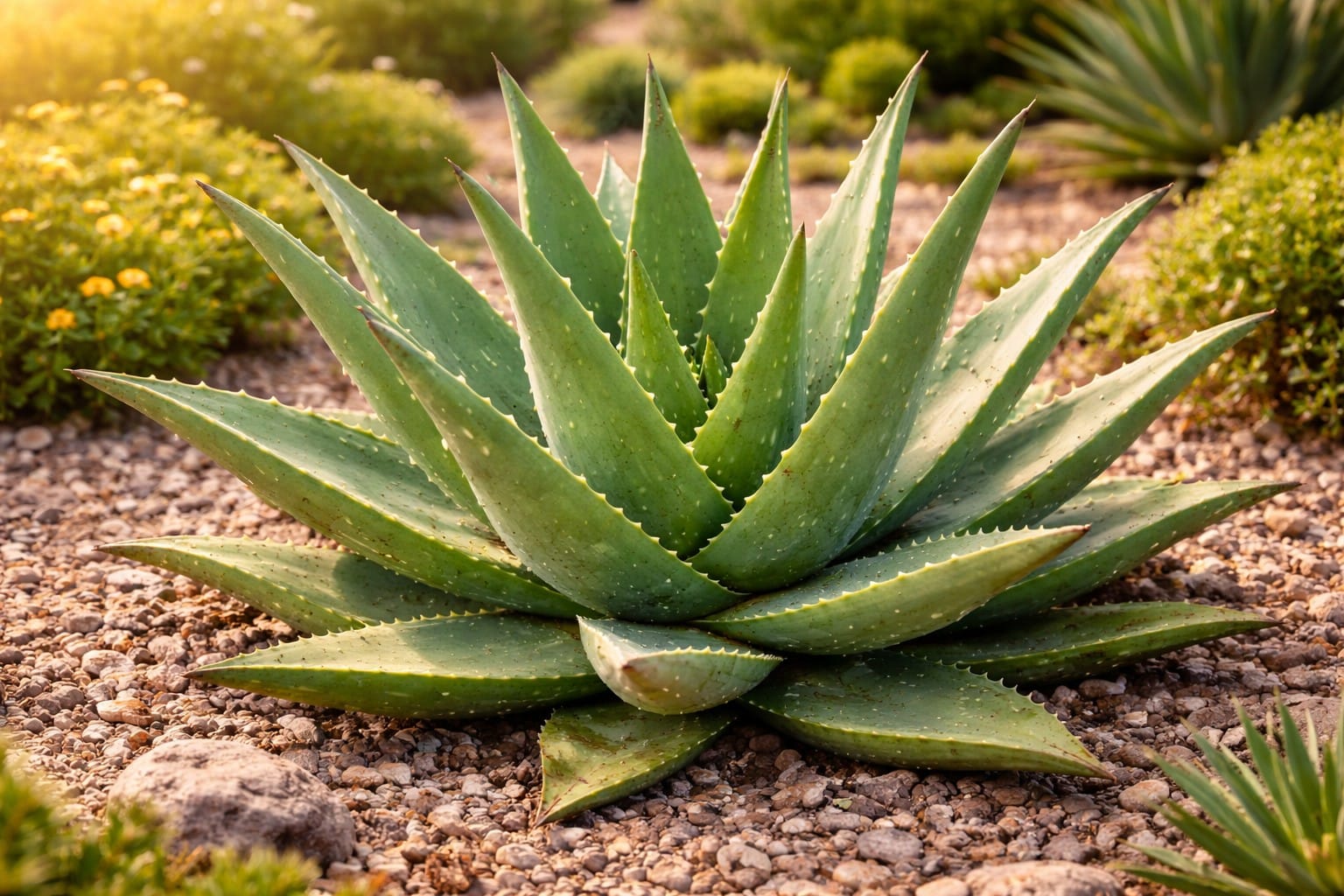
The aloe vera plant is one of the most popular and useful houseplants in the world. Known for its thick, gel-filled leaves, aloe vera is loved for its easy care, medicinal benefits, and modern look. It grows well indoors and outdoors, requires very little attention, and provides natural gel used for skin care, burns, and overall wellness.
This complete guide covers everything you need to know about the aloe vera plant, including types, growing conditions, soil, sunlight, watering, care, propagation, common problems, benefits, uses, and expert tips for long-term success.
What Is an Aloe Vera Plant
Aloe vera is a succulent perennial plant from the Aloe genus, native to arid regions of Africa and the Arabian Peninsula. It stores water in its thick leaves, which helps it survive drought and neglect.
Key characteristics of the aloe vera plant:
Thick, fleshy green leaves
Gel-filled interior used for healing
Rosette growth pattern
Low water needs
Slow to moderate growth
Aloe vera is commonly grown as a houseplant, but it also thrives outdoors in warm climates.
Meaning and Symbolism of Aloe Vera
Aloe vera symbolizes:
Healing and protection
Health and wellness
Resilience and survival
Good fortune and positivity
In many cultures, aloe vera is considered a protective plant and is kept near entrances or windows.
Types of Aloe Plants
While aloe vera is the most famous, there are many aloe varieties.
Aloe vera (Aloe barbadensis miller)
Most commonly used medicinal aloe
Wide, thick leaves
Best for gel extraction
Aloe arborescens
Tall, branching growth
Red or orange flowers
Often used medicinally
Aloe juvenna (Tiger Tooth Aloe)
Compact size
Spotted leaves with small teeth
Popular indoor variety
Aloe aristata (Lace Aloe)
Soft spines and white spots
Cold-tolerant
Great for containers
Where Aloe Vera Grows Best
Aloe vera thrives in warm, dry environments.
Ideal growing locations:
Sunny windowsills indoors
Patios and balconies
Rock gardens and xeriscapes
Outdoor gardens in frost-free regions
Aloe vera adapts well to containers, making it ideal for small spaces.
Soil Requirements for Aloe Vera
Proper soil is essential for aloe health.
Best soil conditions:
Well-draining soil
Sandy or gritty texture
Low organic matter
Slightly acidic to neutral pH
Use cactus or succulent potting mix. Heavy soil causes root rot and leaf collapse.
Sunlight Requirements
Aloe vera loves bright light.
Sun needs:
Bright indirect sunlight indoors
6–8 hours of light daily
Full sun outdoors with light shade in extreme heat
Too little light causes weak, pale leaves. Too much harsh sun may cause leaf burn.
Watering Aloe Vera Plants
Aloe vera prefers infrequent watering.
Watering guidelines:
Water deeply, then allow soil to dry completely
Reduce watering in winter
Water every 2–3 weeks indoors
Never leave roots sitting in water
Overwatering is the most common reason aloe plants fail.
Temperature and Humidity
Aloe vera prefers warm temperatures.
Ideal temperature range:
Daytime: 60–85°F (16–29°C)
Nighttime: above 50°F (10°C)
Aloe does not tolerate frost. Bring plants indoors in cold weather.
Fertilizing Aloe Vera
Aloe vera needs very little feeding.
Fertilizer tips:
Feed once or twice a year
Use diluted cactus or succulent fertilizer
Fertilize during spring or summer only
Too much fertilizer causes soft, weak growth.
Growth Rate and Size
Aloe vera grows slowly to moderately.
Growth details:
Mature height: 12–24 inches
Spread: 12–18 inches
Produces offsets over time
Lives for many years with proper care
Healthy aloe plants gradually form clusters.
Aloe Vera Flowering
Aloe vera can flower under ideal conditions.
Flowering facts:
Tall flower stalk
Yellow, orange, or red tubular flowers
Occurs on mature plants
More common outdoors than indoors
Flowering does not harm the plant.
Propagating Aloe Vera
Aloe vera is very easy to propagate.
Propagation by Offsets (Pups)
Most common method
Remove pups when 3–4 inches tall
Let cut dry for 24 hours
Plant in dry, well-draining soil
Propagation from Seed
Slow and uncommon
Requires warm temperatures
Not ideal for beginners
Offsets produce identical plants and grow faster.
Aloe Vera in Containers
Aloe vera thrives in pots.
Container tips:
Use pots with drainage holes
Choose terracotta pots for airflow
Avoid oversized containers
Repot every 2–3 years
Containers prevent overwatering and root rot.
Indoor Aloe Vera Care
Aloe vera is an excellent indoor plant.
Indoor care tips:
Place near bright window
Rotate plant for even growth
Avoid humid rooms
Water sparingly
Compact aloe varieties work best indoors.
Common Aloe Vera Problems
Yellow or Mushy Leaves
Caused by overwatering
Allow soil to dry completely
Brown Leaf Tips
Caused by underwatering or salt buildup
Water deeply and flush soil occasionally
Leggy Growth
Caused by insufficient light
Move plant to brighter location
Pests
Mealybugs, aphids, scale
Treat with neem oil or alcohol swabs
Root Rot
Caused by poor drainage
Repot into dry, well-draining soil
Is Aloe Vera Safe
Aloe vera gel is beneficial, but caution is needed.
Safety notes:
Gel is safe for skin use
Latex layer under skin can irritate skin
Ingestion not recommended for pets
Use gloves if skin sensitive
Always wash leaves before use.
Benefits of Aloe Vera
Aloe vera is valued for many reasons.
Key benefits:
Soothes burns and sunburn
Moisturizes skin naturally
Supports wound healing
Improves indoor air quality
Low-maintenance houseplant
Fresh aloe gel is often used in home remedies.
How to Harvest Aloe Vera Gel
Harvesting gel is simple.
Steps:
Choose mature outer leaf
Cut close to base
Drain yellow latex
Slice leaf open
Scoop clear gel
Use fresh gel immediately or refrigerate briefly.
Uses of Aloe Vera
Aloe vera has many uses.
Common uses include:
Skin care and beauty routines
Minor burn and cut treatment
Decorative houseplant
Natural home remedy
Office and bedroom plant
Its combination of beauty and usefulness makes it unique.
Aloe Vera in Garden Design
Aloe vera fits many design styles.
Design ideas:
Modern minimalist interiors
Succulent arrangements
Xeriscape gardens
Balcony and patio displays
Its upright form pairs well with other succulents.
Frequently Asked Questions
Is aloe vera easy to care for?
Yes, it is one of the easiest houseplants.
How often should aloe vera be watered?
Only when the soil is fully dry.
Can aloe vera grow indoors?
Yes, with bright indirect light.
Does aloe vera clean the air?
It can help improve indoor air quality.
How long does aloe vera live?
Many years with proper care.
Expert Growing Tips
Less water is always better
Use fast-draining soil
Provide bright light
Harvest older leaves first
Do not overfertilize
Final Thoughts
The aloe vera plant is a perfect blend of beauty, simplicity, and usefulness. Its low-maintenance nature, healing gel, and adaptability make it one of the best plants for homes, offices, and gardens.
With proper sunlight, minimal watering, and well-draining soil, aloe vera thrives for years, providing natural benefits and timeless greenery. Whether you grow it for health, décor, or ease of care, aloe vera is a plant that truly earns its place in every home.