
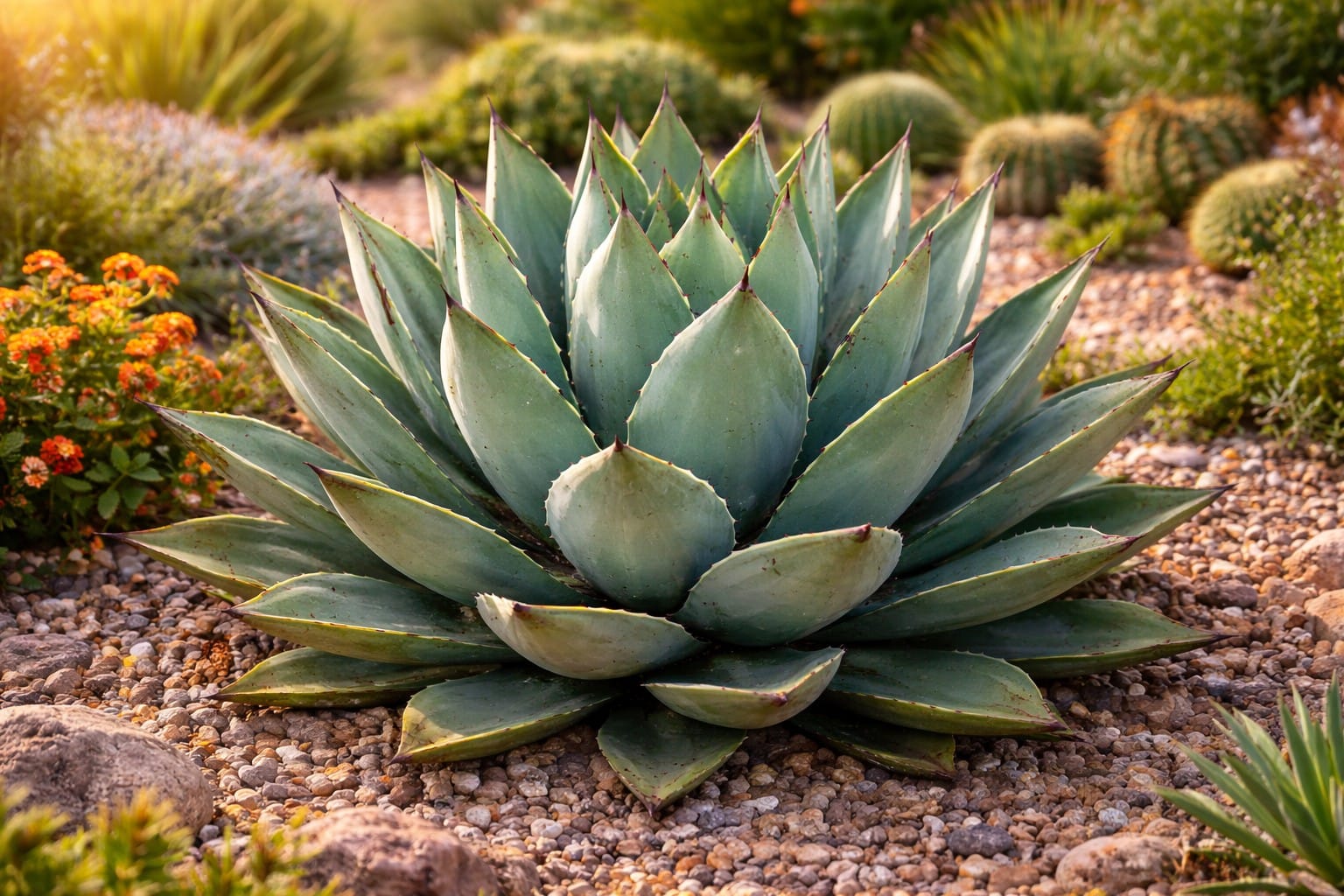
The agave plant is a bold, architectural succulent known for its thick fleshy leaves, dramatic rosette shape, and extreme drought tolerance. Native to hot, dry regions of the Americas, agave plants are popular in desert landscapes, modern gardens, containers, and indoor collections. They are long-living, low-maintenance plants that thrive where many others fail.
This complete guide covers everything you need to know about agave plants, including types, growing requirements, soil, watering, sunlight, care, propagation, common problems, uses, and expert tips to keep your agave healthy for years.
What Is an Agave Plant
Agave is a genus of succulent perennial plants in the Asparagaceae family. Agaves store water in their thick leaves, allowing them to survive long periods of drought. Most agaves form a tight rosette of leaves and grow slowly over many years.
Key characteristics of agave plants:
Thick, fleshy leaves with sharp tips
Rosette growth pattern
Extremely drought tolerant
Slow-growing but long-lived
Many species flower once at maturity
Most agave plants are monocarpic, meaning they flower once at the end of their life cycle, then die, often after producing offsets.
Meaning and Symbolism of Agave
Agave plants symbolize:
Strength and resilience
Endurance and protection
Longevity and patience
Survival in harsh conditions
Because agaves take many years to bloom, they are often associated with commitment, persistence, and long-term growth.
Popular Types of Agave Plants
There are over 200 agave species, ranging from small container plants to massive landscape specimens.
Agave americana (Century Plant)
Large blue-green leaves
Sharp spines and dramatic size
Common landscape agave
Agave attenuata (Foxtail Agave)
Soft, spineless leaves
Curved flower stalk
Ideal for gardens and containers
Agave victoriae-reginae
Compact and symmetrical
Dark green leaves with white markings
Excellent for pots and small spaces
Agave parryi
Cold-hardy variety
Blue-gray leaves
Great for rock gardens
Agave tequilana (Blue Agave)
Used to produce tequila
Tall and upright growth
Requires warm climates
Where Agave Plants Grow Best
Agave plants thrive in warm, dry climates, but many species adapt well to containers and indoor growing.
Ideal growing environments:
Desert and xeriscape gardens
Rock gardens
Mediterranean-style landscapes
Sunny patios and balconies
Bright indoor spaces
Some species tolerate frost, while others require protection from cold.
Soil Requirements for Agave Plants
Proper soil is critical for agave health.
Best soil conditions:
Excellent drainage
Sandy or gritty soil
Low organic matter
Slightly acidic to neutral pH
Use cactus or succulent soil mixes. Heavy or water-retentive soil leads to root rot.
Sunlight Requirements
Agave plants love sunlight.
Sun needs:
Full sun for most outdoor agaves
6–8 hours of direct sunlight daily
Bright indirect light indoors
In very hot climates, some species benefit from light afternoon shade.
Watering Agave Plants
Agaves are drought tolerant but still need proper watering.
Watering guidelines:
Water deeply but infrequently
Allow soil to dry completely between watering
Reduce watering in winter
Never leave roots sitting in water
Overwatering is the most common cause of agave failure.
Temperature and Climate Needs
Agaves prefer warm conditions.
Ideal temperatures:
Daytime: 70–100°F (21–38°C)
Nighttime: above 40°F (4°C) for most species
Cold-hardy varieties tolerate light frost, but many agaves should be protected below freezing.
Fertilizing Agave Plants
Agaves are light feeders.
Fertilizer tips:
Use diluted succulent fertilizer once or twice a year
Apply during spring or early summer
Avoid high-nitrogen fertilizers
Too much fertilizer causes weak growth and reduces plant lifespan.
Growth Rate and Lifespan
Agave plants grow slowly.
Growth facts:
Many species take 10–30 years to mature
Flowering occurs once at the end of life
Flower stalks can reach 10–30 feet tall
Plants often produce pups before flowering
After flowering, the main plant dies, but offsets continue the cycle.
Agave Flowering Explained
Agave flowering is a rare and dramatic event.
Flowering features:
Tall central stalk
Yellow or green flowers
Blooms attract pollinators like bats and bees
Flowering signals the end of the plant’s life, but pups ensure continuity.
Propagating Agave Plants
Agaves are easy to propagate.
Propagation by Pups (Offsets)
Most common method
Remove pups from base of plant
Allow cuts to dry before planting
Plant in well-draining soil
Propagation from Seed
Slow and less common
Requires warm temperatures
Seeds germinate in 2–4 weeks
Propagation by pups is faster and more reliable.
Agave in Containers
Agave plants grow very well in pots.
Container tips:
Use pots with drainage holes
Choose heavy containers for stability
Use cactus soil
Place in bright sunlight
Containers allow easy movement in cold weather.
Indoor Agave Care
Indoor agaves need bright light and minimal water.
Indoor care tips:
Place near sunny windows
Rotate for even growth
Water sparingly
Avoid humid environments
Compact species are best for indoor growing.
Common Problems and Solutions
Root Rot
Caused by overwatering
Improve drainage and reduce watering
Leaf Yellowing
Often due to excess water or poor soil
Allow soil to dry and adjust watering
Pests
Agave snout weevil, mealybugs, scale
Treat early with insecticidal soap or neem oil
Sunburn
Occurs when moving plants suddenly into full sun
Acclimate gradually
Is Agave Toxic
Agave sap can be irritating.
Safety notes:
Sap may cause skin irritation
Wear gloves when handling
Keep away from pets and children
Despite this, agave is safe when handled properly.
Uses of Agave Plants
Agaves are extremely versatile.
Common uses:
Landscape focal points
Xeriscaping and water-wise gardens
Container displays
Indoor decorative plants
Fiber production and sweeteners
Tequila and mezcal production (specific species)
Agave in Landscape Design
Agave plants add structure and drama.
Design ideas:
Pair with gravel and rocks
Combine with other succulents
Use as standalone focal plants
Plant along pathways for bold impact
Their shape contrasts beautifully with soft-textured plants.
Frequently Asked Questions
Are agave plants easy to care for?
Yes, they are very low maintenance once established.
How often should I water an agave?
Only when soil is completely dry.
Do agave plants grow fast?
No, they grow slowly over many years.
Can agave survive indoors?
Yes, with bright light and proper drainage.
Do agave plants die after flowering?
Yes, but they usually leave pups behind.
Expert Growing Tips
Always prioritize drainage
Water less rather than more
Choose the right species for your climate
Handle with gloves
Allow pups to replace the parent plant
Final Thoughts
The agave plant is one of the most durable, striking, and low-maintenance plants you can grow. Its sculptural form, drought tolerance, and long lifespan make it ideal for modern gardens, containers, and indoor spaces.
With proper sunlight, excellent drainage, and minimal watering, agave plants thrive for decades, rewarding patience with bold beauty and, eventually, a spectacular flowering event. Whether used as a focal point or part of a xeriscape design, agave is a plant that truly stands the test of time.