
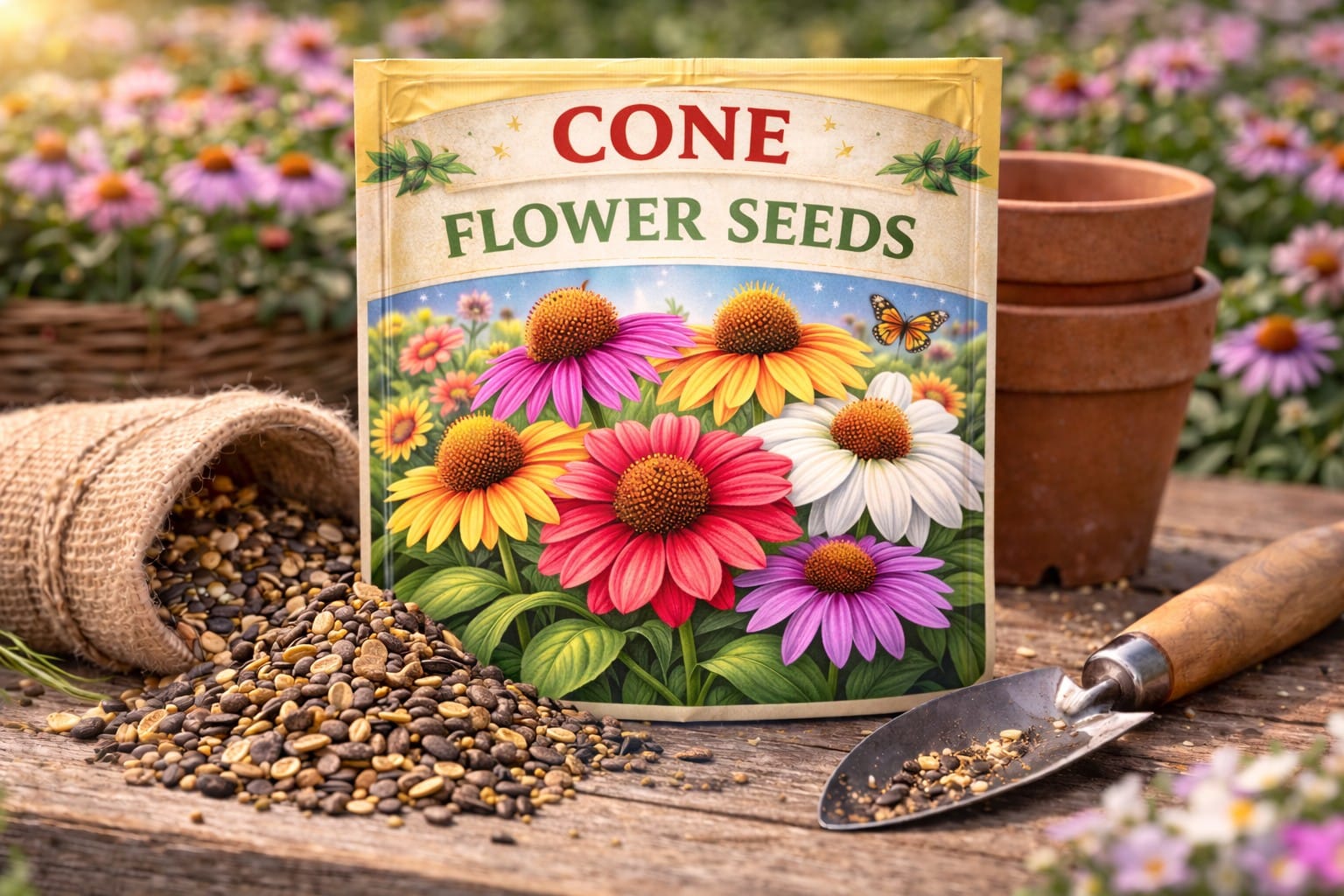
Cone flower seeds, commonly known as coneflower or Echinacea seeds, grow into some of the most reliable, colorful, and pollinator-friendly flowers you can add to a garden. Coneflowers are famous for their raised central cones, daisy-like petals, and long bloom season, making them a favorite for beginners and experienced gardeners alike.
This in-depth guide covers everything about cone flower seeds, including seed types, planting methods, soil and sunlight needs, watering, fertilizing, care tips, common problems, seed harvesting, storage, and expert advice for strong, long-lasting plants.
What Are Cone Flower Seeds
Cone flower seeds come from plants in the Echinacea genus, members of the daisy family (Asteraceae). Native to North America, coneflowers are hardy perennials known for their toughness, drought tolerance, and ability to thrive in a wide range of conditions.
Key characteristics of coneflowers:
Daisy-like flowers with raised cone centers
Petals in purple, pink, white, yellow, orange, and red
Blooms from early summer to fall
Strong, upright stems
Excellent pollinator support
Cone flower seeds are medium-sized, easy to handle, and ideal for direct sowing.
Meaning and Symbolism of Cone Flowers
Coneflowers carry meaningful symbolism across cultures.
They represent:
Strength and resilience
Healing and wellness
Hope and endurance
Protection and vitality
Because Echinacea is widely used in herbal traditions, coneflowers are often associated with health, immunity, and natural healing.
Types of Cone Flower Seeds
There are several types of coneflowers grown from seed.
Purple Coneflower (Echinacea purpurea)
Most common variety
Purple-pink petals with orange-brown cone
Extremely hardy and long-lived
White Coneflower
Pure white petals
Elegant garden appearance
Strong pollinator appeal
Yellow Coneflower
Bright yellow petals
Often native varieties
Excellent for wildflower gardens
Hybrid Coneflowers
Wide range of colors
Compact or tall growth habits
Some hybrids may not come true from seed
Native Coneflowers
Adapted to local climates
Low-maintenance
Ideal for natural landscapes
When to Plant Cone Flower Seeds
Cone flower seeds benefit from cold stratification.
Best planting times:
Fall planting for natural stratification
Early spring planting after cold treatment
Late winter indoor seed starting
Soil temperatures of 65–70°F (18–21°C) are ideal for germination.
Cold Stratification Explained
Many coneflower seeds need a cold period to germinate.
How to stratify seeds:
Place seeds in damp paper towel
Seal in plastic bag
Refrigerate for 3–4 weeks
Plant immediately after
Fall sowing outdoors naturally provides this cold treatment.
Soil Requirements
Coneflowers prefer simple soil.
Ideal soil conditions:
Well-draining soil
Sandy or loamy texture
Neutral to slightly acidic pH
Low to moderate fertility
Avoid heavy clay or waterlogged soil.
How to Plant Cone Flower Seeds
Cone flower seeds can be sown directly or started indoors.
Direct Sowing Steps
Choose a sunny location
Loosen soil lightly
Scatter seeds on soil surface
Press seeds gently into soil
Do not bury deeply
Water lightly
Seeds need light to germinate and usually sprout in 10–20 days.
Indoor Seed Starting
Use seed trays with light potting mix
Surface sow seeds
Mist gently
Provide bright light
Transplant after frost
Sunlight Requirements
Coneflowers thrive in sunlight.
Sun needs:
Full sun is best
At least 6–8 hours daily
Partial shade tolerated but reduces blooms
More sun results in stronger stems and more flowers.
Watering Cone Flowers
Coneflowers are drought-tolerant once established.
Watering guidelines:
Water regularly during germination
Reduce watering as plants mature
Allow soil to dry slightly between watering
Avoid soggy conditions
Overwatering is the most common cause of problems.
Fertilizing Cone Flowers
Coneflowers need very little fertilizer.
Fertilizer tips:
Avoid rich soil
Use compost lightly at planting
Optional light feeding once per season
Too much fertilizer reduces flowering
They thrive in lean conditions.
Growth and Blooming Timeline
Typical growth stages:
Germination: 10–20 days
Seedling stage: 4–6 weeks
First blooms: late summer (first year)
Full flowering: second year onward
Some varieties bloom the first year, especially if started early.
Caring for Cone Flower Plants
Coneflowers are low-maintenance perennials.
Care tips:
Deadhead to extend blooming
Leave some seed heads for birds
Cut back in late fall or early spring
Divide plants every 3–4 years
They are extremely tough once established.
Common Problems and Solutions
Poor Flowering
Caused by shade or rich soil
Move to sunnier area
Root Rot
Caused by poor drainage
Improve soil drainage
Leggy Growth
Caused by overcrowding
Thin seedlings properly
Pests
Generally pest-resistant
Occasional aphids or beetles
Treat with neem oil if needed
Diseases
Powdery mildew in humid conditions
Improve airflow and avoid overhead watering
Attracting Pollinators and Wildlife
Coneflowers are excellent for wildlife gardens.
They attract:
Bees
Butterflies
Beneficial insects
Birds that eat seed heads
Leaving seed heads in fall provides winter food for birds.
Harvesting Cone Flower Seeds
Saving seeds is easy and rewarding.
When to harvest:
Flower heads dry and turn brown
Petals fall off naturally
How to harvest:
Cut dried flower heads
Break apart gently
Separate seeds from chaff
Allow seeds to dry fully
Storing Cone Flower Seeds
Storage tips:
Keep seeds dry
Store in paper envelopes or jars
Label with date and variety
Store in cool, dark place
Seeds remain viable for 2–4 years.
Coneflowers in Containers
Coneflowers can grow in pots.
Container tips:
Choose deep containers
Use well-draining soil
Water sparingly
Provide full sun
Compact varieties work best in containers.
Landscape Uses
Coneflowers are extremely versatile.
Common uses include:
Flower borders
Pollinator gardens
Prairie gardens
Wildflower meadows
Low-maintenance landscapes
They pair well with grasses, black-eyed Susans, and salvias.
Frequently Asked Questions
Are cone flower seeds easy to grow?
Yes, they are beginner-friendly.
Do coneflowers come back every year?
Yes, they are hardy perennials.
Do coneflowers bloom the first year?
Some do, but most bloom fully in the second year.
Are coneflowers drought-tolerant?
Yes, once established.
Are coneflowers deer resistant?
Yes, generally deer resistant.
Expert Growing Tips
Do not overwater
Plant in full sun
Use lean soil
Allow seed heads to remain in fall
Be patient during first year growth
Final Thoughts
Cone flower seeds are an excellent choice for gardeners who want long-lasting color, minimal care, and strong pollinator support. Their ability to thrive in tough conditions, combined with their beauty and ecological value, makes them one of the best flowers to grow from seed.
With proper planting, sunlight, and minimal watering, cone flower seeds grow into strong, vibrant plants that return year after year, filling gardens with color, life, and natural beauty.