
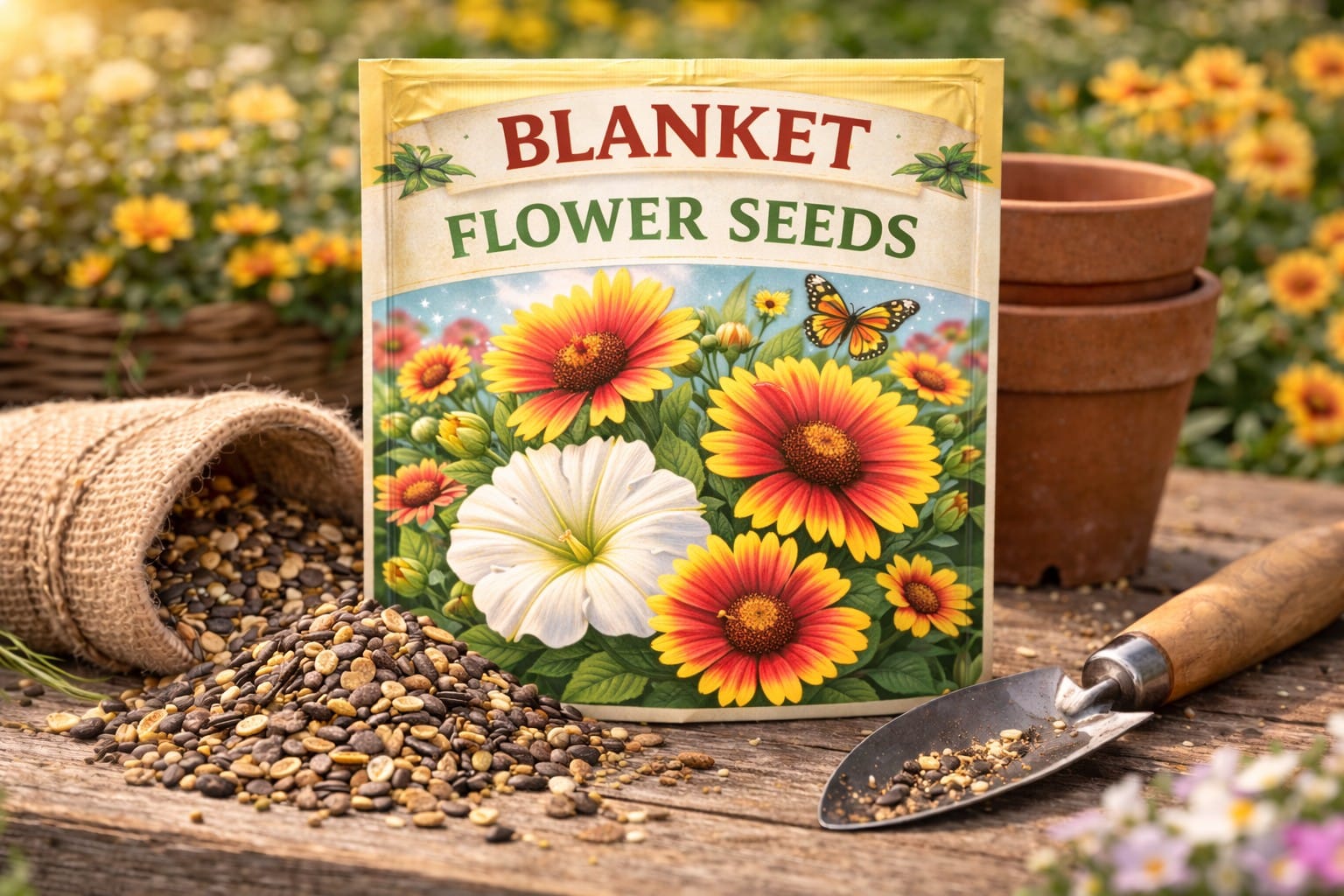
Blanket flower seeds grow into one of the most colorful, tough, and pollinator-friendly flowers you can plant. Known botanically as Gaillardia, blanket flowers produce bright red, orange, and yellow daisy-like blooms that look like woven blankets, which is how they got their common name. These flowers thrive in heat, poor soil, and drought, making them perfect for low-maintenance gardens.
This complete guide covers everything about blanket flower seeds, including seed types, planting steps, soil and sunlight needs, watering, fertilizing, care tips, common problems, seed harvesting, storage, and expert advice for long-lasting blooms.
What Are Blanket Flower Seeds
Blanket flower seeds come from Gaillardia plants, which are hardy annuals or perennials depending on the variety. Native to North and South America, blanket flowers are valued for their long blooming season, bright colors, and resilience.
Key characteristics of blanket flowers:
Daisy-like flowers with red, orange, and yellow tones
Blooms from early summer to fall
Compact to medium height plants
Excellent heat and drought tolerance
Strong attraction for bees and butterflies
Blanket flower seeds are small, easy to handle, and beginner-friendly.
Meaning and Symbolism of Blanket Flowers
Blanket flowers carry cheerful and powerful symbolism.
They represent:
Warmth and happiness
Strength and endurance
Creativity and boldness
Joyful energy
Their fiery colors are often associated with sunshine, summer, and resilience, making them a favorite in cheerful garden designs.
Types of Blanket Flower Seeds
There are several types of blanket flowers grown from seed.
Annual Blanket Flowers
Grow and bloom in one season
Fast growth
Ideal for quick color
Perennial Blanket Flowers
Return year after year
Deep root systems
Extremely drought-tolerant
Dwarf Varieties
Compact growth
Perfect for containers
Great for borders
Tall Varieties
Grow up to 3 feet
Ideal for wildflower gardens
Excellent cut flowers
Popular varieties include Gaillardia aristata, Arizona Sun, and Mesa Yellow.
When to Plant Blanket Flower Seeds
Planting time depends on your climate.
Best planting times:
Early spring after last frost
Late spring to early summer
Fall planting in mild climates
Seeds germinate best when soil temperatures are 65–75°F (18–24°C).
Soil Requirements
Blanket flowers prefer poor to moderately fertile soil.
Ideal soil conditions:
Well-draining soil
Sandy or loamy texture
Neutral to slightly acidic pH
Low organic matter
Rich soil causes excessive leaf growth and fewer flowers, so avoid heavy composting.
How to Plant Blanket Flower Seeds
Blanket flower seeds are easy to sow.
Step-by-Step Planting
Choose a sunny location
Loosen soil lightly
Scatter seeds on soil surface
Press seeds gently into soil
Do not bury deeply
Water lightly
Seeds need light to germinate and typically sprout in 7–14 days.
Container Planting
Use pots with drainage holes
Fill with light potting mix
Scatter seeds and press gently
Thin seedlings after emergence
Containers should be placed in full sun.
Sunlight Requirements
Blanket flowers love sunshine.
Sun needs:
Full sun is best
At least 6–8 hours daily
More sun equals more flowers
Plants grown in shade produce fewer blooms and weaker stems.
Watering Blanket Flowers
Blanket flowers are drought-tolerant once established.
Watering guidelines:
Water regularly during germination
Reduce watering once plants mature
Allow soil to dry slightly between watering
Avoid soggy soil
Overwatering is the most common mistake.
Fertilizing Blanket Flowers
Blanket flowers require minimal feeding.
Fertilizer tips:
Avoid heavy fertilization
Use light balanced fertilizer once or twice a season
Too much nitrogen reduces blooms
In most gardens, blanket flowers grow well without fertilizer.
Growth and Blooming Timeline
Growth stages:
Germination: 7–14 days
Seedling stage: 3–4 weeks
Bud formation: 6–8 weeks
Blooming: early summer to fall
Deadheading encourages continuous blooming.
Caring for Blanket Flower Plants
Blanket flowers are very low maintenance.
Care tips:
Deadhead spent blooms
Trim plants mid-season to refresh growth
Stake taller varieties if needed
Mulch lightly in extreme heat
They thrive even in harsh conditions.
Common Problems and Solutions
Poor Flowering
Caused by too much fertilizer or shade
Move plants to sunnier spot
Root Rot
Caused by wet soil
Improve drainage and reduce watering
Leggy Growth
Caused by shade or overcrowding
Thin plants and provide full sun
Pests
Generally pest-resistant
Occasional aphids
Treat with neem oil if needed
Diseases
Rare
Good airflow prevents fungal issues
Attracting Pollinators
Blanket flowers are excellent for pollinator gardens.
They attract:
Bees
Butterflies
Beneficial insects
Planting blanket flowers helps support local ecosystems.
Harvesting Blanket Flower Seeds
Saving seeds is simple.
When to harvest:
Flowers fade and dry
Seed heads turn brown
How to harvest:
Cut dry flower heads
Allow to dry completely
Remove seeds gently
Clean off debris
Seeds are ready when fully dry.
Storing Blanket Flower Seeds
Proper storage ensures long-term viability.
Storage tips:
Keep seeds dry
Store in paper envelopes or jars
Label with date
Store in cool, dark place
Seeds remain viable for 2–3 years.
Blanket Flowers in Containers
Blanket flowers grow well in pots.
Container tips:
Choose wide containers
Use light, fast-draining soil
Water sparingly
Place in full sun
Dwarf varieties perform best in containers.
Landscape Uses
Blanket flowers are very versatile.
Common uses include:
Borders and edging
Wildflower gardens
Rock gardens
Pollinator gardens
Roadside and low-maintenance landscapes
Their bright colors pair well with grasses and blue flowers.
Frequently Asked Questions
Are blanket flower seeds easy to grow?
Yes, they are ideal for beginners.
Do blanket flowers come back every year?
Perennial varieties return; annuals reseed easily.
Do blanket flowers need fertilizer?
Very little, if any.
Can blanket flowers grow in hot climates?
Yes, they thrive in heat.
Are blanket flowers deer resistant?
Yes, they are generally deer resistant.
Expert Growing Tips
Do not overwater
Avoid rich soil
Deadhead regularly
Plant in full sun
Allow some flowers to go to seed
Final Thoughts
Blanket flower seeds are perfect for gardeners who want bright color, long bloom time, and minimal care. Their ability to thrive in heat, drought, and poor soil makes them one of the easiest flowers to grow from seed.
With simple planting, full sun, and light watering, blanket flower seeds grow into cheerful, long-lasting blooms that attract pollinators and brighten gardens from summer through fall.