
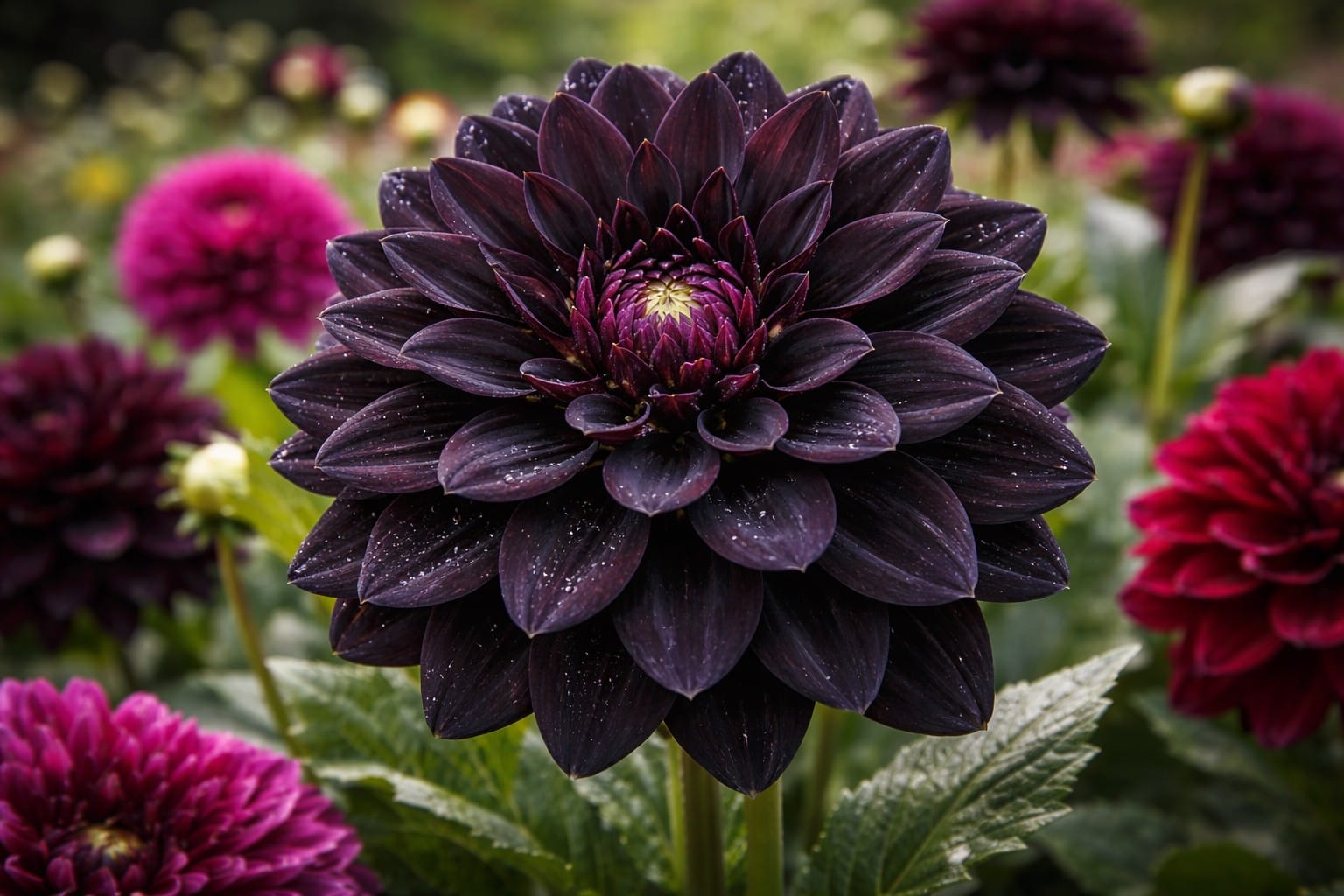
The black dahlia flower is one of the most striking and dramatic flowers in the garden world. Known for its deep, almost black petals and intricate layered structure, it adds a touch of mystery, elegance, and sophistication to any garden or floral arrangement. Despite its name, the petals are usually a very dark burgundy, maroon, or purple, appearing black under certain lighting conditions.
This in-depth guide covers everything about black dahlias, including their meaning, symbolism, popular types, planting, growing conditions, care, common problems, companion planting, uses, and expert tips, ensuring you can grow and enjoy these rare and captivating blooms.
What Is a Black Dahlia
Black dahlias belong to the genus Dahlia in the family Asteraceae. They are perennial tuberous plants, often grown as annuals in colder climates. Dahlias are native to Mexico and Central America and are famous for their diverse flower shapes, vibrant colors, and long-lasting blooms.
Key characteristics:
- Flower: Deep maroon, burgundy, or near-black petals
- Height: 18–48 inches depending on variety
- Leaves: Dark green, deeply lobed
- Growth habit: Upright, bushy, or tall depending on cultivar
- Bloom season: Summer to fall
The black dahlia is especially popular in cut flower arrangements, gothic-themed gardens, and dramatic borders due to its unique dark color.
Black Dahlia Meaning and Symbolism
Black dahlias carry a rich and mysterious symbolism:
- Elegance and sophistication: Dark petals create a luxurious aesthetic
- Mystery and intrigue: Unusual color conveys secrecy or the unconventional
- Strength and courage: Symbolizes inner strength and confidence
- Farewell and goodbyes: Dark flowers are sometimes used to represent endings
- Passion and commitment: Deep red tones under black petals convey love and devotion
These flowers are often used in weddings, formal arrangements, and memorial gardens, where dramatic visual impact is desired.
Popular Black Dahlia Varieties
Several varieties are cultivated for their dark petals:
1. ‘Arabian Night’
- Deepest near-black petals with dark foliage
- Large, formal decorative blooms
- Popular for dramatic garden beds
2. ‘Black Beauty’
- Bushy plants with multiple blooms
- Intense dark petals with a glossy finish
- Ideal for containers or borders
3. ‘Black Jack’
- Medium-height variety
- Fully double blooms
- Reliable for cut flowers
4. ‘Night Butterfly’
- Semi-cactus type
- Rich, dark petals with spiky edges
- Adds exotic flair to gardens
5. ‘Dahlia Bishop of Llandaff’
- Blackish-red petals
- Dark, almost black foliage
- Compact and ideal for mixed borders
When Do Black Dahlias Bloom
- Black dahlias bloom from mid-summer to the first frost
- Individual blooms can last up to 2–3 weeks
- Deadheading spent flowers encourages continuous blooming
- Planting multiple varieties can extend bloom season
Ideal Growing Conditions
Black dahlias require proper care to thrive:
- Sunlight: Full sun (6–8 hours daily)
- Soil: Rich, well-draining soil with good organic content
- Water: Consistent, deep watering; avoid wet foliage to prevent disease
- Temperature: Sensitive to frost; plant after danger of frost passes
- Support: Tall varieties may require staking to prevent flopping
Dahlias flourish in fertile, sunny gardens with regular maintenance.
How to Plant Black Dahlias
Planting Time
- Plant tubers after the last frost in spring
- Soil temperature should be at least 60°F
Step-by-Step Planting
- Choose a sunny, well-drained location
- Loosen soil and mix in compost or bulb fertilizer
- Dig a hole 6–8 inches deep
- Place tuber horizontally with eyes (growth buds) facing up
- Cover with soil and water gently
- Space plants 18–24 inches apart depending on variety
Container Growing
- Use deep pots with drainage holes
- Plant 1–2 tubers per container
- Provide support for taller varieties
Soil Requirements
- Well-draining soil prevents rot
- Rich in organic matter for robust growth
- Slightly acidic to neutral pH (6.0–7.0)
- Mulch around base to retain moisture and control weeds
Watering Black Dahlias
- Water deeply 2–3 times per week, depending on climate
- Keep soil moist but not soggy
- Avoid wetting foliage to reduce fungal disease risk
- Mulching helps maintain consistent soil moisture
Fertilizing
- Use balanced fertilizer when planting tubers
- Feed every 3–4 weeks during growing season
- Avoid high nitrogen fertilizer; it encourages leaf growth over flowers
Black Dahlia Care
- Deadhead regularly to promote continuous blooms
- Pinch new growth early to encourage bushy plants
- Stake taller varieties to prevent flopping
- Monitor for pests like aphids, slugs, and spider mites
- Mulch to retain moisture and reduce weeds
Propagation
- By tubers: Most common; dig up after frost and store tubers over winter
- By cuttings: Softwood cuttings can be rooted in spring
- By seeds: Rare and slow; usually used for breeding new cultivars
Common Problems
1. Fungal Diseases
- Powdery mildew and botrytis can occur
- Solution: Good air circulation, avoid wet foliage, fungicide if necessary
2. Pests
- Aphids, slugs, and spider mites may damage leaves and flowers
- Use natural predators or insecticidal sprays
3. Poor Flowering
- Cause: Too much nitrogen or insufficient sunlight
- Solution: Fertilize correctly and provide full sun
4. Tubers Rotting
- Cause: Waterlogged soil or planting too deep
- Solution: Improve drainage and plant at correct depth
Companion Planting
- Bright-colored flowers: Yellow marigolds or orange zinnias for contrast
- Foliage plants: Hostas or ornamental grasses for texture
- Other dahlias: Mix colors and forms for layered displays
Companion planting enhances visual appeal and helps prevent disease spread.
Uses of Black Dahlia Flowers
- Gardens: Borders, beds, containers, and formal landscapes
- Cut flowers: Long-lasting, dramatic blooms for bouquets
- Events: Gothic-themed weddings, formal arrangements, or artistic displays
- Pollinator-friendly: Attracts bees and butterflies
- Symbolic: Used to convey mystery, elegance, or farewell
Frequently Asked Questions
Are black dahlias really black?
- True black is rare; most are deep burgundy, maroon, or purple appearing black under sunlight.
Can black dahlias survive winter?
- In frost-prone areas, dig up tubers and store in a cool, dry place over winter.
How tall do black dahlias grow?
- Depends on variety; typically 18–48 inches, taller types need staking.
Do black dahlias need full sun?
- Yes, at least 6–8 hours daily for vibrant blooms.
Are black dahlias toxic?
- Generally safe for humans; however, tubers may be mildly toxic if ingested.
Final Thoughts
The black dahlia flower is a dramatic, elegant, and captivating addition to any garden. Its dark petals create a mysterious and sophisticated effect, while its long blooming season from summer to fall ensures continuous beauty.
With full sun, rich soil, consistent watering, and regular care, black dahlias can reward gardeners with stunning blooms year after year. Whether planted in borders, containers, or used in floral arrangements, the black dahlia remains a statement flower, symbolizing elegance, strength, and mystery.