
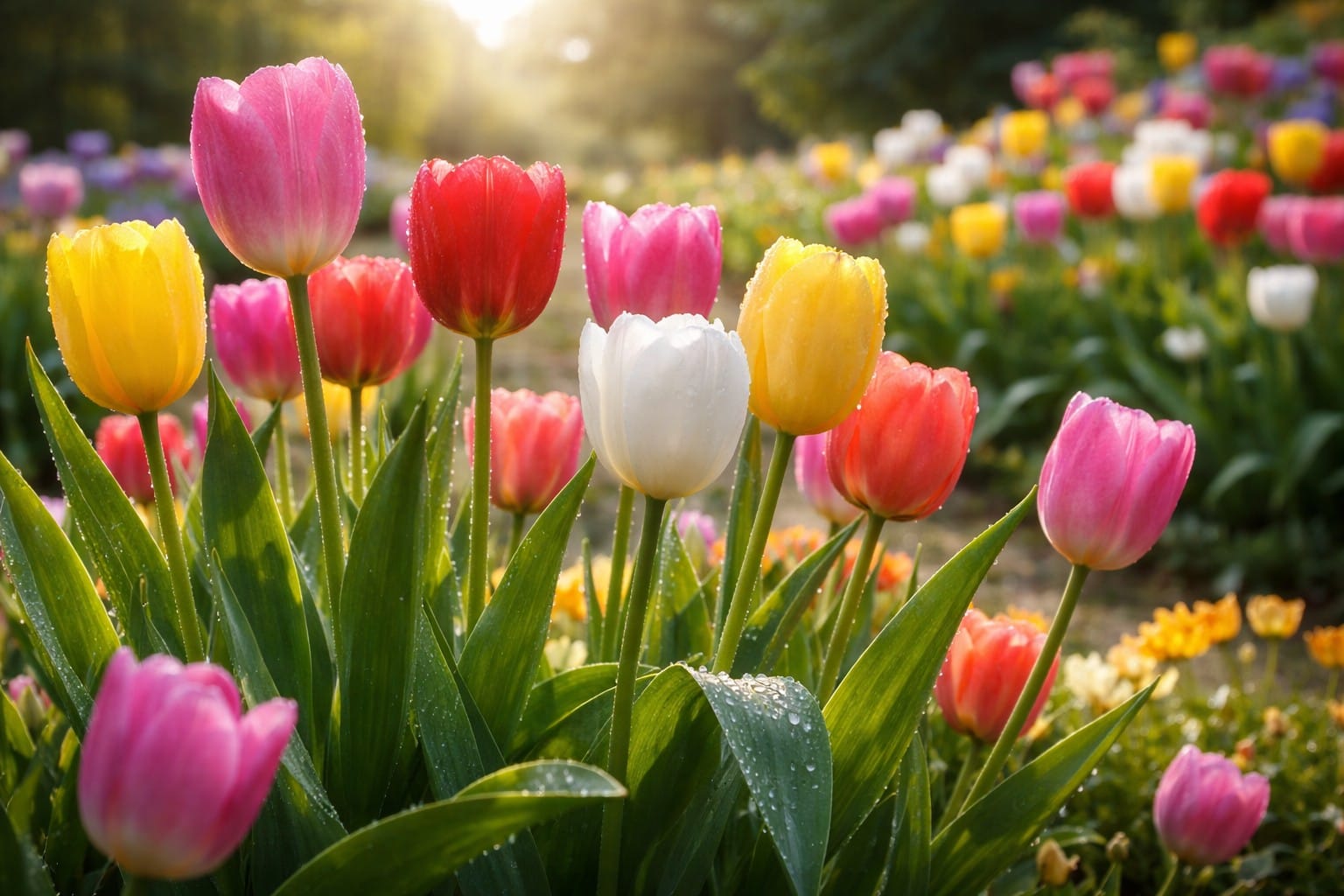
The tulip flower, one of the most iconic and beloved spring blooms, is celebrated for its bold, colorful petals and elegant cup shape. Native to Central Asia and popularized in Europe, tulips symbolize love, rebirth, and beauty, making them a favorite in gardens, floral arrangements, and cultural festivals.
This comprehensive guide covers everything about tulips, including their meaning, types, planting, growing conditions, care, common problems, companion planting, uses, and expert tips, ensuring you can grow vibrant, long-lasting tulip displays in your garden.
What Is a Tulip Flower
Tulips belong to the genus Tulipa in the lily family (Liliaceae). They are perennial bulbs, although often grown as annuals in colder climates for guaranteed blooms each year. Tulips are known for:
- Bright, vibrant colors including red, pink, yellow, purple, white, and even bi-colored varieties
- Cup-shaped or star-shaped flowers
- Narrow, lance-shaped green leaves
- Upright growth habit, generally 6–24 inches tall depending on the variety
Tulips are celebrated in many cultures, especially during spring festivals, such as Holland’s Tulip Festival, symbolizing joy, prosperity, and the arrival of warmer days.
Tulip Flower Meaning and Symbolism
Tulips have rich cultural and symbolic significance:
- Love and romance: Red tulips are associated with true love
- Happiness and cheerfulness: Bright colors represent joy and positivity
- Elegance and grace: Tulips’ simple yet sophisticated shape conveys refinement
- Rebirth and renewal: Blooming in spring after winter dormancy symbolizes new beginnings
- Forgiveness and respect: White tulips are often used in expressions of apology or remembrance
Different colors carry distinct meanings:
- Red – love and passion
- Yellow – cheerful thoughts and friendship
- Purple – royalty and admiration
- Pink – caring, affection, and good wishes
- White – purity, forgiveness, and sympathy
Popular Types of Tulips
Tulips are diverse, with hundreds of species and cultivars. Popular types include:
1. Single Early Tulips
- Simple cup-shaped blooms
- Early spring bloomers
- Compact, ideal for borders and containers
2. Double Tulips
- Layers of petals resembling peonies
- Full, showy flowers
- Slightly later bloom than single tulips
3. Triumph Tulips
- Classic tulip shape
- Strong stems, ideal for cut flowers
- Blooms mid-season
4. Darwin Hybrid Tulips
- Tall, large flowers
- Long-lasting blooms
- Excellent for mass plantings and garden displays
5. Parrot Tulips
- Frilled, feathered petals
- Bright, unusual colors
- Adds exotic flair to gardens
6. Lily-Flowered Tulips
- Pointed, star-shaped petals
- Elegant appearance
- Slightly taller stems
7. Species Tulips
- Wild varieties with small blooms
- Early bloomers
- Perfect for naturalizing in lawns or rock gardens
When Do Tulips Bloom
- Tulips typically bloom in spring, from March to May
- Bloom time varies depending on type and climate
- Early tulips bloom first, while Darwin hybrids and late tulips appear later
- Individual blooms last 1–2 weeks, but staggered plantings extend flowering season
Ideal Growing Conditions
Tulips thrive under the following conditions:
- Sunlight: Full sun for optimal flowering
- Soil: Well-draining soil rich in organic matter
- Water: Moderate; avoid waterlogged soil
- Temperature: Require cold winter period for proper bloom (vernalization)
- Spacing: Plant bulbs 4–6 inches apart to prevent overcrowding
Tulips prefer cooler climates, but pre-chilling bulbs allows growth in warmer regions.
Planting Tulip Bulbs
Proper planting ensures healthy growth and vibrant blooms.
Planting Time
- Plant bulbs in autumn, 6–8 weeks before the first hard frost
- Soil should be cool but not frozen
Planting Steps
- Choose a sunny location with well-draining soil
- Dig holes 6–8 inches deep with pointed end facing up
- Space bulbs 4–6 inches apart
- Add a layer of compost or bulb fertilizer to the soil
- Cover bulbs and water gently
Container Planting
- Use deep pots with good drainage
- Plant 3–5 bulbs per container
- Keep soil moist but not soggy
Soil Requirements
- Loamy or sandy soil with good drainage is ideal
- Soil pH: neutral to slightly acidic
- Enrich soil with compost or bulb fertilizer before planting
- Avoid heavy clay or soggy soils to prevent rot
Watering Tulips
- Water after planting to settle soil
- Moderate watering during growth; do not overwater
- Tulips are drought-tolerant once established
- Avoid watering leaves or flowers to prevent fungal issues
Fertilizing Tulips
- Light feeding with balanced fertilizer at planting
- Additional fertilizer in early spring can boost flowering
- Avoid high nitrogen; it encourages foliage growth over blooms
Tulip Care After Blooming
- Allow foliage to die back naturally; this nourishes the bulb for next year
- Deadhead spent flowers to prevent seed formation
- Mulch in late fall to protect bulbs in colder regions
- Dig and store bulbs in very hot climates if tulips will not naturalize
Propagation
- By bulbs: Main method; dig and divide after foliage dies back
- By seeds: Possible but slow; may take 5–7 years to bloom
Propagation ensures long-term tulip displays and preserves cultivars.
Common Problems
1. Poor Flowering
- Cause: Shallow planting, overcrowding, lack of cold exposure
- Solution: Replant deeper and provide vernalization if needed
2. Bulb Rot
- Cause: Waterlogged or poorly drained soil
- Solution: Improve drainage and avoid wet winters
3. Pests
- Aphids, rodents, deer, and squirrels may eat bulbs
- Use barriers, repellents, or plant protective netting
4. Diseases
- Fungal diseases like Botrytis blight
- Prevent by spacing bulbs, improving airflow, and removing diseased plants
Companion Planting
- Daffodils: bloom slightly earlier for layered effect
- Crocus: small early bloomers under tulips
- Hyacinths: fragrant, colorful contrast
- Hostas or ferns: foliage contrast after tulip dies back
Companion planting ensures continuous color and healthy garden dynamics.
Uses of Tulips
- Gardens: Borders, mass plantings, rock gardens, raised beds
- Containers: Patios, balconies, and indoor displays
- Cut flowers: Long-lasting blooms for bouquets
- Festivals and cultural displays: Widely used in spring festivals worldwide
- Pollinator gardens: Attract bees in early spring
Frequently Asked Questions
Do tulips come back every year?
Yes, but many garden varieties are short-lived; bulbs may need lifting and replanting.
Can tulips grow in warm climates?
Yes, but bulbs require pre-chilling for vernalization to bloom properly.
How do I get taller tulips?
Plant deep, provide full sun, and fertilize lightly in spring.
Are tulips safe for pets?
Tulips are toxic to cats and dogs; avoid ingestion.
How long do tulip blooms last?
Each bloom lasts 1–2 weeks; staggered planting extends the season.
Final Thoughts
The tulip flower is a timeless symbol of spring, beauty, love, and renewal. Its wide variety of colors, shapes, and sizes makes it suitable for gardens, containers, cut flower arrangements, and festivals.
With proper planting, care, and attention to soil, water, and sunlight, tulips reward gardeners with vibrant, long-lasting displays year after year. Their elegant form and cheerful colors make them a staple in any spring garden, bringing joy, color, and optimism after the long winter months.