
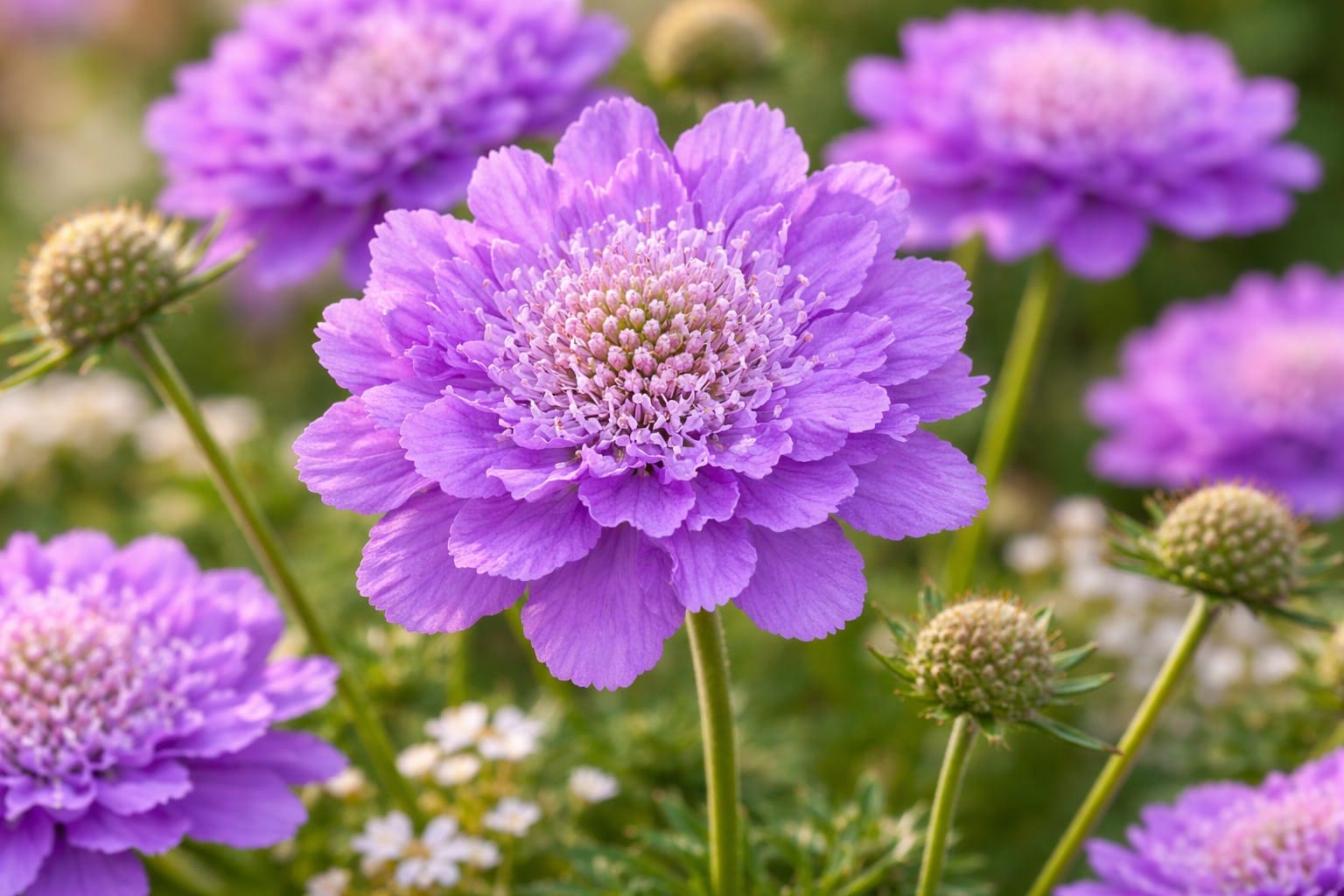
Purple flowers are among the most stunning, versatile, and meaningful blooms in any garden. Their shades range from soft lavender to deep violet, symbolizing royalty, creativity, peace, and mystery. Purple flowers can bring elegance, depth, and contrast to flower beds, borders, containers, and floral arrangements. Many species are also pollinator-friendly, making them an excellent choice for sustainable and ecological gardening.
This comprehensive guide covers everything about purple flowers: their meaning, symbolism, popular types, planting, growing, care, common problems, companion planting, uses, and expert tips so you can create a vibrant purple flower garden or indoor display that thrives year after year.
Meaning and Symbolism of Purple Flowers
Purple has long been associated with royalty, luxury, wisdom, and spirituality. Purple flowers carry similar meanings, making them ideal for weddings, celebrations, memorials, and decorative arrangements.
General meanings of purple flowers include:
- Royalty and elegance – deep purple conveys nobility and sophistication
- Creativity and imagination – purple flowers inspire artistic expression
- Peace and calm – lighter shades of lavender create a soothing effect
- Mystery and magic – purple symbolizes the mystical and enchanting
Color-specific symbolism:
- Lavender – calm, tranquility, devotion
- Violet – humility, modesty, faithfulness
- Iris – wisdom, hope, and cherished friendship
- Lilac – youthful innocence, first love, spring renewal
- Orchid (purple varieties) – rare beauty, admiration, and elegance
Purple flowers are often gifted to convey admiration, respect, and love, making them highly meaningful in personal and ceremonial contexts.
Popular Types of Purple Flowers
Purple flowers include annuals, perennials, shrubs, and bulbs, providing options for every garden and climate. Here’s a detailed breakdown:
1. Lavender
- Aromatic herb with spiky purple flowers
- Blooms mid to late summer
- Ideal for borders, herb gardens, and pollinator habitats
- Drought-tolerant once established
2. Violet
- Small, delicate blooms
- Thrive in partial shade
- Self-seeding perennials for naturalizing garden spaces
3. Iris
- Dramatic, sword-like foliage and upright flowers
- Bloom in late spring
- Attracts bees and butterflies
- Easy to propagate by rhizomes
4. Lilac
- Shrubs with fragrant purple blooms
- Bloom in early to mid-spring
- Provide privacy hedges or focal points in landscapes
5. Hydrangea (Purple Varieties)
- Large, spherical flower clusters
- Bloom from mid-summer to early fall
- Soil pH affects shade of purple
- Excellent for cut flowers and container gardens
6. Aster
- Daisy-like flowers
- Bloom in late summer and fall
- Long-lasting, attract pollinators
7. Salvia (Sage)
- Spiky perennial with rich purple flowers
- Attracts hummingbirds and bees
- Drought-tolerant and low-maintenance
8. Clematis (Purple Varieties)
- Climbing vines with striking purple flowers
- Blooms from late spring to summer
- Ideal for fences, trellises, and arbors
Ideal Growing Conditions for Purple Flowers
Most purple flowers thrive under similar conditions:
- Sunlight: Full sun for most species; partial shade for violets, lilacs, and hydrangeas
- Soil: Well-draining, fertile soil; slightly acidic for some species (like hydrangeas)
- Water: Moderate watering; avoid waterlogging
- Climate: Adaptable to temperate and mild climates, with some varieties tolerating frost
Providing the right growing conditions ensures vibrant blooms, healthy foliage, and strong plant structure.
Planting Purple Flowers
From Seeds
- Start seeds indoors for early spring blooms
- Scarify or soak hard seeds for faster germination
- Transplant seedlings after the last frost
From Bulbs
- Plant bulbs (like irises) in fall for spring blooms
- Dig 4–6 inches deep in well-draining soil
- Space bulbs 4–6 inches apart
From Nursery Plants
- Select healthy, pest-free plants
- Dig holes slightly larger than root ball
- Plant at soil level and water immediately
Companion Planting
- Purple flowers pair well with whites, yellows, and pinks
- Layer heights: taller flowers in back, smaller in front
- Combine perennials and annuals for continuous blooms
Watering and Fertilizing
- Keep soil consistently moist during germination
- Water deeply rather than frequently to encourage deep roots
- Mulch around plants to retain moisture and suppress weeds
- Fertilize lightly in spring with balanced fertilizer
- Avoid excessive nitrogen; it promotes leaves over blooms
Common Problems and Solutions
1. Poor Flowering
- Cause: Too much shade or high nitrogen
- Solution: Relocate to sunnier spot and reduce fertilization
2. Yellow Leaves
- Cause: Overwatering or nutrient deficiency
- Solution: Adjust watering and add compost
3. Pests
- Aphids, slugs, caterpillars
- Solution: Handpick, use neem oil, or encourage natural predators
4. Fungal Diseases
- Powdery mildew or root rot
- Solution: Provide airflow, avoid overhead watering, ensure well-draining soil
Pollinator Benefits
Purple flowers attract a variety of pollinators:
- Bees: lavender, salvia, aster
- Butterflies: lilac, purple coneflower
- Hummingbirds: tubular purple flowers
Planting purple flowers increases biodiversity and supports local ecosystems.
Uses of Purple Flowers
Purple flowers are highly versatile:
- Landscapes: flower beds, borders, hedges, focal points
- Containers: patios, balconies, indoor pots
- Cut flowers: bouquets, centerpieces, floral arrangements
- Pollinator gardens: attract beneficial insects
- Medicinal or aromatic uses: lavender, sage
Pruning and Maintenance
- Deadhead spent blooms to encourage reblooming
- Remove diseased or damaged leaves
- Cut back overgrown stems for proper airflow
- Mulch in winter to protect roots from frost
Maintenance ensures long-lasting beauty and healthy growth.
Seasonal Care
- Spring: Plant new seedlings, fertilize, prune
- Summer: Water deeply, deadhead, monitor pests
- Fall: Mulch, collect seeds for next season, cut back perennials
- Winter: Protect frost-sensitive plants, minimal watering
Frequently Asked Questions
Do purple flowers attract pollinators?
Yes, many purple flowers are especially attractive to bees, butterflies, and hummingbirds.
Can purple flowers grow in shade?
Some, like violets and hydrangeas, tolerate partial shade. Most need full sun for optimal blooms.
Are purple flowers perennial?
Depends on species; many are perennials, while others are annuals.
How do I get deeper purple blooms?
Adjust soil pH for hydrangeas, provide full sun, and avoid excessive nitrogen.
Are purple flowers toxic to pets?
Some, like foxglove or hyacinth, may be toxic. Research individual species before planting in pet-friendly gardens.
Final Thoughts
Purple flowers bring beauty, elegance, and meaning to gardens, landscapes, and floral arrangements. With a wide variety of species, shapes, and shades, they offer year-round color, fragrance, and pollinator support.
By choosing the right types, planting in suitable conditions, and providing proper care, gardeners can enjoy stunning purple blooms, healthy ecosystems, and vibrant landscapes year after year. Whether used in borders, containers, or wildflower gardens, purple flowers are an enduring favorite for gardeners seeking beauty, symbolism, and ecological value.